When you tune into a Tesla Inc. (TSLA) earnings call, you expect Elon Musk to talk about Robotaxis, Optimus robots, and artificial intelligence. What you probably don't expect is for him to pause and thank a memory chip company by name. But that's exactly what happened during Tesla's second-quarter earnings call, when Musk singled out Micron Technology Inc. (MU) for a brief but telling shout-out.
It wasn't just a polite gesture. Musk's comment offered a window into one of Tesla's biggest challenges as it scales up its AI ambitions: getting enough advanced memory to power the next generation of AI hardware.
An Unexpected Thank-You
While discussing Tesla's plans to develop custom AI chips, Musk dropped the Micron mention almost casually. "I'd actually also like to thank Micron for giving us memory allocation," he said, before adding that memory pricing has become "pretty insane" as demand surges.
Public companies rarely use earnings calls to thank suppliers by name. The comment stood out not just because it was unusual, but because it highlighted an increasingly critical piece of the AI supply chain: memory. For investors, it was a clue that Tesla is feeling the same memory constraints that have rippled across the AI industry.
TSM Got a Shout-Out Too
Later in the call, Musk broadened his appreciation to include Taiwan Semiconductor Manufacturing Company Ltd. (TSM) and Samsung Electronics Co., Ltd. (SSNLF). "I think things are going really well on the chip front. Yeah. Again, I'd like to thank TSMC and Samsung, and Micron for their support," he said.
The second acknowledgment reinforced Tesla's growing reliance on leading chip suppliers. But it was Micron's earlier, standalone mention that may have been the more revealing clue for investors. While Nvidia Corp. (NVDA) graphics processors have become synonymous with AI, high-bandwidth memory (HBM) has emerged as another critical component as companies race to build increasingly powerful AI systems.
Tesla's AI Ambitions Depend on More Than Chips
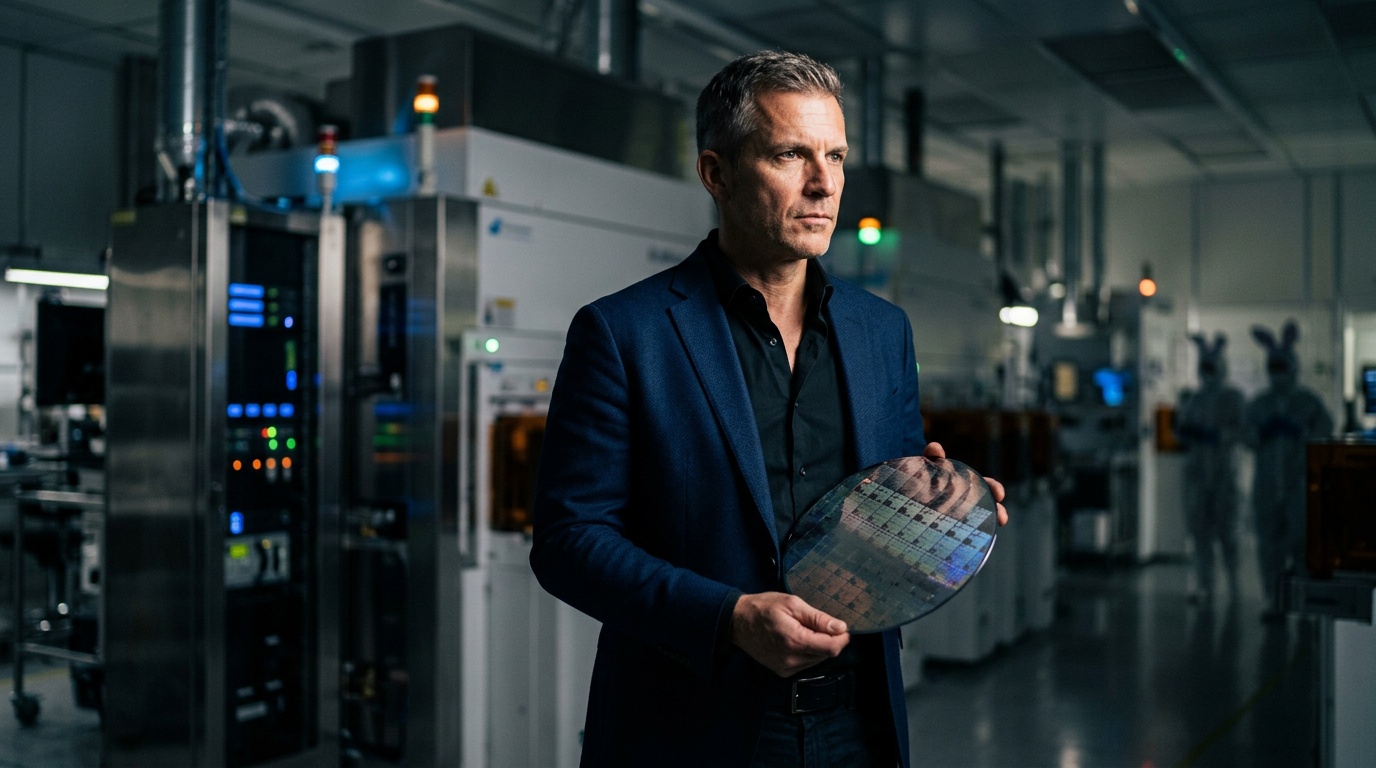
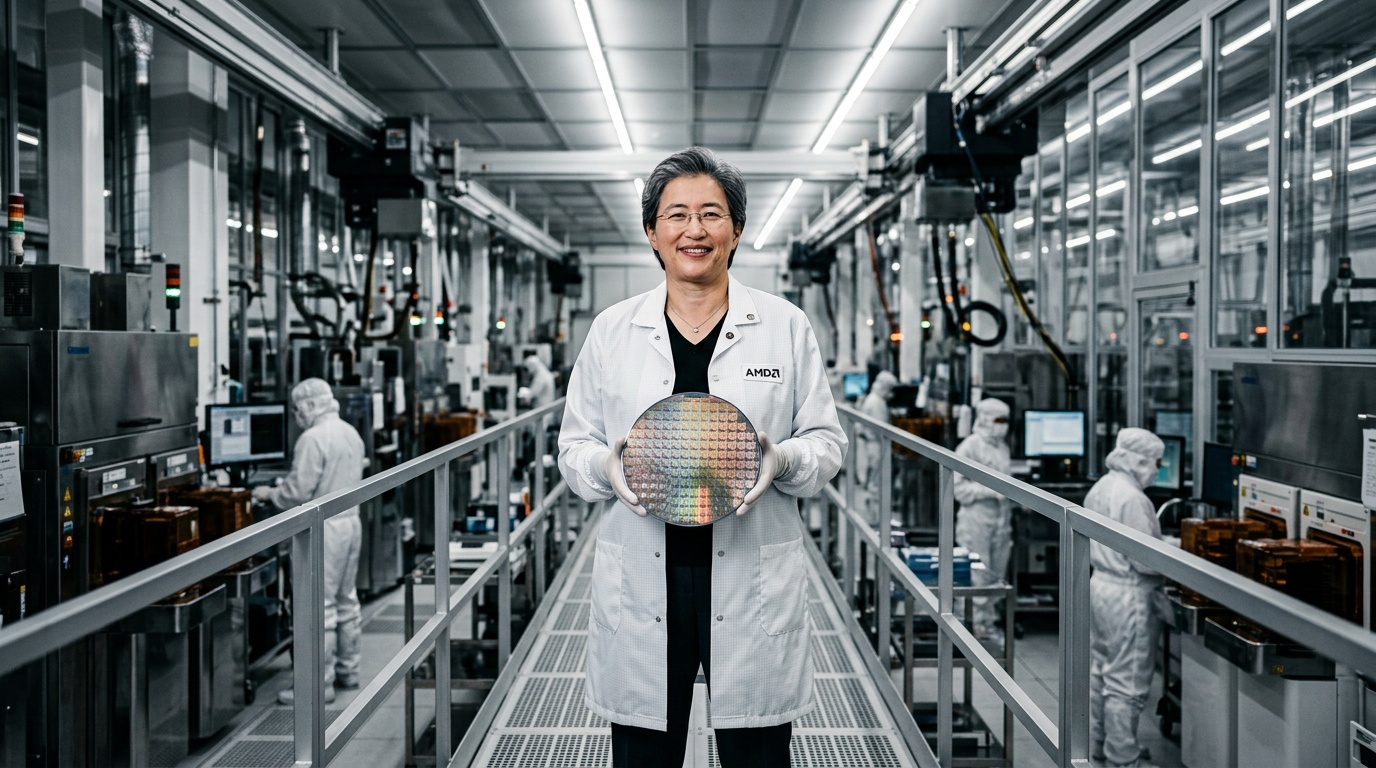
Musk's comments came as he outlined Tesla's plans for Terafab, a proposed semiconductor development facility designed to accelerate the creation of custom AI chips for Optimus. According to Musk, Tesla wants to bring together logic, memory, lithography mask development, packaging, and testing under one roof to dramatically shorten chip development cycles. He even suggested he does not believe "such a building exists anywhere on Earth."
That vision, however, depends on access to advanced memory. Unlike conventional computing workloads, AI systems require enormous amounts of high-speed memory to train and run increasingly sophisticated models. Musk's acknowledgment suggests Tesla is feeling the same supply constraints that have affected much of the AI industry over the past two years.
Why Investors Should Pay Attention
For investors, Micron's mention may have been one of the most revealing moments of Tesla's earnings call. Rather than focusing solely on vehicles or even AI processors, Musk drew attention to another piece of the AI hardware ecosystem that is becoming increasingly difficult to secure.
As Tesla pushes deeper into robotics, autonomous driving, and custom AI silicon, the company's competitive advantage may depend not only on designing better chips but also on securing the memory needed to run them. Musk's brief thank-you to Micron served as a reminder that in the AI race, the next bottleneck may not be the processor itself—it could be the memory sitting beside it.