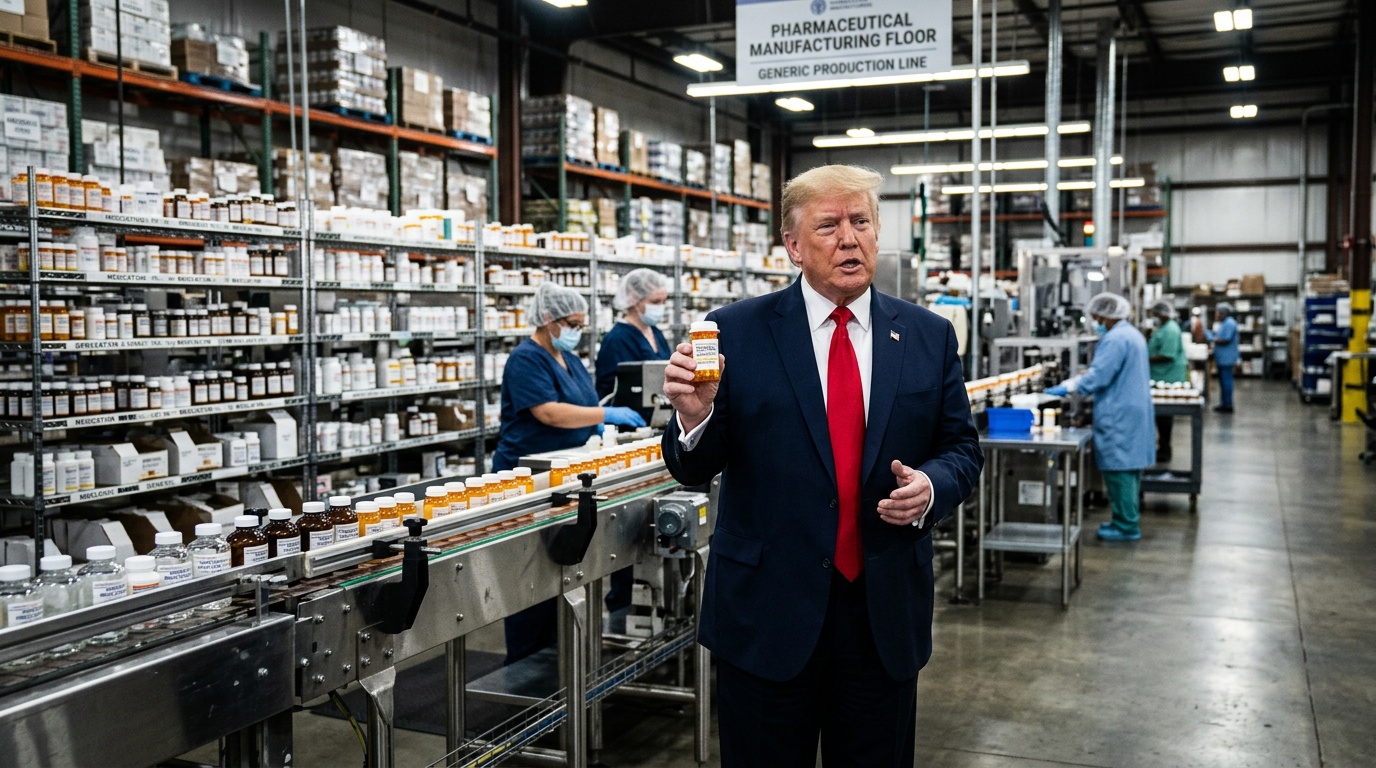
President Donald Trump laid out a clear timeline Tuesday for tariffs on imported generic drugs, giving manufacturers a two-year window to shift production to the U.S. before duties climb as high as 200%.
Starting August 1, imported generic medicines will face a 0% tariff for two years. After that, the rate jumps to 100% for one year, and then to 200% — a level that would effectively make importing generics uneconomical. Trump announced the plan in a post on Truth Social, framing it as a push to bring pharmaceutical manufacturing back to American soil.
“This is done in order to RESHORE Generic Pharmaceutical Production into America,” Trump wrote.
The policy targets a huge chunk of the drug market. According to the Food and Drug Administration, generic drugs account for more than 90% of prescriptions filled in the U.S. So any disruption in their supply chain could have serious consequences for patients and healthcare costs.
Trump’s message to drugmakers is blunt: build plants here, or pay up. Companies that fail to set up domestic manufacturing during the two-year grace period will face escalating penalties. The administration is betting that the threat of 200% tariffs will be enough to spur investment in new facilities.
This generic-drug tariff plan builds on an earlier strategy for branded and patented medicines. Back in December, nine major drugmakers — including Bristol Myers Squibb (BMY), Merck (MRK), Novartis (NVS), Amgen (AMGN), and GSK (GSK) — agreed to lower U.S. drug prices in exchange for temporary tariff exemptions. Those deals were designed to align U.S. prices more closely with those in other developed countries.
Since then, some companies have already started moving. Johnson & Johnson (JNJ) committed to new manufacturing investments earlier this year, and Merck pledged more than $70 billion toward domestic research and production. Trump said pharmaceutical facilities are now being built across the U.S. “at a level never seen before.”
For investors, the key question is which companies are best positioned to weather the transition. Johnson & Johnson currently has a Momentum score in the 84th percentile and a Growth score in the 29th percentile, according to market data. That suggests the stock has strong near-term momentum but may face headwinds on growth.
The clock is ticking. With August 1 as the start date, drugmakers have a clear deadline to begin their shift. The next two years will determine whether the administration’s bet on reshoring generic production pays off — or whether patients end up paying the price.