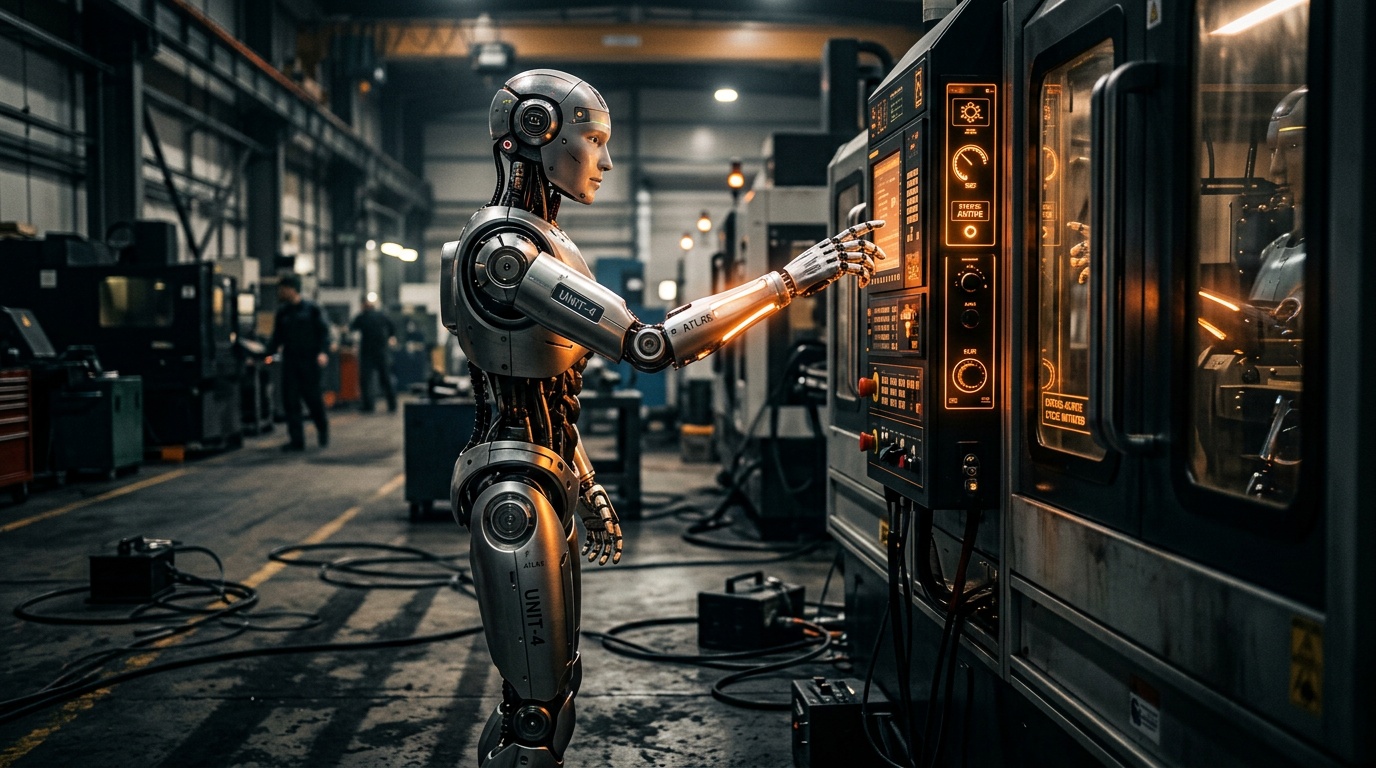
For the past couple of years, if you wanted to invest in artificial intelligence, you bought semiconductor stocks. Nvidia, AMD, maybe some hyperscale data center plays. It was a straightforward bet: AI needs chips, and lots of them. But as the technology matures, the investment narrative is starting to shift. The next big wave, according to some, isn't about the chips that power AI—it's about the robots and machines that put AI to work.
That's the bet VistaShares is making with its new line of ETFs. The firm recently launched the VistaShares Robotics Supercycle ETF (RTOO), alongside the Space Supercycle ETF (GALX) and the Defense Supercycle ETF (AMMO). These funds are designed to ride what VistaShares calls long-term "supercycles" in industries where AI is moving from software into the physical world.
The timing makes sense. For the last two years, AI investing has been dominated by semiconductor companies and the infrastructure needed to train massive models. But now, attention is turning to the hardware that actually does something with all that intelligence—autonomous robots, industrial automation, defense systems, even space technologies. It's a natural evolution, and it's already attracting serious money.
Why Robotics Is Becoming the Next AI Investment Theme
Robotics isn't a new investment theme, but it's getting a fresh look as AI becomes more practical. The Global X Robotics & Artificial Intelligence ETF (BOTZ) already manages about $3.37 billion, and the ROBO Global Robotics & Automation Index ETF (ROBO) has accumulated roughly $1.97 billion over more than a decade. Those are big numbers, and they show that investors are already on board with the idea that robots are the next big thing.
But VistaShares thinks it can do better. Instead of tracking a traditional thematic index, the firm uses a patent-pending "Bill of Materials" investment process. The idea is to analyze supply chains and industry ecosystems to find companies that will benefit from long-term technological shifts—not just the obvious names. CEO Adam Patti has described the approach as more like institutional or hedge fund portfolio construction than passive indexing. It's a way to look beyond the headline companies and find value throughout the value chain.
How VistaShares Is Trying to Stand Out
The three new funds join VistaShares' growing Supercycle ETF family, which already includes the VistaShares Artificial Intelligence Supercycle ETF (AIS) and the VistaShares Electrification Supercycle ETF (POW). The firm's entire ETF lineup recently crossed $2 billion in assets under management, and AIS has been one of the stronger-performing non-leveraged thematic ETFs this year, according to Morningstar data.
Still, VistaShares is entering a competitive market. BOTZ and ROBO are established players with billions in assets. But the firm is betting that active management and an ecosystem-based approach can differentiate it as investors look for the next phase of AI beyond semiconductors. Whether that bet pays off remains to be seen, but the thesis is compelling: AI is moving from the cloud to the factory floor, and the companies that build the robots might be the ones that reap the rewards.