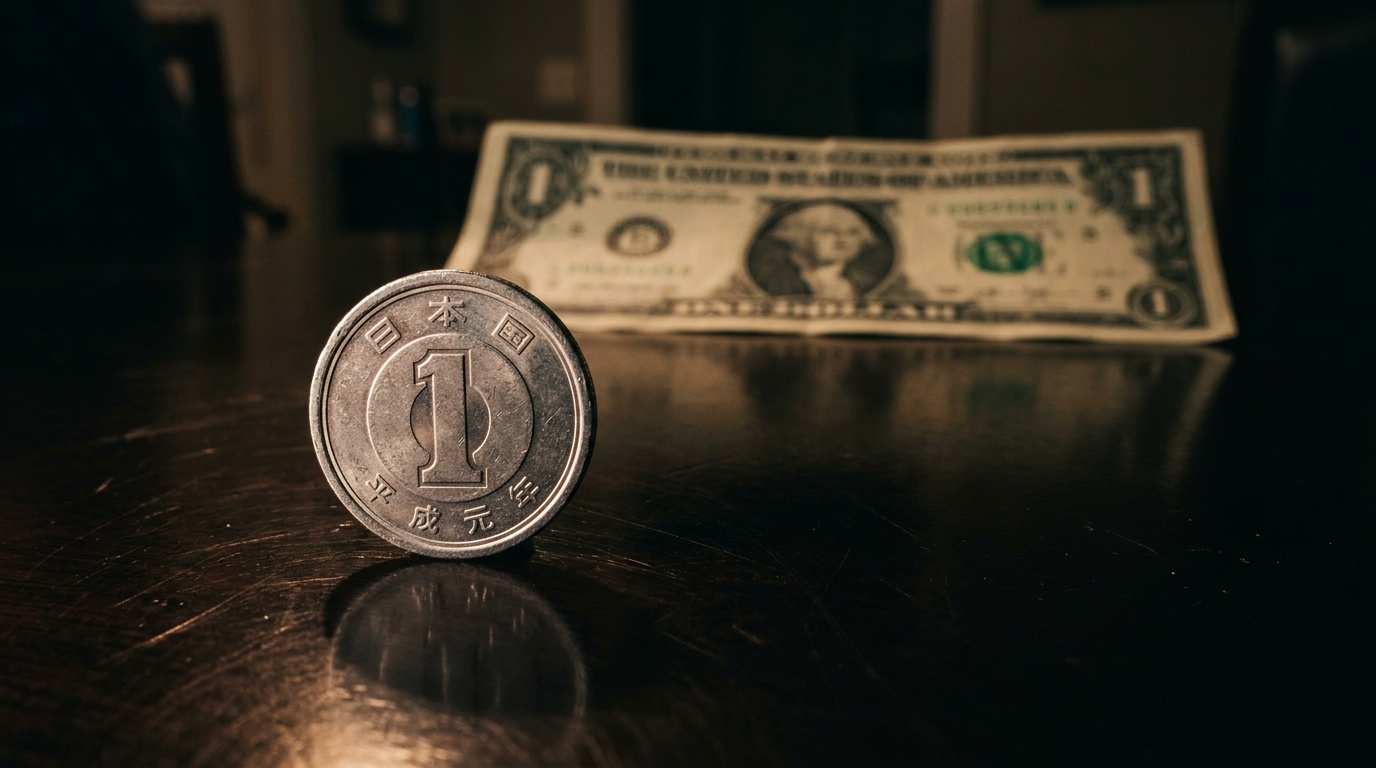
The Japanese yen just hit a level it hasn't seen since Ronald Reagan was in the White House. On Tuesday morning, it took 162.77 yen to buy a single U.S. dollar—the weakest the yen has been in nearly 40 years.
Over the past five years, the dollar has gained almost 50% against the yen. The culprit? A giant interest rate gap between the Federal Reserve and the Bank of Japan. The Fed has been hiking aggressively to fight inflation, while the BoJ has kept rates near zero. That gap creates a powerful incentive for the so-called carry trade: investors borrow yen cheaply, convert it to dollars, and pocket the difference in yields.
The numbers tell the story. The Invesco CurrencyShares Japanese Yen Trust (FXY) has lost nearly 10% over the last twelve months. For anyone holding yen-denominated assets, it's been a painful ride.
As long as the Fed stays hawkish and the BoJ stays dovish, the yen's weakness could persist. For now, the carry trade is alive and well.