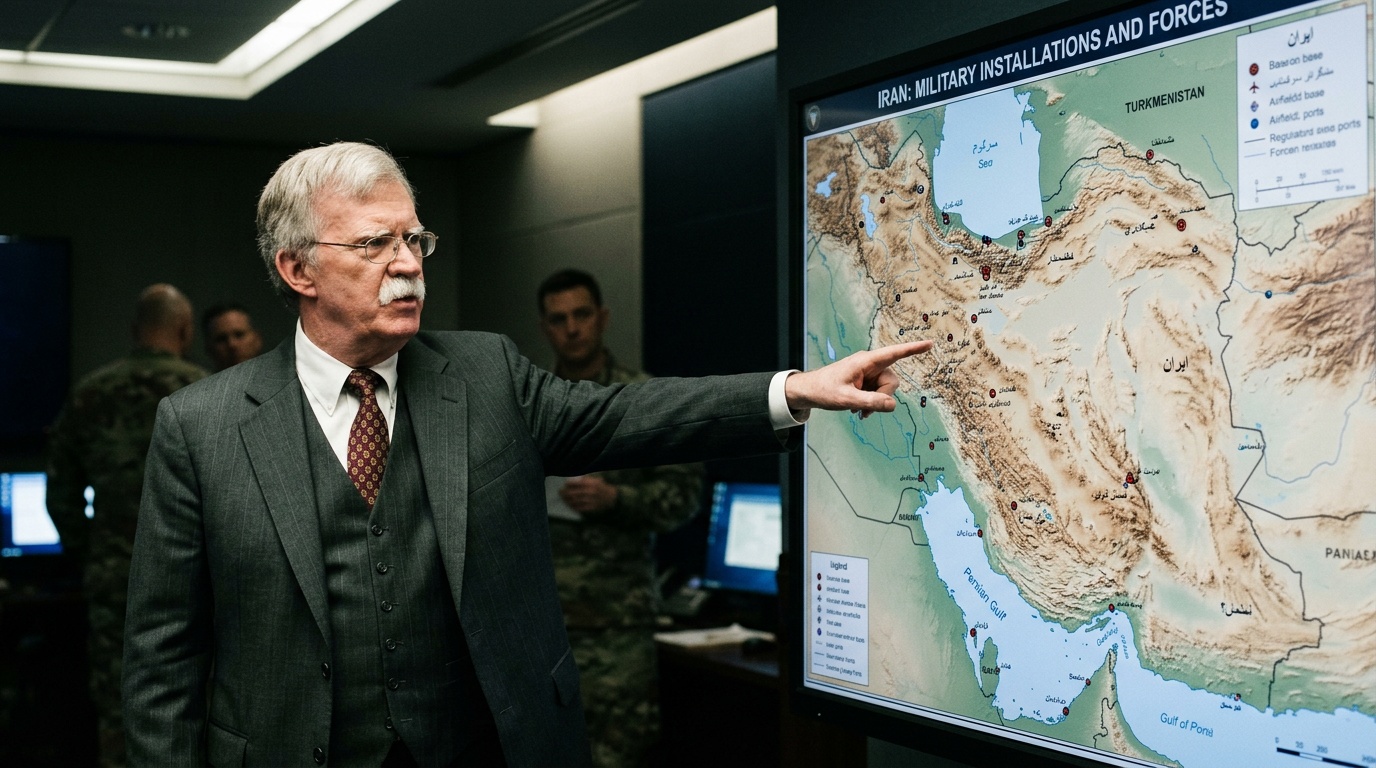
Former National Security Advisor John Bolton has a clear message about who's really running Iran's military: the Islamic Revolutionary Guard Corps, not the country's civilian leaders. And he thinks the U.S. should make destroying the IRGC its top priority.
On Monday, Bolton posted on X while sharing his NewsNation interview, writing, "The Revolutionary Guard is calling the shots in Iran."
He added, "Whatever the civilians are saying means very little when the IRGC is in charge. If we are going to see regime change in Iran, we need to eliminate the IRGC."
During the interview, Bolton argued that Iran's IRGC, rather than the country's civilian leadership, is directing military operations and making key security decisions.
"The Iran Revolutionary Guard is running the military operations," he said.
Bolton Calls For Regime Change
Bolton said recent attacks on U.S. bases in the region and the deaths of American service members warranted a broader military objective.
"Our objective should not just be to retaliate for this particular tragedy, but to flatten the Revolutionary Guard entirely. That's the only way there's a possibility for regime change in Iran," he said.
He also backed maintaining sanctions and a naval blockade while targeting the IRGC's military capabilities.
"The Revolutionary Guard has survived. It still has significant weapons capabilities, missiles, missile launchers, drones, fastboats. Those are all very legitimate targets," Bolton said.
He added that diplomacy was unlikely to succeed because "The Revolutionary Guard are functioning autonomously… They're the ones that need to be eliminated."
US-Iran Conflict Escalates
The U.S.-Iran conflict escalated as the Houthis threatened a maritime blockade against Saudi Arabia, increasing concerns over global energy supplies.
Saudi Arabia warned it would respond with force and boosted security around the Bab el-Mandeb Strait.
On Sunday, the developments followed U.S. strikes on Iranian military targets linked to attacks that killed American service members.
Iran suspended commitments under a U.S.-Iran agreement, warned Gulf nations hosting U.S. forces could face retaliation, and reported casualties and infrastructure damage from the strikes.