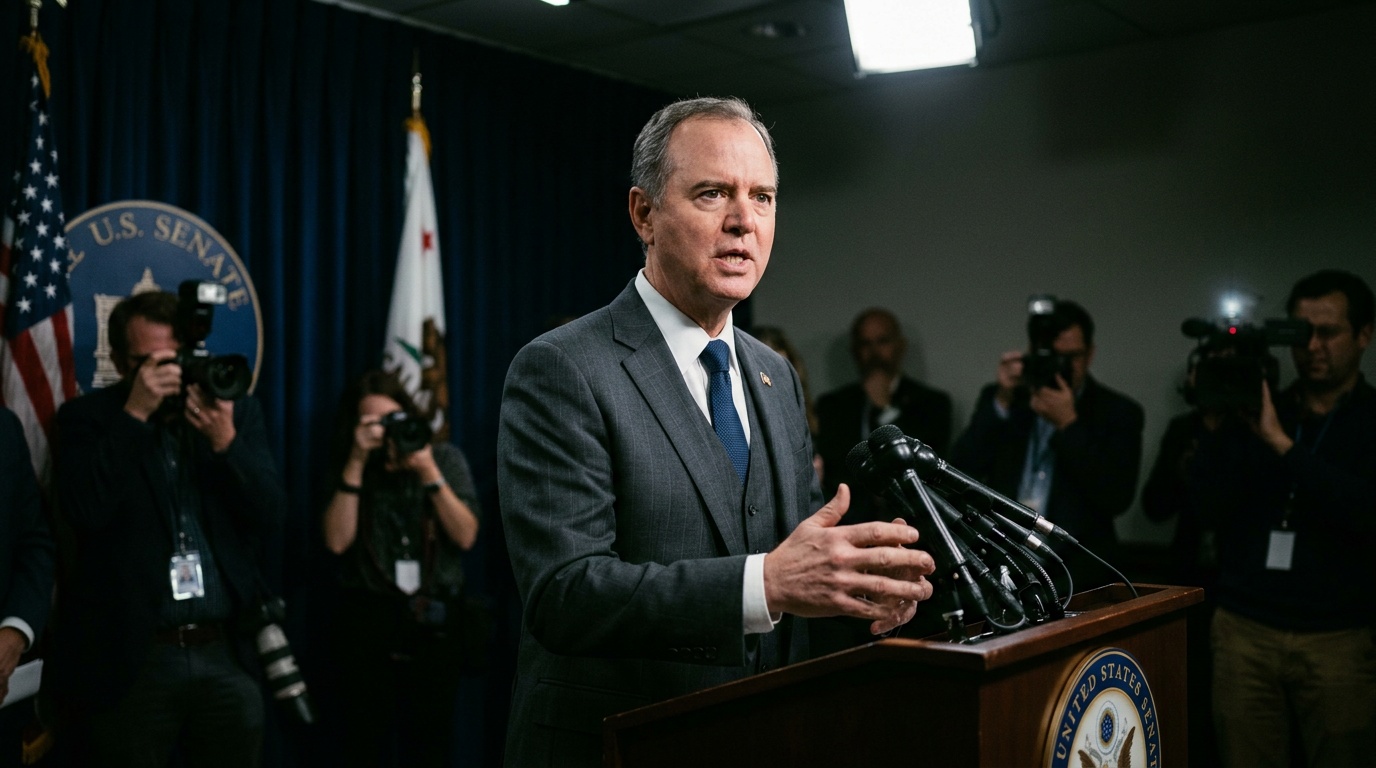
Sen. Adam Schiff (D-Calif.) took aim at President Donald Trump over a reported plan to let deep-pocketed traders pay for early access to his Truth Social posts. Schiff argues the president could personally cash in on messages that move markets.
On Sunday, Schiff posted on X, sharing a CNN interview clip, and accused Trump of using the presidency to line his own pockets. "Trump's latest scheme is to sell early access to his posts for a cool $100,000 a month, and he gets a cut," Schiff wrote. "He gets richer off the presidency, while ordinary families struggle on."
In the CNN interview, Schiff laid out the conflict: Trump owns a big chunk of Truth Social's parent company, and his posts can swing stocks. "You can pay a premium to get, you know, first access to his social media posts that move markets," Schiff said. "This is the president saying, give me a cut, and I'll give you the opportunity to make money off my statements."
The White House didn't immediately respond to requests for comment.
Schiff isn't the only one sounding alarms. Last week, Sen. Elizabeth Warren (D-Mass.) raised questions about a Trump administration teleprompter staffer who allegedly made over $100,000 betting on speeches he helped prepare. "Congress needs to get to the bottom of how far this goes," Warren posted on X.
Economist Peter Schiff and commentator Ed Krassenstein also piled on, arguing that Truth Social's paid data feed could give institutional investors an unfair edge by letting them see Trump's posts before the public.
The service in question is Truth API, a real-time feed launched by Trump Media & Technology Group (DJT). It's designed for trading firms and offers faster access to posts from top Truth Social accounts. Since President Trump uses the platform for policy announcements—and some of his posts have reportedly triggered market reactions—the ethics are, to put it mildly, questionable.
So here's the situation: The president of the United States owns a stake in a social media company that's selling early access to his own words. Critics say it's a recipe for insider trading, or at least a massive conflict of interest. Supporters might call it innovation. Either way, it's a story that's not going away.