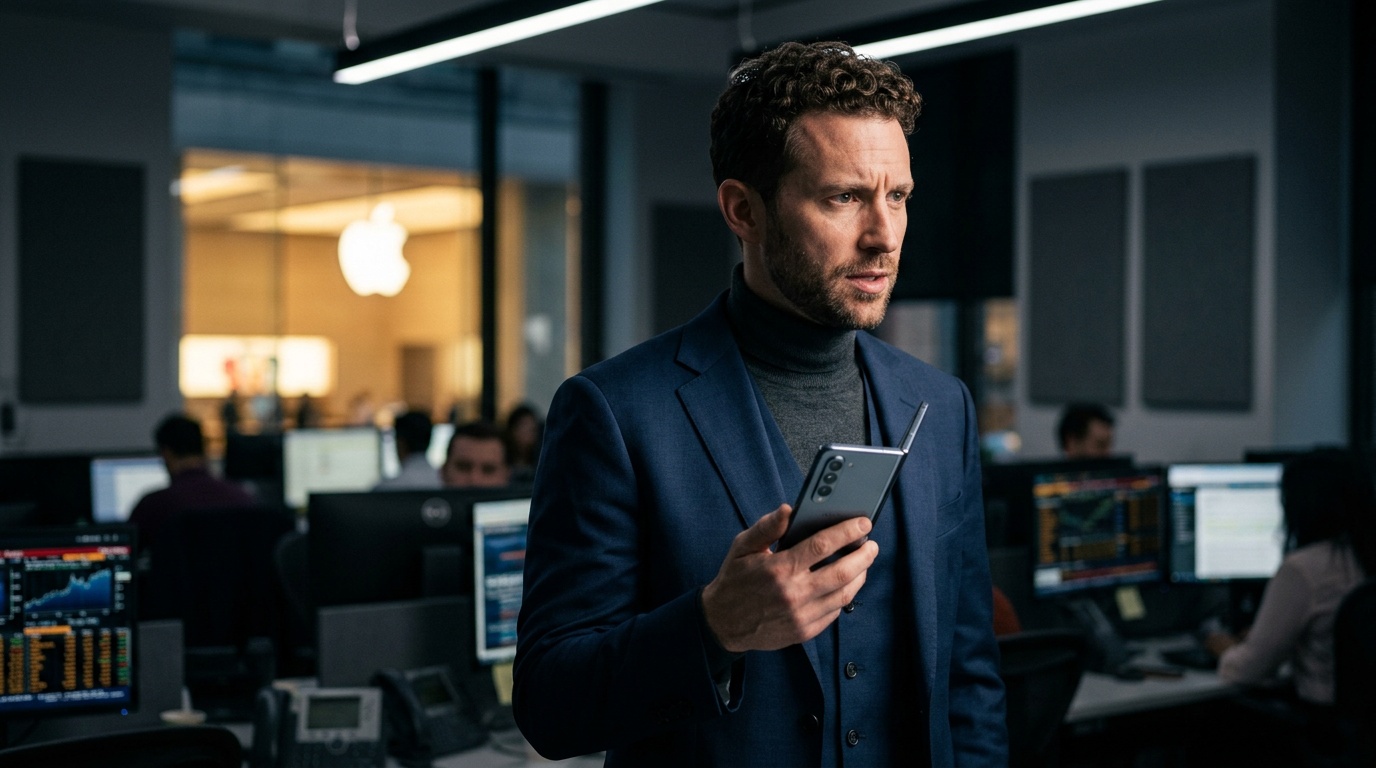
Here's a fun party trick: be the only smartphone maker that doesn't raise prices during a global memory shortage. That's basically what Apple (AAPL) pulled off in the second quarter, and it paid off in a big way.
According to Counterpoint Research, Apple's global smartphone shipments rose 3% year over year in Q2, while its market share hit a record 20% for the period. That might not sound earth-shattering, but consider this: the rest of the industry was in freefall. Global smartphone shipments fell 11% year over year — the lowest second-quarter level since 2013. The culprit? A nasty shortage of DRAM and NAND memory that pushed up production costs and, for most companies, consumer prices.
Apple, though, held the line. It was the only major smartphone maker that didn't raise handset prices during the quarter, even as memory costs went through the roof. That's a big deal when your competitors are passing those costs along to customers.
How Apple Did It
The growth was driven by continued demand for the iPhone 17 lineup, which remained the world's top-shipped smartphone family during the quarter. But it wasn't all smooth sailing. Counterpoint noted that China remained a weak spot, where Apple's shipments declined from a year earlier despite promotions ahead of the annual 618 shopping festival. Older iPhone models also faced softer demand as component allocations favored newer devices.
Meanwhile, Samsung (SSNLF) regained the top spot in global smartphone shipments with a 24% market share, helped by strong Galaxy S26 sales and aggressive promotions. Xiaomi (XIACY), OPPO, and vivo all posted double-digit shipment declines — their heavier exposure to lower-priced devices made them more vulnerable to rising memory costs.
The Memory Crisis Isn't Going Away
Counterpoint Senior Analyst Shilpi Jain put it bluntly: "The global memory crisis has now overtaken every other factor as the single biggest drag on the smartphone industry." She added that rising component costs, geopolitical tensions, higher shipping expenses, and weaker consumer sentiment are hurting demand, particularly in entry-level and midrange smartphones.
The firm expects industry conditions to remain difficult through the rest of 2026 and believes the memory shortage could persist into 2027. While premium smartphones are expected to remain relatively resilient — thanks to financing offers, ecosystem loyalty, and AI-driven features — overall demand is unlikely to recover meaningfully until memory supply improves.
As for Apple's stock, shares were down 1.06% at $313.95 during premarket trading on Tuesday, approaching its 52-week high of $323.45.