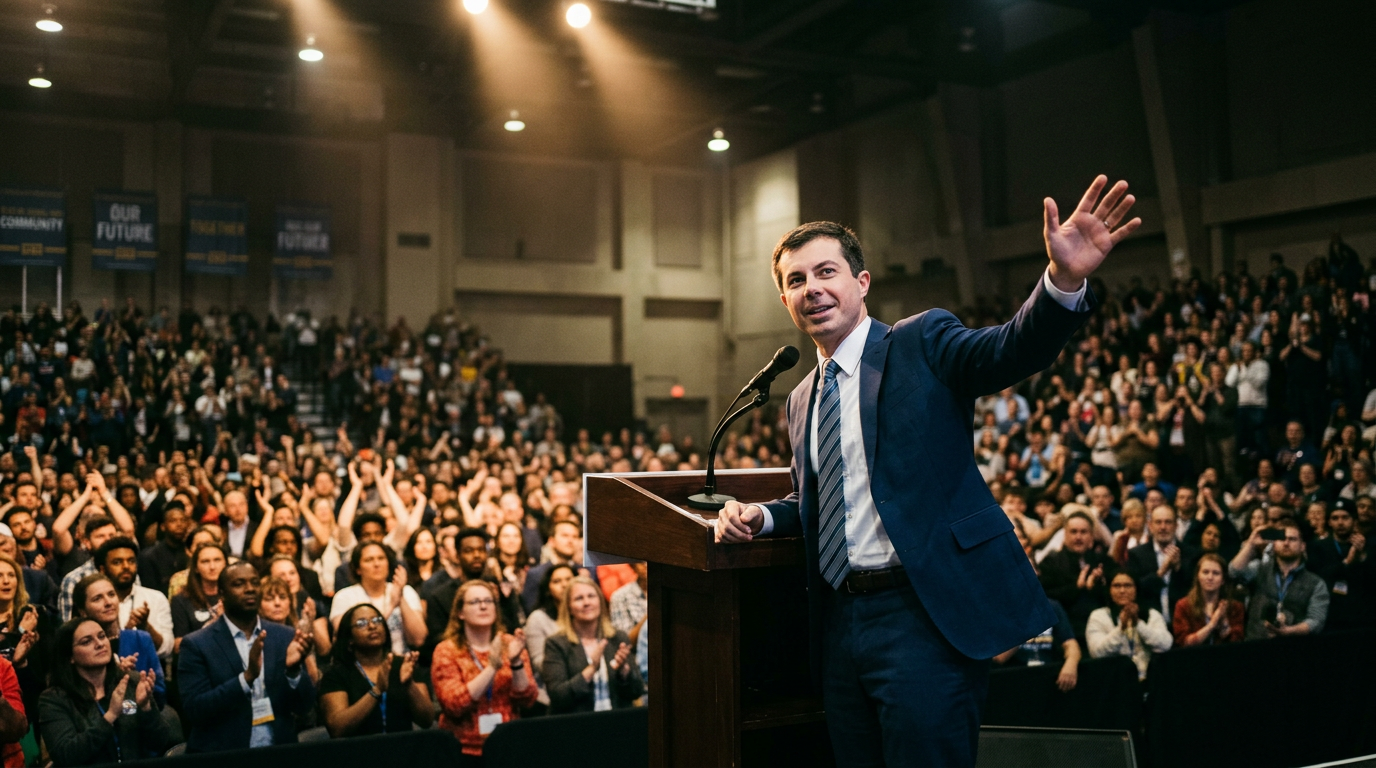
Former Transportation Secretary Pete Buttigieg has a message for Americans who feel outnumbered when they push for things like affordable health care, better schools, and decent roads: you're actually part of a pretty big club.
On Saturday, Buttigieg posted on X alongside a clip of a speech, writing, "You are not alone if you believe that every American should have access to affordable health care, good roads, and great public schools. You are in fact part of a powerful American majority."
In the video, Buttigieg acknowledged that if you live in a politically competitive or Republican-leaning area, it can sometimes feel like your views are unpopular. "When you live in one of these kind of purple or some would say reddish areas, sometimes the world has a way of making you think that you're part of some tiny minority," he said.
But he pushed back on that idea, arguing that support for expanding health care access, investing in education, and improving infrastructure isn't a fringe position—it's widespread. "Turns out that if you think health care ought to be available to every single American, you're part of a majority, not a minority, to believe that," he said.
Buttigieg also questioned why a wealthy nation can't provide better-funded education, rural hospitals, and reliable roads. And he made the case that wealthy Americans should pay more in taxes to support these public services. "It turns out most people agree with you," he said. "So don't let anybody make you feel like you're alone."
Meanwhile, the Trump administration is also taking aim at health care costs—from a different angle. It recently proposed a rule to prevent hospitals from marking up discounted Medicare drugs, a move that could save consumers an estimated $1.1 billion next year. The plan would change payments under the 340B drug program to better reflect hospitals' actual costs.
Billionaire entrepreneur Mark Cuban has backed efforts to reduce health care expenses but warned that insurers and hospitals could weaken reforms without greater pricing transparency. He called for public disclosure of contracts and stricter penalties for companies that avoid cost-cutting measures.
And the pressure on health care costs is real. The Kobeissi Letter recently warned that rising insurance costs continue to strain employers and workers, projecting that health benefit costs per employee could rise 6.7% in 2026 to at least $18,500.
So whether it's Buttigieg's call for a broader social safety net or the administration's push to cut drug prices, the debate over health care affordability is clearly front and center—and both sides seem to agree that something needs to change.