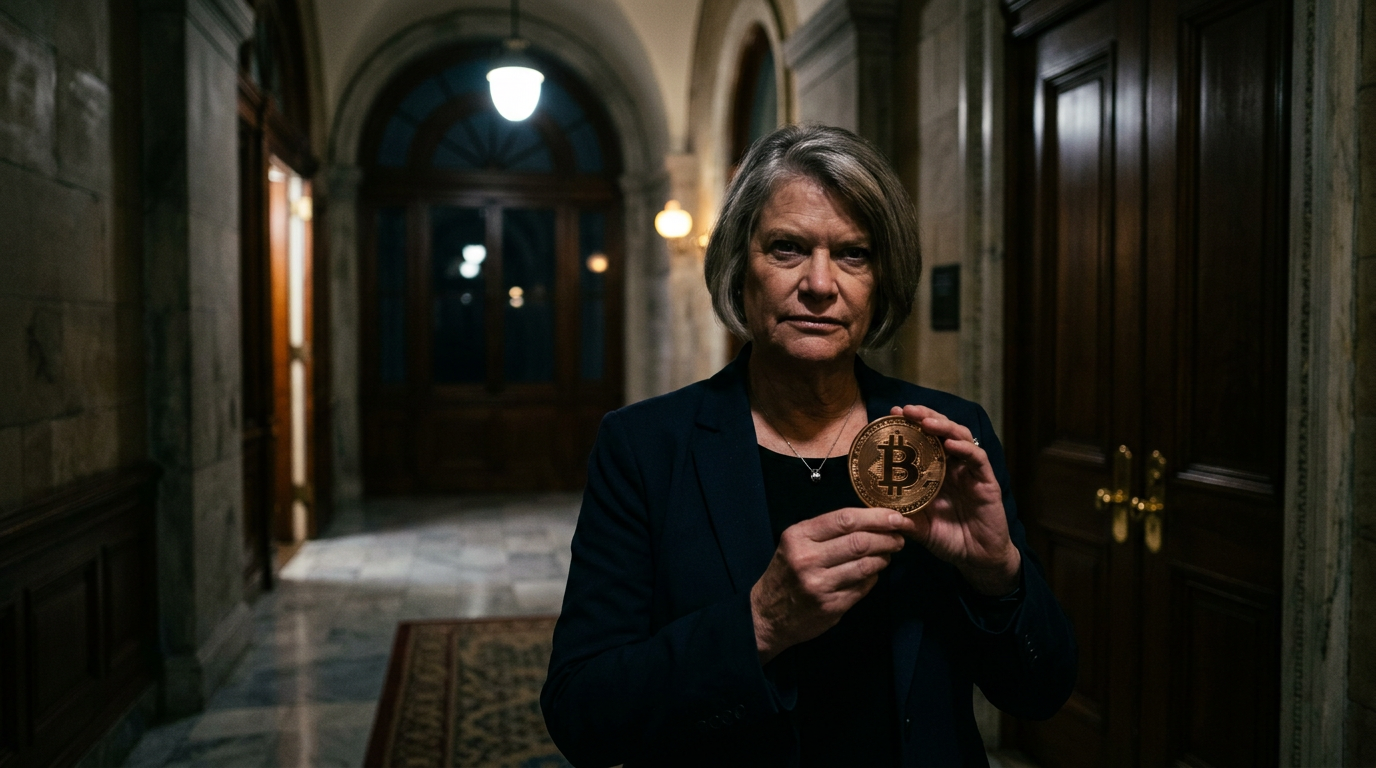
Senator Cynthia Lummis (R-Wyo.) has a bold idea for tackling America's $39 trillion national debt: buy Bitcoin. In a Wednesday podcast with Bitcoin Magazine, she laid out a plan that sounds almost too good to be true—and maybe it is.
Lummis said that if the U.S. acquired just 5% of the world's Bitcoin supply—roughly 1 million BTC—and held it for 20 years, the value could grow enough to cut the national debt by one-third to one-half. “And if we held even more than 5% of the world's Bitcoin, it could actually erase our debt,” she said. “So this is an important asset in a buy-and-hold strategy.”
That's a stunning claim. Bitcoin (BTC) currently trades around $60,726, down nearly 52% from its all-time high of $126,198 set last October. But Lummis is thinking long-term. Her BITCOIN Act, which she's been pushing for a while, would have the U.S. buy 1 million BTC over five years using what she calls “budget-neutral” strategies—things like reallocating Federal Reserve remittances and revaluing gold certificates. The U.S. government already holds 328,352 BTC, worth about $20.29 billion, mostly from seizures. So the plan would roughly triple that stash.
Lummis isn't optimistic about the bill's chances in the Senate, but she's hopeful the House version, introduced by Rep. Nick Begich (R-AK), might pass. The idea is that Bitcoin, with its fixed supply of 21 million coins, could appreciate dramatically as adoption grows, turning a small initial investment into a debt-busting windfall.
But critics have plenty of concerns. For one, selling over 8,000 tonnes of U.S. gold reserves to fund Bitcoin purchases could depress global gold prices and damage the credibility of U.S. reserves. And Bitcoin's volatility is a major risk—it's already fallen 52% from its peak. “It can drive prices higher during accumulation phases while increasing the risk of sharp reversals afterward,” critics note. In other words, the same volatility that could make the plan work could also blow it up.
Lummis also used the podcast to push for regulatory clarity. “Digital asset innovation doesn't wait for regulatory clarity. It just moves somewhere else,” she tweeted. “I refuse to let that keep happening on my watch.” She said the Senate is preparing to move forward with cryptocurrency market structure legislation, called the Clarity Act, in July. And she pushed back against critics like JPMorgan Chase CEO Jamie Dimon, who has long been skeptical of crypto.
So, can Bitcoin really erase the national debt? It's a compelling narrative, but the math depends on Bitcoin's price growing exponentially over two decades—and staying there. For now, it's a bet on the future of money, with all the risks that entails.