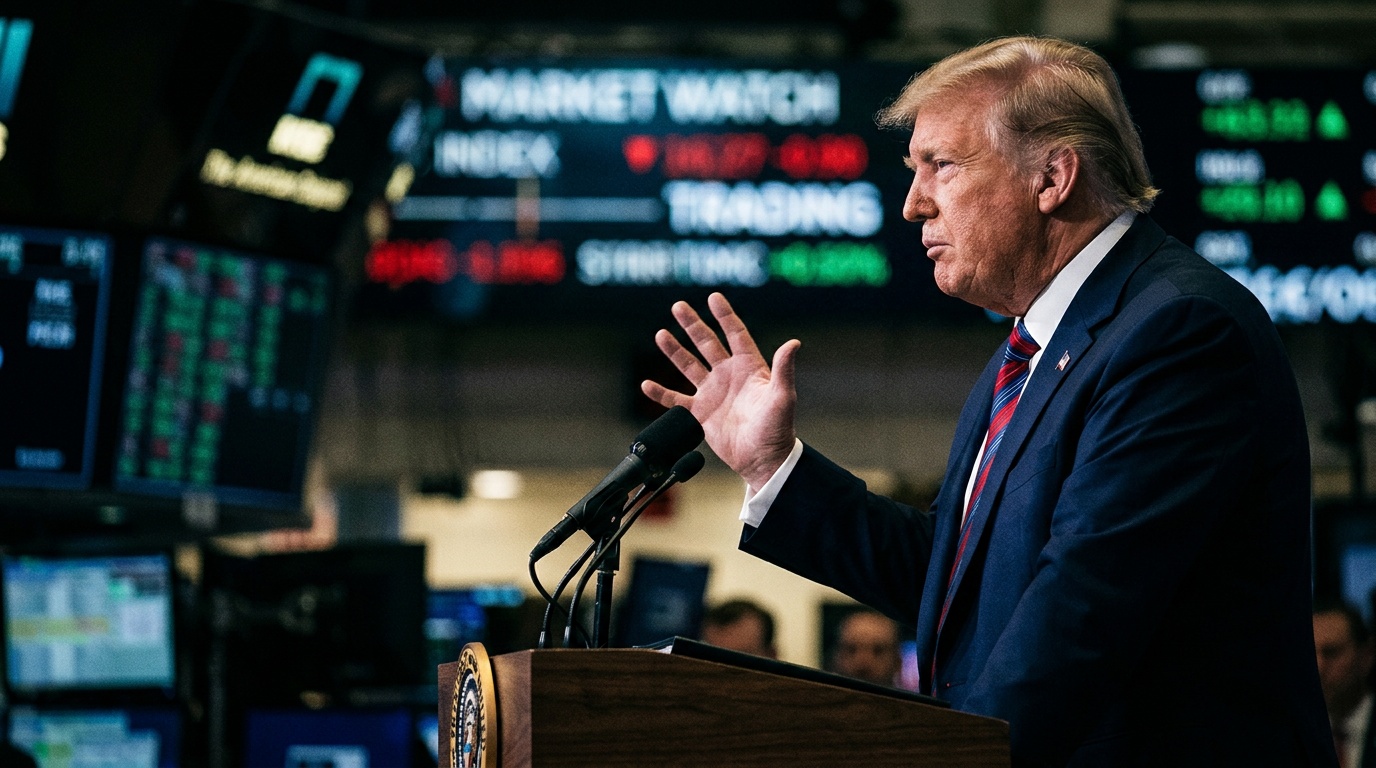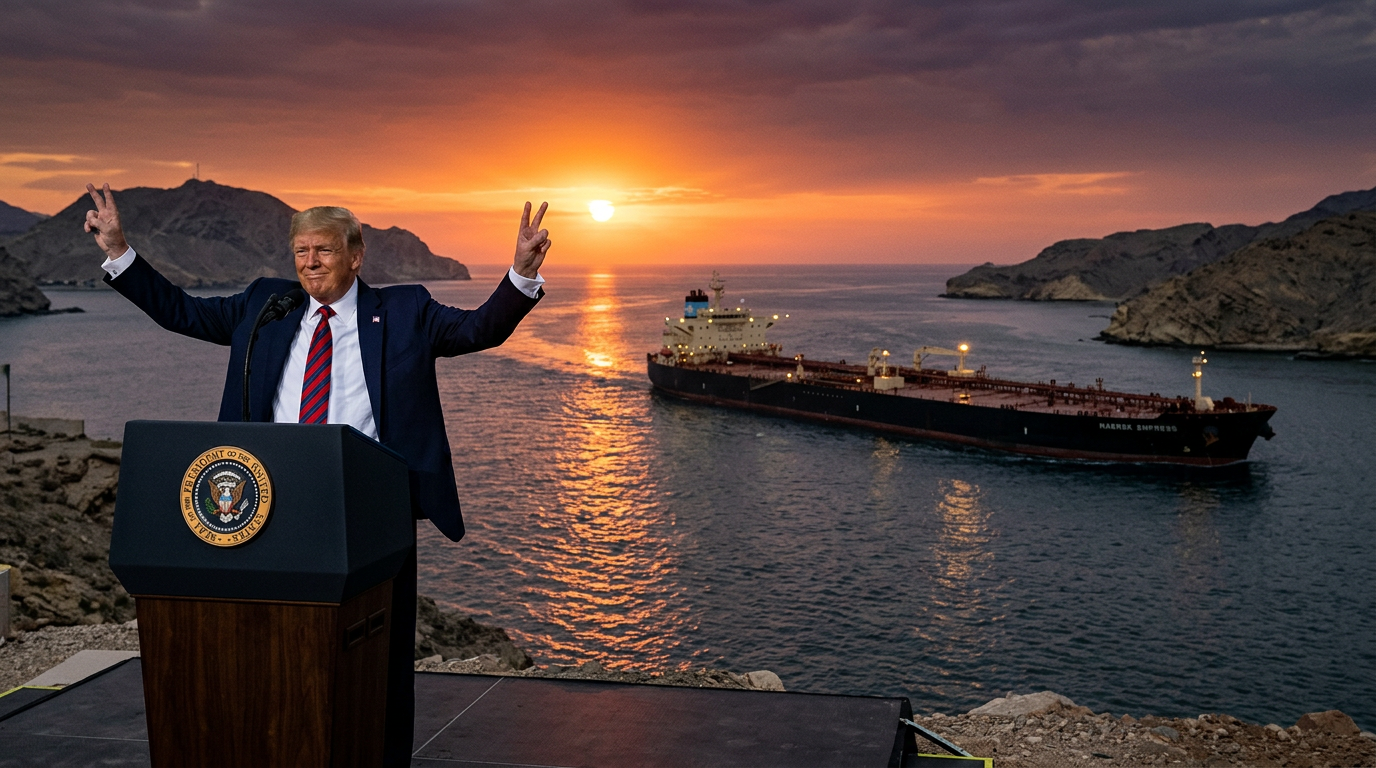
President Donald Trump is celebrating a big number: 19 million barrels of oil flowing through the Strait of Hormuz in a single day. That's an "all time RECORD," he said on Truth Social Tuesday, and it's helping push oil prices down.
"Oil prices are tumbling down, and the World is a much safer place!!!" Trump wrote.
It's a nice headline, but the situation around the Strait of Hormuz is still complicated. Iran's Parliament Speaker Mohammad Bagher Ghalibaf recently said that under the U.S.-Iran agreement, Iran will keep control over the strait, and it won't return to its "pre-war" status. Ships will get free passage for 60 days under a joint administration with Oman, but that's not exactly a permanent solution.
This came after Iran's Foreign Minister Seyed Abbas Araghchi announced that the U.S. had lifted its naval blockade of the strait and waived oil export restrictions. So things are moving in the right direction, but there are still plenty of reasons to be nervous.
Last week, U.S. intelligence agencies reportedly found that Iran can now shut the Strait of Hormuz "at will" and could use the Houthis to threaten shipping through the Bab-el-Mandeb Strait, despite the deal. That's a major risk to global trade and the economy.
Oil market expert Dan Dicker has warned that crude prices could rally sharply because global oil inventories are shrinking. He noted that executives from Chevron Corp. (CVX) and Exxon Mobil Corp. (XOM) have said they can't rapidly make up for shrinking inventories if supply conditions worsen. So even with the Hormuz flow hitting records, the underlying supply picture is tight.
Kpler data from Tuesday shows crude inventories at Cushing, Oklahoma—the key U.S. oil storage hub—have fallen by about 11 million barrels since early May. If the current drawdown pace continues, stocks could approach operational minimum levels by mid-July. That's a warning signal.
On the bright side, Kpler also reported that traffic through the Strait of Hormuz surged between June 19 and 21, with 71 confirmed vessel transits and a peak of 35 crossings on June 20. So the record flow is real.
As of Tuesday, Brent crude was trading 0.63% lower at $75.39 per barrel, while WTI futures were down 0.68% at $73.35 per barrel. Lower prices for now, but the market is watching those inventories closely.