Four words. That is genuinely all it took.
Jensen Huang walked onto the Computex stage in Taipei on June 2 with Marvell CEO Matt Murphy standing beside him and told the room that Marvell could be the next trillion-dollar company.
By the closing bell, Marvell Technology (MRVL) had gained 32.52%, settling at $290.79 on volume running more than triple its three-month daily average. Market capitalization grew by north of $40 billion in a single afternoon. Put holders watched positions built on reasonable assumptions become essentially worthless as the stock erased every level that previously looked like resistance.
Then Wednesday arrived, and the buying continued, with premarket gains suggesting the market had not finished working through what Huang's words actually mean for where Marvell sits inside the AI infrastructure stack.
Why Those Words Hit as Hard as They Did
Huang is not someone who makes predictions casually from a podium. When the chief executive of the most consequential semiconductor company alive climbs onto a stage alongside a partner's CEO and describes that partner as the next trillion-dollar company, the investment community does not treat it as a throwaway line. It treats it as a map.
The relationship Huang was describing on stage did not begin at Computex. Nvidia (NVDA) made a $2 billion strategic investment in Marvell back in March 2026, anchored around NVLink Fusion, the platform Nvidia built to support heterogeneous AI infrastructure.
What NVLink Fusion actually solves is a problem hyperscalers had been carrying quietly for years: the desire for custom silicon without abandoning the software ecosystem that Nvidia's platform provides.
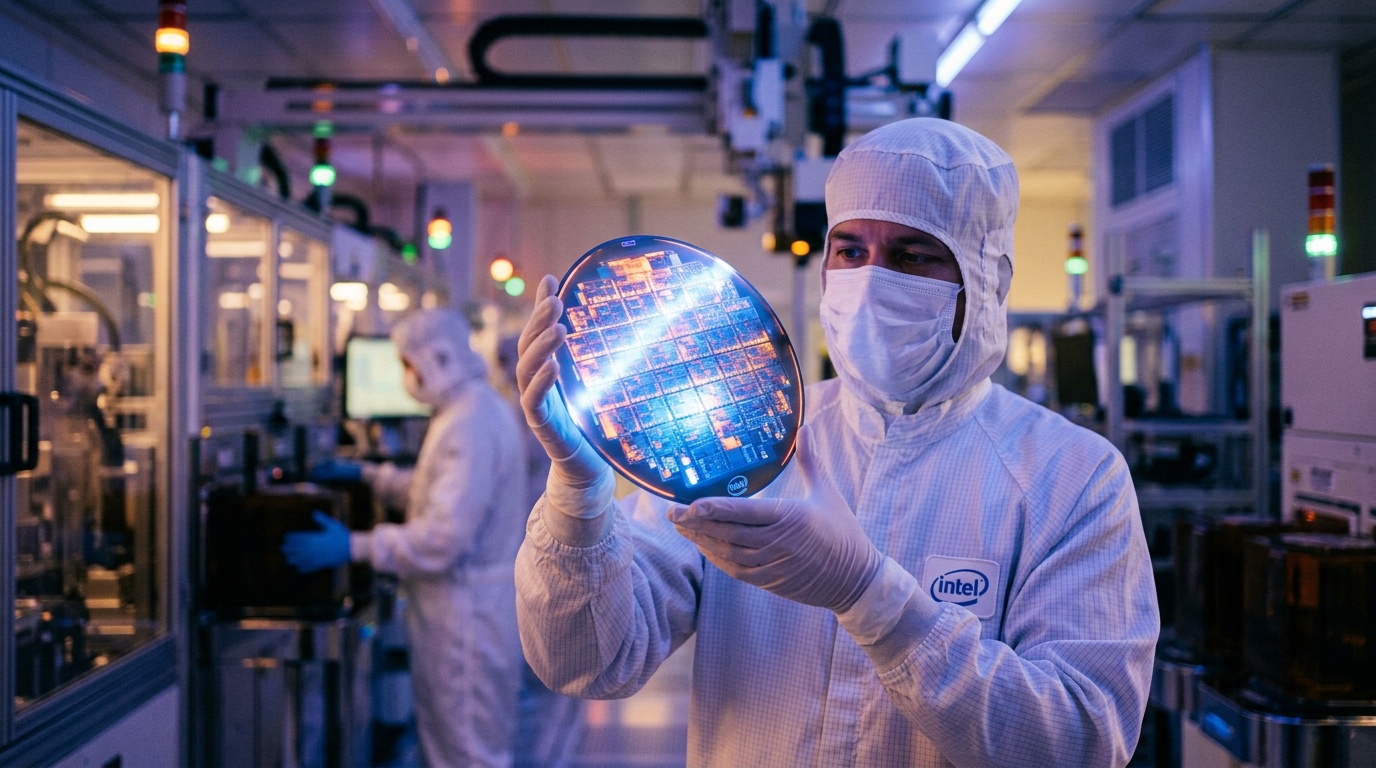
Through the partnership, Marvell's custom application-specific chips and networking silicon sit natively inside the NVLink stack alongside Nvidia's own Vera processors, ConnectX network cards, BlueField data units, and Spectrum-X switches.
That level of integration puts Marvell well beyond the category of preferred vendor. It makes the company a structural component of how the next generation of AI data centers gets built.
At Computex, Huang pushed the framing further. He described a future where optical interconnects replace copper as the connective tissue of AI factories, and placed Marvell at the center of that transition through its work in silicon photonics and scale-up networking. The Teralynx T100 switch chip, Marvell unveiled alongside those comments, added hardware credibility to the vision: a 102.4 terabit-per-second device engineered for the environments where thousands of accelerators need to behave as a single unified system.
The Business Underneath the Headlines
Huang's endorsement would have landed differently if Marvell's own numbers had not already been moving in the right direction. They have been.
First quarter fiscal 2027 revenue reached a record $2.418 billion, up 28% from the same period a year earlier. Non-GAAP gross margin came in at 58.9%. Operating cash flow for the quarter hit $638.8 million, also a company record.
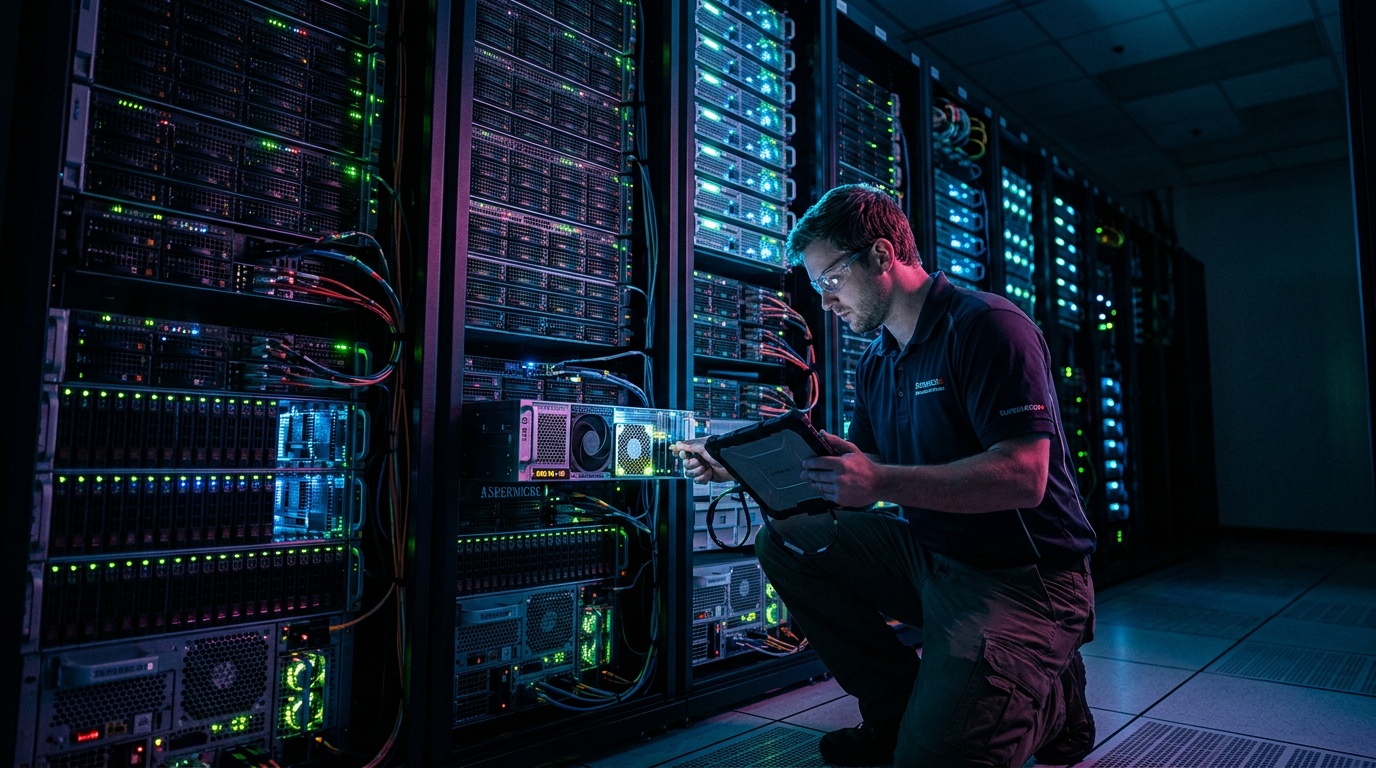
Two years ago, data center work represented about half of what Marvell brought in. Today, that number sits at roughly 74%, a shift that did not happen by accident but through a deliberate repositioning of the entire business toward the part of the technology economy growing faster than almost anything else.
Amazon, Microsoft, and Google collectively represent the bulk of that demand, which creates both a powerful growth engine and a concentration risk worth understanding clearly.
The revenue ambition Marvell has put on record publicly is $10 billion in custom chip revenue by fiscal 2029. The custom ASIC market is currently expanding at approximately 45% annually, a rate that outpaces even the GPU market, driven by hyperscalers routing specific high-volume AI workloads through purpose-built chips rather than general-purpose processors.
The economics are straightforward: custom silicon handles defined tasks at lower power draw and lower operating cost than a GPU designed to handle everything. The two companies hyperscalers call when they want that kind of chip are Broadcom (AVGO) and Marvell.
Evercore's Read and What It Adds
Evercore ISI weighed in following the Computex session, describing Marvell as a critical strategic supplier embedded inside the infrastructure layer that AI scaling depends on. That framing aligned precisely with what Huang communicated on stage, and it carries analytical weight independent of the endorsement. Evercore was not simply echoing the excitement. It was confirming that the competitive position Huang described maps onto a real and durable business reality.
The Honest Caveat
Marvell's market capitalization sits around $190 billion after two days of gains. Huang's trillion-dollar destination implies a roughly fivefold journey from that figure. Between here and there are real risks. Customer concentration at the top of the revenue stack means that changes in capital spending at Amazon, Microsoft, or Google create direct consequences for Marvell's income statement. The valuation multiple the stock now carries leaves limited room for execution and stumbles on the path toward $10 billion in custom chip revenue.
Matt Murphy has been running this company since July 2016. Shares have climbed more than 2,700% on his watch against roughly 450% for the Nasdaq over the same stretch. Tuesday added another chapter to that run. Whether the next chapter reaches the destination Huang described depends on whether Marvell keeps building the evidence that the prediction was earned rather than simply generous.