America's emergency oil reserve is shrinking at the fastest pace in history. The Strategic Petroleum Reserve (SPR) fell by nearly 10 million barrels according to the latest report by the Energy Information Administration (EIA).
It was the largest weekly drawdown on record, pushing total inventories below 375 million barrels. That number is less than half the levels the reserve held at its 2009 peak — far below the cushion Washington once relied on during global supply shocks.
Political Promises
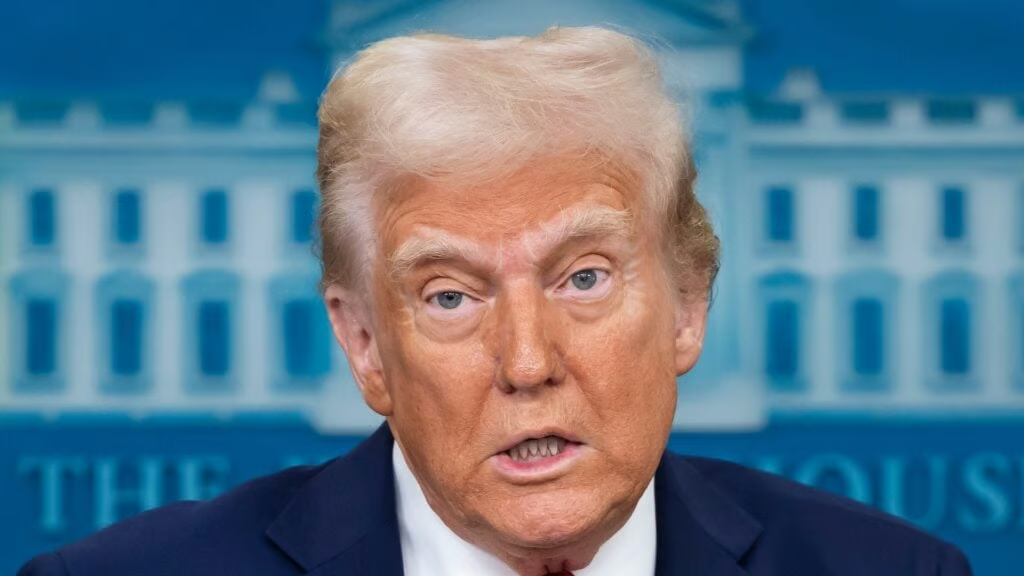
The timing is politically uncomfortable for President Donald Trump. On his campaign trail, Trump repeatedly promised to refill the SPR after criticizing the Biden administration's massive 2022 and 2023 releases. Yet the war with Iran reversed the initial 22 million-barrel gain through 2025.
The administration is draining emergency crude reserves again while oil prices remain above $100 a barrel and geopolitical tensions continue to threaten global supply routes.
The contradiction reflects a deeper problem inside the U.S. energy market. The long-promised surge in domestic production is failing to materialize.
While surging prices helped increase domestic oil and gas rig count, Reuters reported that the total count still remains down 4% year-over-year. Overall, the count declined by 7% in 2025, 5% in 2024, and as much as 20% in 2023 as lower prices suppressed production.
That decline leaves the White House relying on the SPR as a pressure valve. While rebuilding the reserve is difficult at current prices, the administration has, once again, made promises.
"We'll leave it fuller than when we started," Energy Secretary Chris Wright said, according to OilPrice. He explained that the plan is to add 1.2 barrels to the SPR for every single barrel that is currently being released.
But aggressively repurchasing crude at $100 or more would force the government to lock in losses on barrels it previously sold at far lower prices.
For now, Washington appears to be making the same calculation many consumers are making: postpone the pain and hope prices eventually cool. The danger, however, is that the margin for error is disappearing.
The Disappearing Buffer
Analysts at Standard Chartered warned that U.S. emergency inventories are approaching operational limits after two consecutive weeks of record withdrawals. The SPR still maintains substantial withdrawal capacity, but the broader issue is psychological as much as logistical.
Markets know the reserve is no longer the massive buffer it once was. Thus, that fact changes the pricing of the future disruptions.
The global oil market remains heavily headline-driven, swinging sharply on developments tied to Iran, the Strait of Hormuz, and changing sanctions policies.
Brent crude briefly traded above $108 this month while physical cargo premiums surged during the height of tanker disruption fears. Although prices later eased on reports of renewed U.S.-Iran negotiations, volatility remains high.
The reserve, created in the turbulent era of the 1970s, exists precisely for moments like these. But, if inventories continue to deplete at this pace, the next disruption — whether a refinery outage, a hurricane in the Gulf, or renewed conflict in the Middle East — could hit consumers almost immediately through gasoline and diesel prices.
For energy investors, the market is becoming increasingly binary.
Either diplomacy eventually delivers additional supply and stabilizes crude markets, or the SPR continues acting as America's last line of defense until inventories become too thin to matter. If that happens, physical crude premiums could spike again, dragging futures prices sharply higher.
United States Oil Fund (USO) is up 109.21% year-to-date.