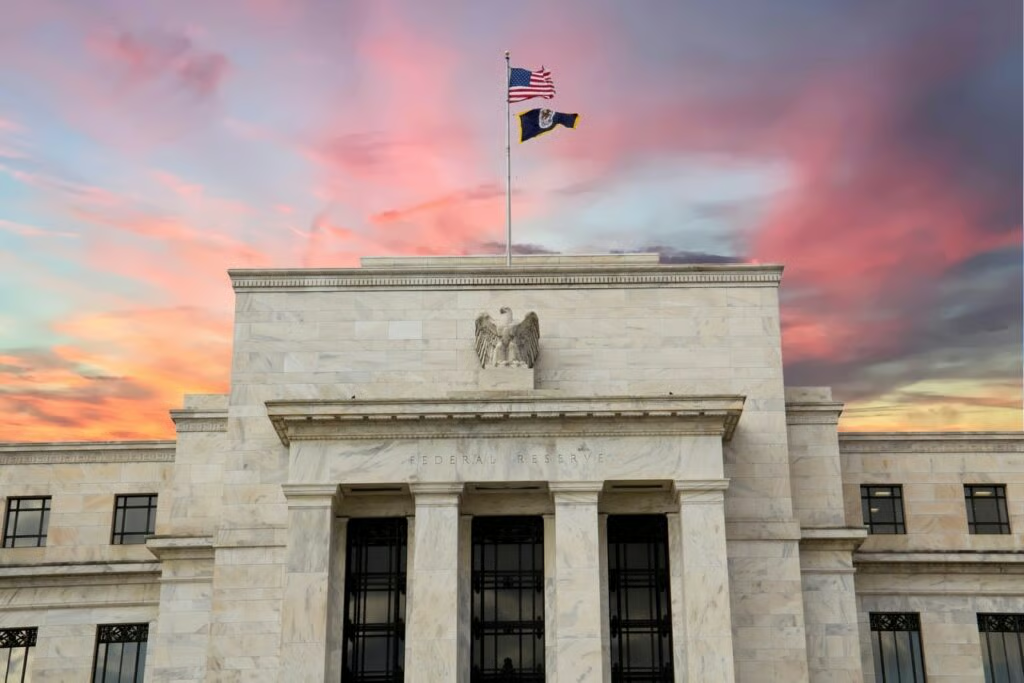
The Federal Reserve walked into its April meeting expecting to talk about cutting rates.
It walked out debating when to raise them.
Minutes from the April 28-29 meeting, released Wednesday afternoon, showed a striking shift in the tone of the Federal Open Market Committee.
The Middle East conflict, which has kept the Strait of Hormuz blocked since late February, has pushed oil higher, lifted near-term inflation expectations, and forced policymakers to seriously entertain a scenario most had dismissed only months earlier: that the next move on rates could be up, not down.
According to the minutes, a majority of officials signaled that some policy tightening would likely become appropriate if inflation were to continue running persistently above 2%.
Many participants said they would have preferred to strip the easing bias entirely from the post-meeting statement.
Three regional Fed presidents — Beth Hammack, Neel Kashkari and Lorie Logan — formally dissented on that point. They backed the decision to hold rates at 3.5%-3.75% but objected to the statement still hinting at lower rates ahead.
A fourth dissenter, Governor Stephen Miran, wanted a 25-basis-point cut immediately.
Why The Tone Shifted
Total Personal Consumption Expenditure (PCE) inflation was estimated to have risen to 3.5% in March, with core PCE at 3.2%. Both readings sit well above the Fed's 2% target.
The vast majority of participants flagged an increased risk that inflation would take longer to return to target than they had previously expected.
Several participants warned that after several years of inflation above 2%, “elevated inflation rates could begin to have an increased effect on wage- and price-setting decisions.”
Almost all participants acknowledged the risk that the Middle East conflict could persist longer than markets expect, or that oil and other commodity prices could remain elevated for an extended period even after the conflict ends.
What The CME FedWatch Tool Is Now Pricing
The market read the minutes the same way the hawks did.
According to the CME FedWatch tool, traders now assign a 63% probability that the Fed will hike rates by the end of 2026, with the move almost fully priced by March 2027.
Just weeks ago, the curve still leaned toward one cut before the year's end.
Market Reaction
The response in financial markets was muted, in part because investors were focused on Nvidia Corp. (NVDA) earnings due after the close.
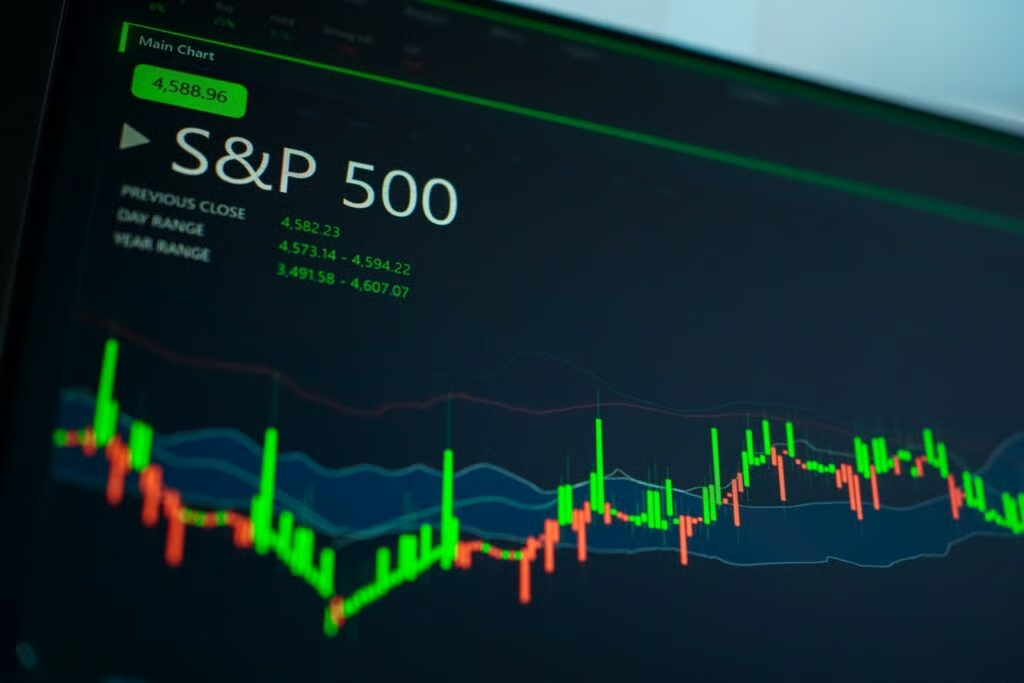
The S&P 500 — as tracked by the SPDR S&P 500 ETF Trust (SPY) — held onto session gains, rising about 0.5%. The Nasdaq 100, tracked by the Invesco QQQ Trust (QQQ), traded little changed, while the Dow Jones Industrial Average, tracked by the SPDR Dow Jones Industrial Average ETF (DIA), advanced about 1%.
The Russell 2000, tracked by the iShares Russell 2000 ETF (IWM), led with a gain of more than 2%.
The risk-on tone was driven less by the Fed and more by oil.
WTI crude, tracked by the United States Oil Fund (USO), fell roughly 4.4% to $98 a barrel on rising hopes for a Middle East peace deal. The drop in crude pulled Treasury yields lower across the curve.
The 2-year yield slipped to 4.05%. Gold, tracked by the SPDR Gold Shares (GLD), rose about 1% to $4,533 an ounce.
What It Means For Investors
The minutes mark a real regime shift in how the Fed is thinking about the next 12 months. The easing bias is fading. The hike option, once unthinkable, is now a one-in-three to two-in-three event depending on which market gauge investors trust.
For equity investors, the implication is that the Fed put — the long-running assumption that the central bank will step in to support markets when conditions wobble — now sits considerably lower than it did a year ago.
The Committee's tolerance for above-target inflation appears to be shrinking, not growing.
The question now is whether the Middle East conflict resolves quickly enough to let energy prices unwind before inflation expectations get away from policymakers.
The June 16-17 meeting will be the next test.