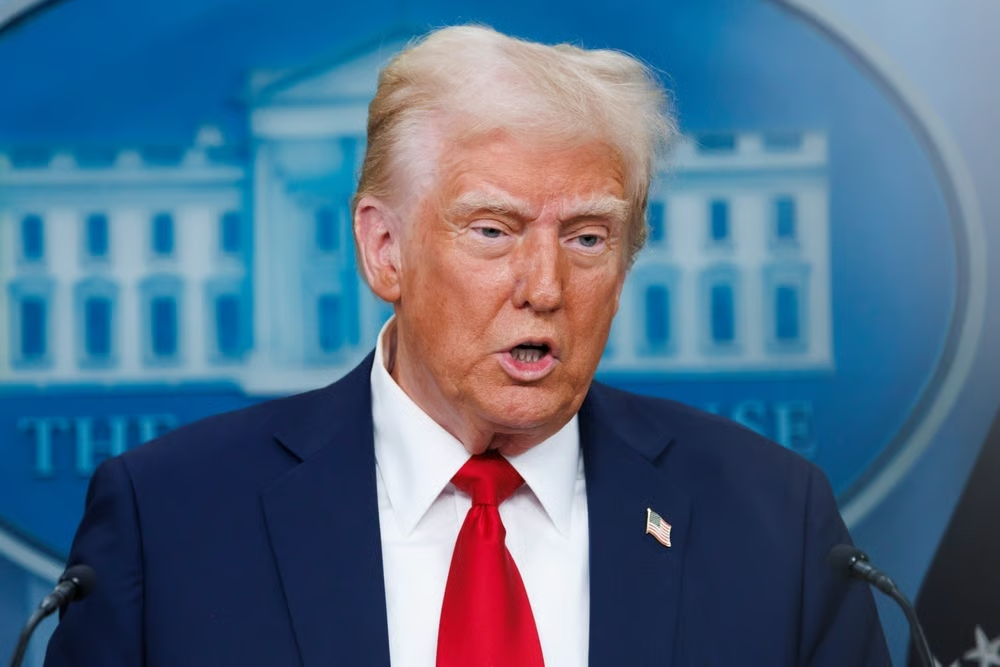
Here's a plot twist you probably didn't see coming: a Democratic senator is throwing his weight behind President Trump's drug pricing plan. And not just a quiet nod of support — he's promising to work "actively and aggressively" to get it done.
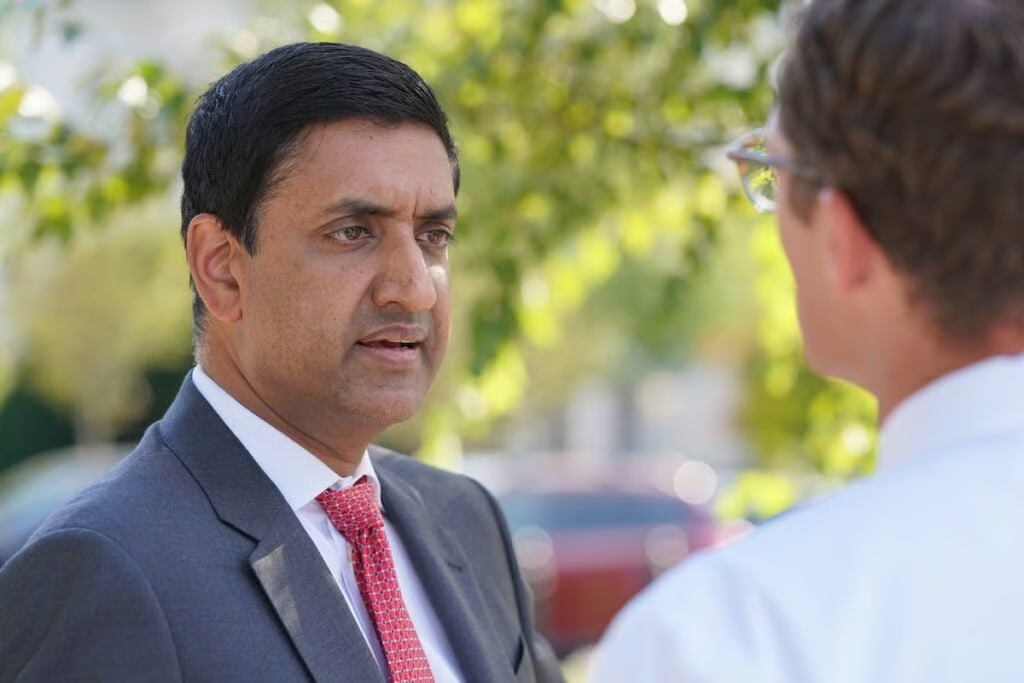
Sen. Peter Welch (D-Vt.) said Wednesday at the Axios Future of Health summit that he would "not only vote for" Trump's "most favored nation" (MFN) drug pricing proposal, but would "work actively and aggressively to make it happen." It's a rare moment of bipartisan alignment on an issue that usually divides the parties: how to lower the cost of prescription drugs.
The MFN policy is exactly what it sounds like: it aims to bring U.S. prescription drug prices closer to what other developed nations pay for the same medicines. In other words, if Canada or Germany pays less for a drug, the U.S. would get that same lower price. Welch wants the administration to move beyond talking points and actually introduce legislation. "Do it, not just talk about it," he said.
This isn't just a one-off comment. Welch and Sen. Josh Hawley (R-Mo.) are already working on bipartisan legislation that would bar pharmaceutical companies from charging Americans more than the international average price for medicines. That bill could give congressional backing to Trump's broader drug pricing framework.
Drug affordability is shaping up to be a major political issue ahead of the midterm elections. According to KFF health researchers, more voters trust Democrats than Republicans on prescription drug costs, though a sizable chunk of Americans say they trust neither party. So there's political incentive on both sides to show progress.
The White House has put some big numbers behind the policy. Economists recently estimated that Trump's agreements with pharmaceutical companies could generate roughly $529 billion in economic savings over the next decade. Administration officials also projected Medicaid savings of $64.3 billion over the same period under the MFN pricing framework.
But not everyone is on board. The Trump administration has promoted its drug-pricing agreements as a major healthcare reform effort, but lawmakers from both parties have raised concerns about the lack of public disclosure surrounding the agreements signed with major drugmakers. Several pharmaceutical companies, including Pfizer (PFE), Eli Lilly (LLY), AstraZeneca (AZN), Novo Nordisk (NVO), and Johnson & Johnson (JNJ), have entered agreements tied to the administration's pricing initiative.
The MFN model ties U.S. drug prices to prices paid in other high-income countries. Trump has also linked the policy to tariff pressure on pharmaceutical manufacturers — a not-so-subtle hint that if drugmakers don't play ball, they could face trade penalties.
On the other side of the aisle, some Democrats are skeptical. Sen. Bernie Sanders (I-Vt.) and Sen. Elizabeth Warren (D-Mass.) recently questioned Trump's claims that his administration had lowered drug prices by as much as 400% to 600%. They want to see the receipts.
The administration hasn't stopped at drug pricing. Earlier this year, Trump launched TrumpRx.gov, a platform that allows consumers to compare discounted prescription drug prices and access coupons tied to participating manufacturers. The administration has also proposed new fertility coverage rules tied to employer-sponsored health benefits as part of a broader push focused on healthcare affordability and family support.
Welch also said Democrats would push to extend Affordable Care Act tax credits that help Americans purchase healthcare coverage. So while the MFN plan is getting attention, it's part of a larger healthcare debate that's likely to heat up as the midterms approach.
For investors, the key takeaway is that drug pricing reform is back on the table with genuine bipartisan potential. If the MFN policy gains traction, it could mean significant revenue pressure for big pharma companies that rely on U.S. pricing power. But the road ahead is far from clear — transparency issues, political opposition, and the sheer complexity of the policy mean this is a story worth watching closely.