President Donald Trump said Tuesday that Americans' financial struggles are "not even a little bit" motivating his administration's negotiations with Iran, arguing that preventing Tehran from obtaining nuclear weapons remains the administration's only priority.
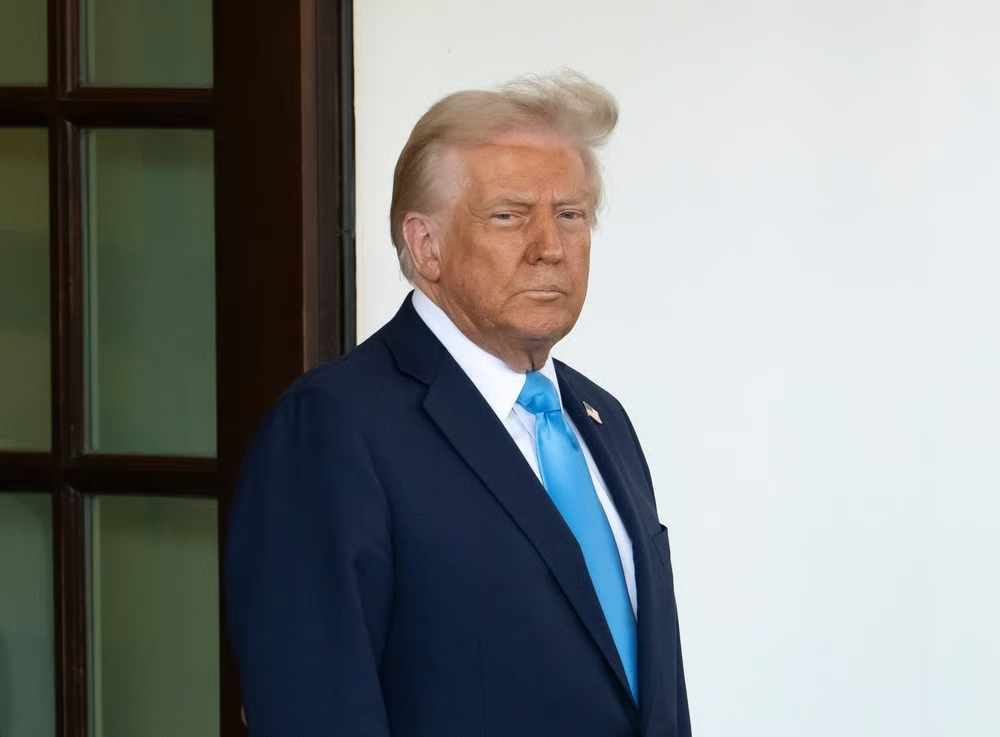
Speaking to reporters on the White House South Lawn before departing for China, Trump was asked how much Americans' financial situation was influencing efforts to reach a deal tied to the Iran conflict.
"Not even a little bit," Trump responded.
"The only thing that matters when I'm talking about Iran, they can't have a nuclear weapon," Trump added. "I don't think about Americans' financial situation, I don't think about anybody."
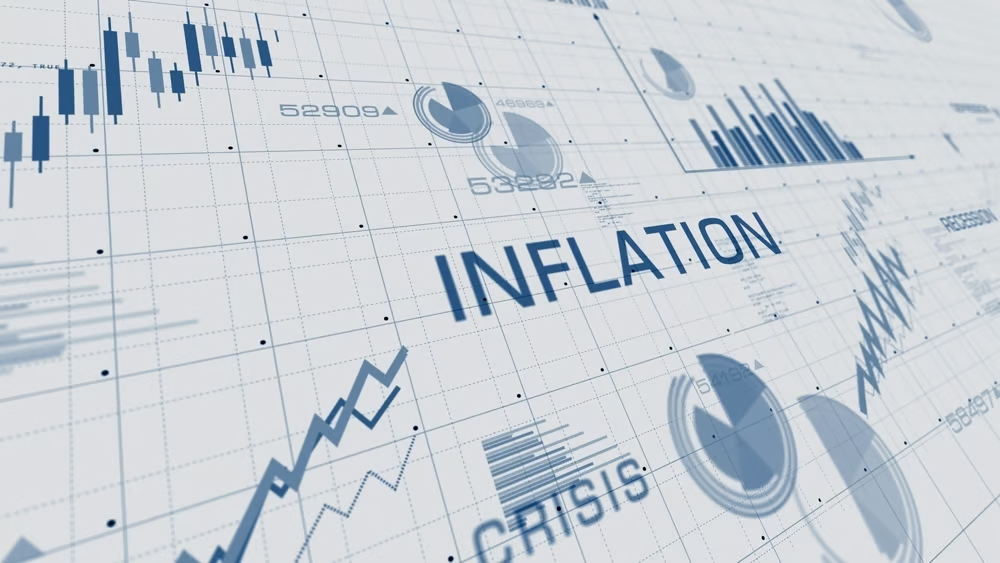
Trump's remarks also came a day after hotter-than-expected U.S. inflation data showed prices rising faster than expected in April. Inflation climbed to 3.8%, above economists' expectations of 3.7%, as higher energy and gasoline prices linked to disruptions around the Strait of Hormuz continued to increase costs for consumers.
China Trip, Oil Risks In Focus
Trump's remarks came before departing for China for a high-stakes summit with Chinese President Xi Jinping, where energy security, the Iran conflict and the Strait of Hormuz are expected to remain major discussion points.
Earlier reporting outlined that the Trump-Xi meeting could include discussions around global energy flows, U.S. oil exports and efforts to stabilize shipping through the Strait of Hormuz, a critical route for global crude and LNG shipments.
The comments also come as fuel prices continue rising across the U.S. AAA data showed the national average gasoline price reached $4.511 per gallon on Wednesday, compared with $4.125 a month ago.
In a post on X on Tuesday, Patrick De Haan, head of petroleum analysis at GasBuddy, said gasoline prices could reach $5 per gallon as early as June if the Strait does not reopen soon.
Secretary of State Marco Rubio has also argued that a nuclear-armed Iran could disrupt global energy markets and sharply increase fuel prices by threatening shipping through the Strait of Hormuz.