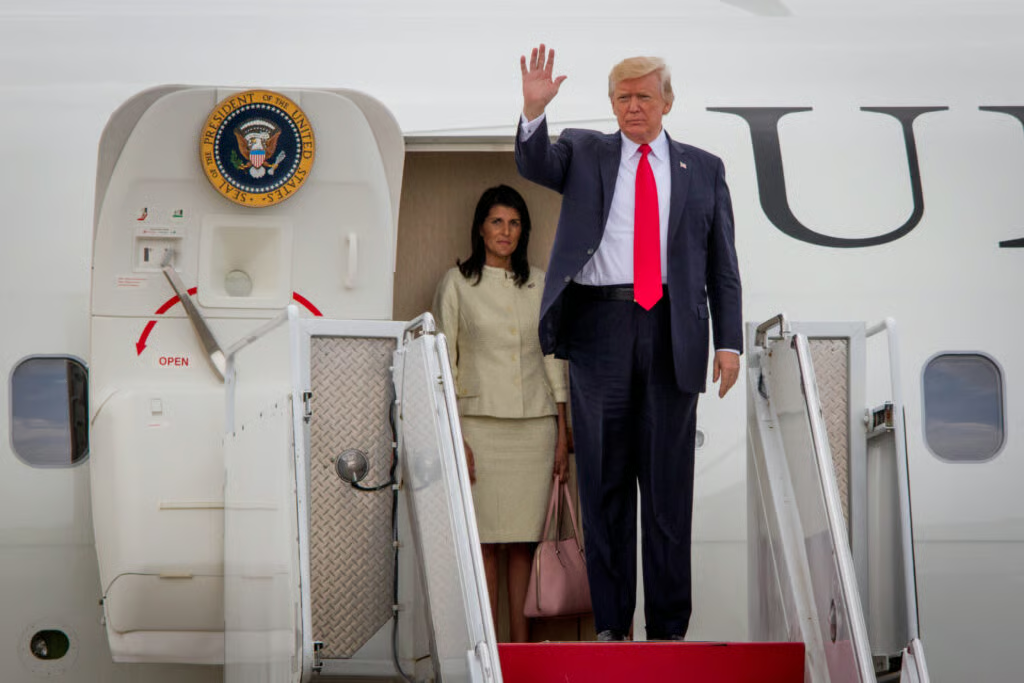
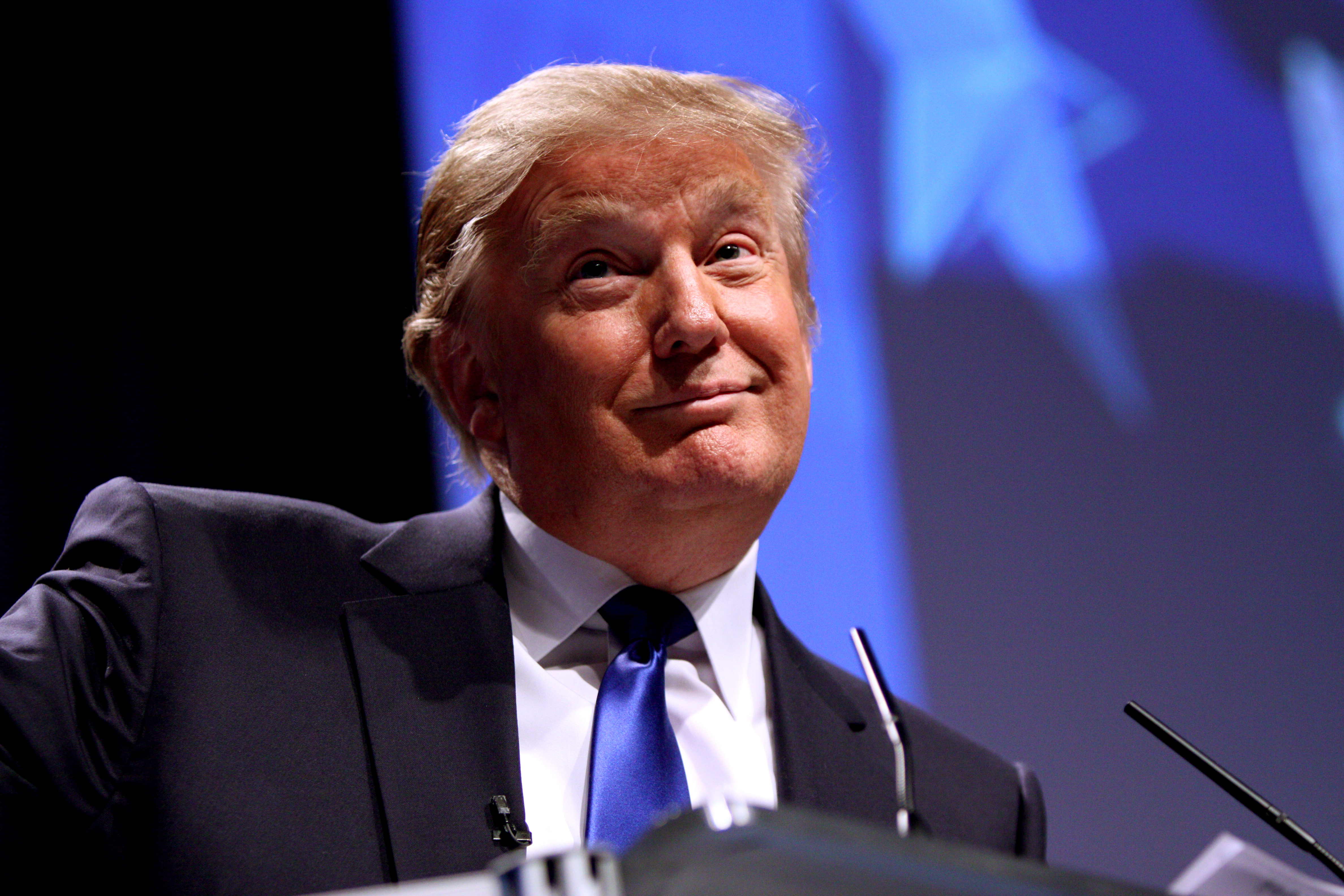
When President Donald Trump's delegation to China was announced, one name was conspicuously missing: Jensen Huang, the CEO of Nvidia (NVDA). That omission didn't last long. On Tuesday, CNBC reported that Trump personally called Huang and invited him to join the trip. A source familiar with the matter said Huang flew to Alaska to board Air Force One. Nvidia later confirmed that Huang joined the summit at Trump's invitation to support the administration's goals.
It's a dramatic last-minute addition that underscores just how central Nvidia has become to the geopolitical battle over AI chips and semiconductor leadership. Trump also said he planned to ask Chinese President Xi Jinping to further open China to U.S. businesses during the meetings in Beijing.
Nvidia Remains Caught in U.S.-China AI Tensions
Nvidia continues to face tighter U.S. restrictions on the sale of advanced AI chips to China, where its graphics processing units remain critical for AI development. The company said in February that U.S.-approved versions of its chips had still not received clearance for sales in China. Meanwhile, China is aggressively accelerating its push for semiconductor self-sufficiency, aiming to build its own AI chip ecosystem to replace Nvidia technology and bypass U.S. export controls.
A recent article in the Chinese Communist Party's official journal acknowledged that U.S. chip restrictions slowed local AI development while also recognizing Nvidia's continued dominance in the global GPU market. It's a delicate dance: China needs Nvidia's chips, but it also wants to break free from dependence on them.
Experts Say Export Restrictions Still Cloud Nvidia's China Outlook
Former U.S. Commerce Secretary Carlos Gutierrez said Huang's participation in the delegation carried symbolic importance for both Nvidia and the Trump administration. However, Gutierrez said he still believed the U.S. remained far from reaching any agreement with China on AI chip export controls, signaling that Nvidia could continue facing major regulatory barriers in one of the world's largest technology markets.
D.A. Davidson analyst Gil Luria said that growing geopolitical tensions and the global AI race continue to reshape competition among major technology and semiconductor companies, particularly Apple Inc. (AAPL), Nvidia, and China-based AI players.
Apple Still Depends Heavily on China
Luria told CNBC on Tuesday that China remains a critical market for Apple because the company still generates more than 15% of its revenue there and continues dominating the premium smartphone segment in the country. He credited outgoing CEO Tim Cook for successfully navigating U.S.-China tensions while preserving Apple's position in China. Luria said Cook's diplomatic approach helped Apple maintain resilience amid rising geopolitical pressure and supply chain uncertainty.
Nvidia Losing Access to China's AI Market
Luria offered a blunt assessment: Nvidia CEO Jensen Huang did not need to join President Trump's China trip because the U.S. and China are now competing directly in artificial intelligence rather than collaborating. He said the U.S. has effectively decided not to provide China with advanced AI chips or semiconductor equipment due to national security and competitive concerns. Luria added that China is unlikely to become a major market for Nvidia in the future, as restrictions on advanced chip exports have already changed the landscape.
But Luria also noted that China has advantages in AI through greater power capacity, energy resources, and engineering talent, while the U.S. maintains leadership in advanced chips. It's not a one-sided game.
Taiwan and AI Competition Remain Central Risks
Luria described Taiwan as a key part of the broader geopolitical struggle involving China, the U.S., Russia, and Iran because global semiconductor companies remain heavily dependent on Taiwan Semiconductor Manufacturing Co. Ltd. (TSM) for advanced chip production. He said Taiwan would likely remain part of ongoing U.S.-China discussions as Washington seeks to reduce geopolitical tensions while protecting semiconductor supply chains and AI leadership.
At the same time, Luria said future cooperation between the U.S. and China may focus only on establishing AI guardrails and preventing direct conflict involving advanced AI systems, rather than broader technological collaboration. In other words, don't expect a grand bargain on chips anytime soon.
Price Action: Nvidia shares were up 2.52% at $226.35, Apple shares were down 0.33% at $293.84, and Taiwan Semiconductor shares were up 1.01% at $401.31 during premarket trading on Wednesday, according to market data.