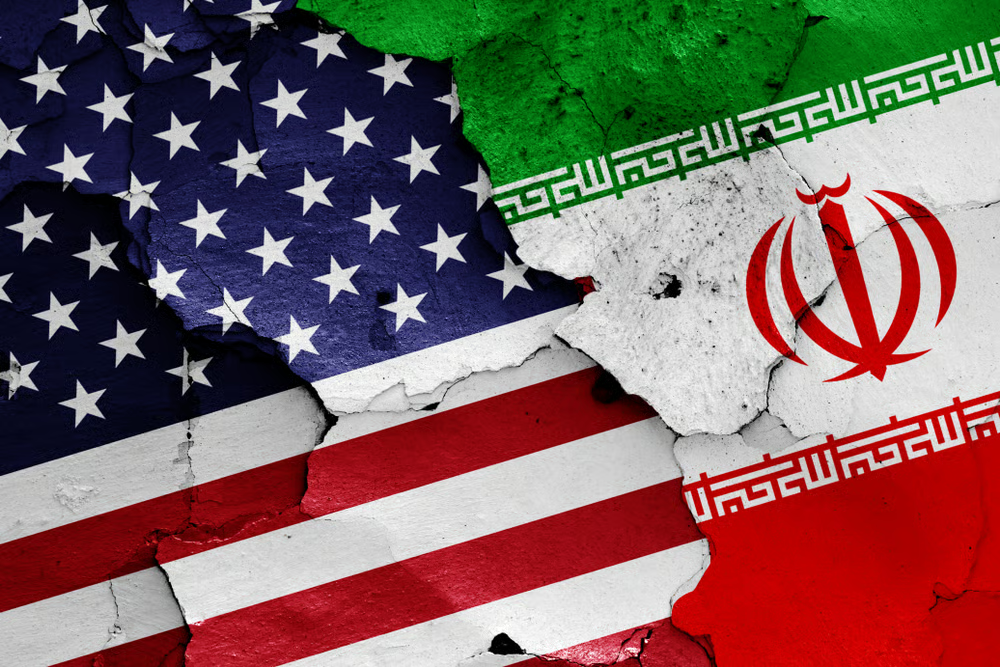
The U.S. military is reportedly considering renaming the war with Iran, should the current ceasefire fail and President Donald Trump decide to resume major combat operations.
The discussions about the change in name from “Operation Epic Fury” to “Operation Sledgehammer” would effectively restart the clock with Congress for war authorization, reported NBC News on Wednesday. “Operation Sledgehammer” is not the only name under consideration, though, stated the report, citing U.S. officials.
The U.S. military presence in the region is now reportedly larger than it was at the start of Operation Epic Fury in February, with an additional carrier strike group deployed and several military assets replaced and rearmed, according to Defense Secretary Pete Hegseth. The Pentagon did not immediately respond to a request for comment.
White House defends war timeline
The Trump administration said Operation Epic Fury had ended after the U.S. and Iran agreed to a ceasefire in early April and began diplomatic talks, informing Congress that hostilities were over. Despite that, the Pentagon has continued referring to the conflict as Operation Epic Fury in its public updates.
During a White House briefing last week, Secretary of State Marco Rubio said Operation Epic Fury "is over," stating that Trump informed Congress the mission was complete and that its objectives had been achieved. However, the U.S. and Iran have traded attacks in recent days as tensions escalate in the Strait of Hormuz, with Iran restricting ship traffic while Trump maintains a naval blockade.
The 1973 War Powers Resolution requires presidents to notify Congress within 48 hours of initiating combat and limits unauthorized military action to 60 days. The Trump administration argues that because Operation Epic Fury paused offensive combat operations after 40 days, it has not yet crossed the 60-day threshold.
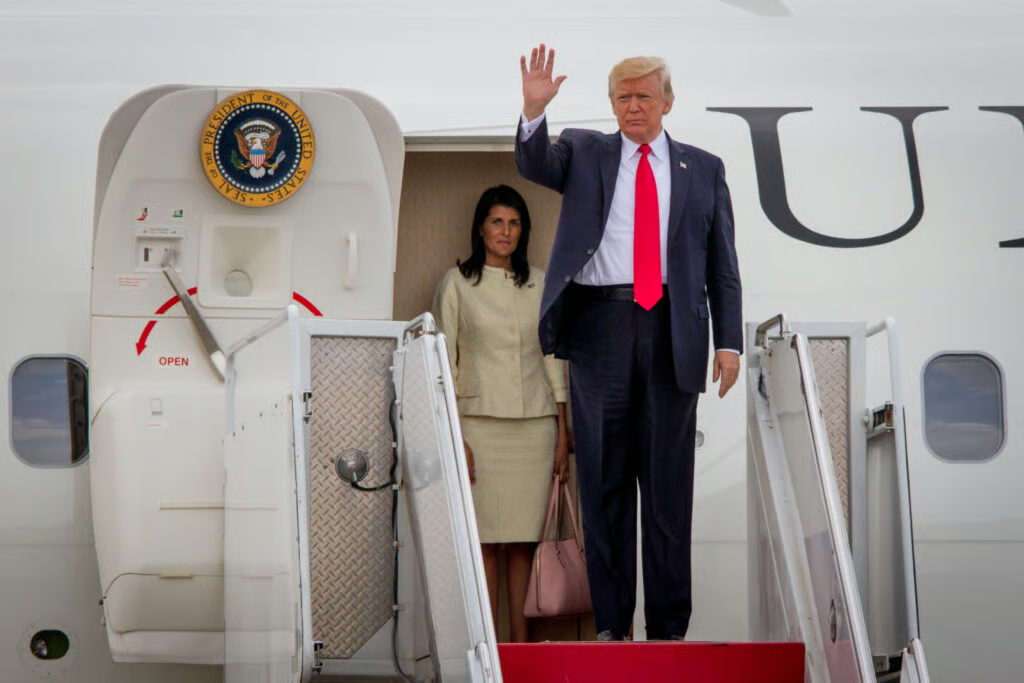
Trump rejected Iran's response to a U.S.-backed peace proposal on Sunday, calling it "totally unacceptable" in a Truth Social post and signaling frustration over stalled negotiations. Trump also said the month-long ceasefire is on "massive life support" and "unbelievably weak."
Senators Question Iran War Costs
Hegseth and Gen. Dan Caine testified Tuesday on Trump's proposed $1.5 trillion 2027 defense budget, facing bipartisan questions over military spending, alliances and the impact of the Iran war on U.S. weapons stockpiles.
Sen. Patty Murray (D-Wash.) challenged the Pentagon's estimated $29 billion cost of the Iran war, calling it "suspiciously low" and arguing it excluded damage to U.S. military facilities. Hegseth defended the campaign by emphasizing the cost of allowing Iran to obtain a nuclear weapon, but did not provide a figure for damage to American assets.
At the end of April, the Pentagon had said the Iran war cost about $25 billion so far, predominantly for munitions, though the estimate may not include infrastructure repairs.