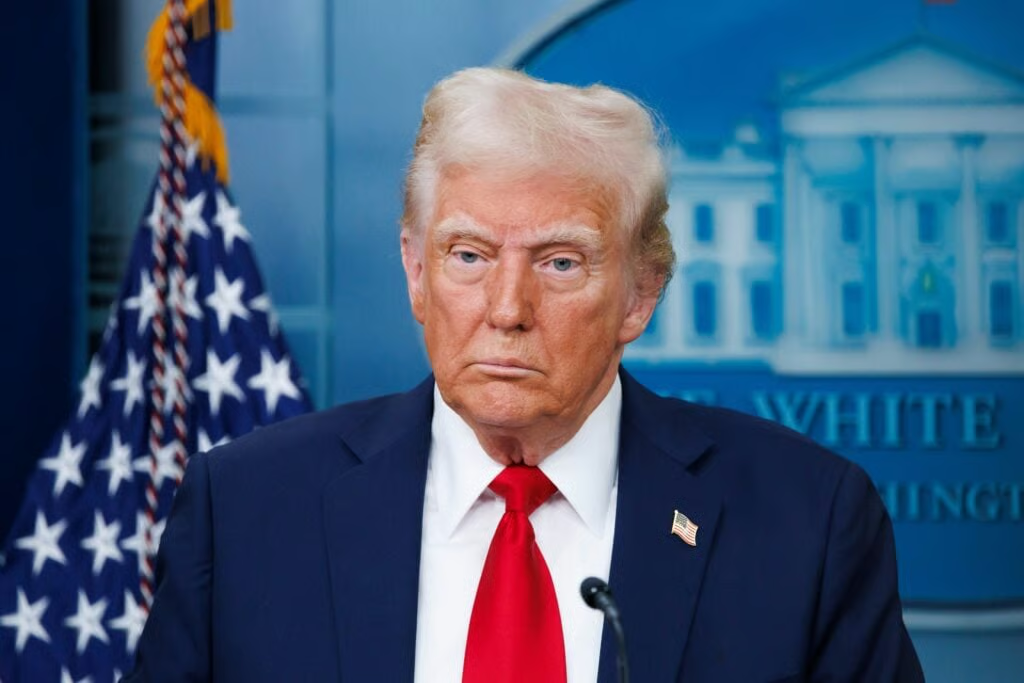
California Governor Gavin Newsom didn't mince words on Tuesday, blaming President Donald Trump and the Republican Party for letting China race ahead in the global electric vehicle market. In a post on X, Newsom's official press office painted a picture of what could have been: "Before Donald Trump, America was on a path to beat China," with strong EV manufacturing, supply chains, and good-paying American jobs. "Trump and Republicans blew that up. Jobs gone. Factories moving overseas. China stronger than ever," the post read.
The timing is interesting. Trump is preparing to meet Chinese President Xi Jinping, and there's growing unease among industry leaders and lawmakers about Chinese EVs potentially entering the U.S. market after the summit. Back in January, Trump hinted he might allow Chinese automakers to set up shop in the U.S.—if they manufactured locally. That's a far cry from the aggressive stance some Democrats want.
Representative Ro Khanna of California, for instance, has been cautioning against Chinese investment in the U.S., clashing with Trump over a potential $1 trillion investment from Chinese enterprises. He's also sparred with the administration over a $1 billion funding request for the White House ballroom—a separate but equally contentious issue.
Meanwhile, Trump has invited a who's who of tech leaders to join him in China. Tesla Inc. (TSLA) CEO Elon Musk, Apple Inc. (AAPL) CEO Tim Cook, and Boeing Co. (BA) CEO Kelly Ortberg are all on the guest list. Ortberg has been optimistic about securing a 500-aircraft order from Chinese airlines. Also joining is NVIDIA Corp (NVDA) CEO Jensen Huang, whose name wasn't initially on the list but was confirmed by an NVIDIA spokesperson on Tuesday, according to Reuters.
So while Newsom laments a lost EV war, Trump is heading to China with a delegation that reads like a tech summit guest list. The question is whether the trip will help or hurt America's position in the EV race—or if it's already too late.