Transportation Secretary Sean Duffy pushed back Saturday on claims that the U.S.-Iran war caused Spirit Airlines (FLYYQ)'s collapse, calling the carrier's financial troubles pre-existing and structural.
"Spirit was in dire straits long before the war with Iran," Duffy said at a New Jersey press conference. "Multiple times, they filed for bankruptcy. Their model wasn't working."
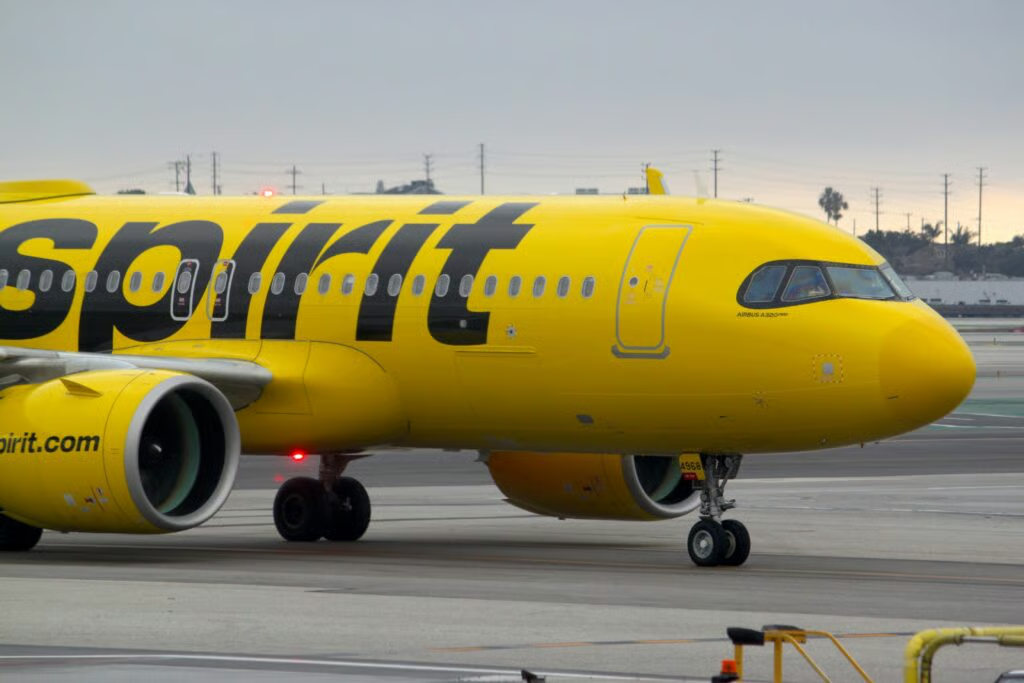
Spirit announced Saturday it was "winding down its global operations, effective immediately," marking its second bankruptcy in 12 months.
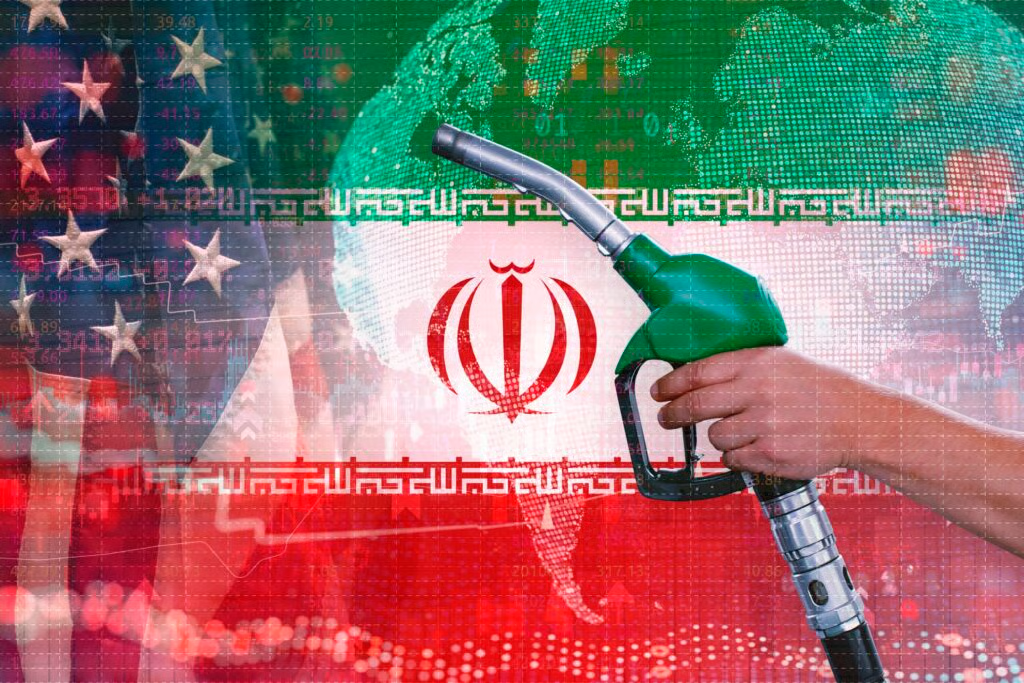
CEO Dave Davis told The Wall Street Journal that surging jet fuel costs, driven by the Iran conflict, doomed the airline's recovery plan.
Several budget carriers have since requested a $2.5 billion federal bailout through the Association of Value Airlines. Duffy called the requests "based on opportunity," not genuine need.
"If they want to come to the U.S. government, we would be a lender of last resort," Duffy said, noting any loan requires congressional approval and demonstrated necessity.
President Donald Trump had previously floated a $500 million Spirit-specific bailout, which collapsed amid Republican opposition. Reason Foundation's Marc Scribner said a government loan would simply transfer Spirit's financial risks to taxpayers, calling it a "bad investment."
On Friday, Spirit's board concluded negotiations without securing a viable solution, with creditors rejecting the rescue plan before the grounding was announced.
After Spirit's closure, rivals moved swiftly to fill the void. JetBlue Airways (JBLU) rolled out $99 rescue fares, while Frontier Group Holdings (ULCC) introduced discounts of up to 50%. Southwest Airlines (LUV) offered counter fares ranging from $200 to $400.
Houston-based Avelo Airlines also announced 75% off base fares across its network and said it is actively hiring displaced Spirit employees, directing applicants to a recruitment event at McKinney (TKI) on May 9.