So here’s what’s happening in the world’s most important oil chokepoint: the U.S. Navy is now playing traffic cop for Iranian tankers halfway across the Indian Ocean. According to shipping and security sources, American forces have intercepted at least three Iranian-flagged oil tankers in Asian waters and are redirecting them away from positions near India, Malaysia, and Sri Lanka. This isn’t just a Hormuz Strait thing anymore—it’s a whole-of-ocean blockade that’s getting wider by the day.
Think of it as a high-stakes game of maritime keep-away. The U.S. is essentially saying, “You can’t dock here,” while Iran is firing on ships in and around the Strait of Hormuz—that narrow waterway at the mouth of the Gulf that carries about a fifth of the world’s oil and gas. It’s the focal point of what’s becoming a truly global energy shock, and neither side looks ready to back down.
Meet The Tankers: Deep Sea, Sevin, And Dorena
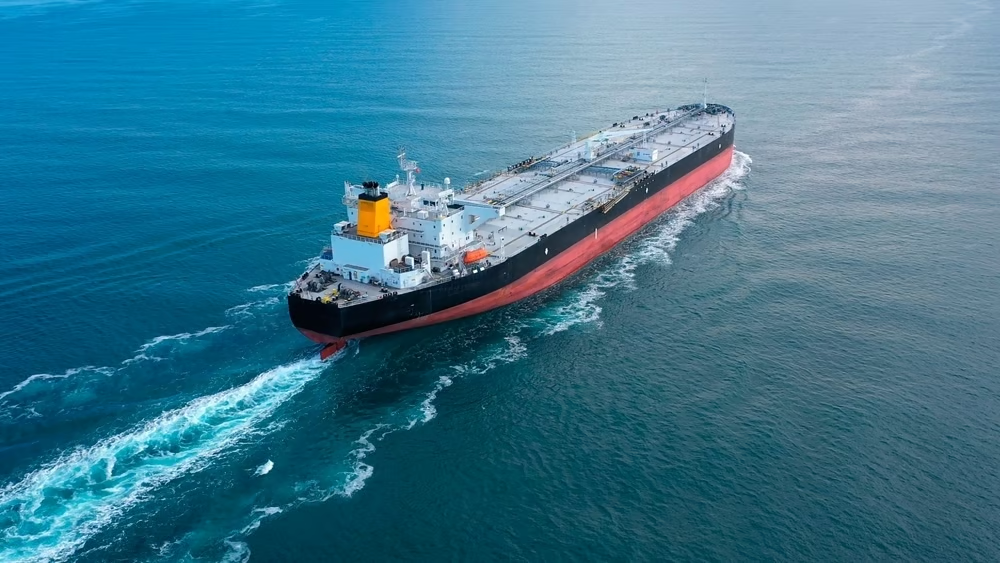
Let’s talk about the ships themselves, because in blockade economics, the vessels are the story. One of them, the Deep Sea supertanker, was partly loaded with crude and was last visible on public tracking data off Malaysia a week ago. The smaller Sevin, with a capacity of 1 million barrels and carrying about 65% of its cargo, was also intercepted after it was last tracked off Malaysia.
Then there’s the Dorena. This supertanker was fully loaded with 2 million barrels of crude oil and was last seen off the coast of southern India three days ago. Now, according to U.S. Central Command, the Dorena is under escort by a U.S. Navy destroyer in the Indian Ocean after attempting to violate the blockade. That’s right—escorted. Not just turned around, but actively chaperoned away from where it wanted to go.
And this isn’t a one-off. CENTCOM said Wednesday that U.S. forces have directed 29 vessels to turn around or return to port since the blockade began. What’s interesting here is the geography: American forces appear to be targeting Iranian ships farther from Hormuz, likely to reduce the risk posed by floating mines. It’s a blockade that starts hundreds of miles from the actual strait.
Iran’s Response: Seizures And A Diplomatic Hard Line
Meanwhile, Iran isn’t just sitting back. The maritime standoff deepened after Iran said it seized two container ships trying to exit the Gulf through the Strait of Hormuz on Wednesday—its first such seizures since the war began. So while the U.S. is intercepting tankers in the Indian Ocean, Iran is grabbing ships right at the choke point.
On the diplomatic front, Iranian officials are blaming Washington for the deadlock. Parliament Speaker Mohammad Bagher Ghalibaf took to X to say there can be no real ceasefire while the blockade remains, writing: "A complete ceasefire only makes sense if it is not violated by the maritime blockade and the hostage-taking of the world's economy." That’s a pretty clear statement: no deal while the ships can’t move.
President Masoud Pezeshkian echoed the sentiment in his own X update, saying diplomacy, not pressure, was needed for talks. Which is the kind of thing you say when you’re under pressure and want to shift the narrative back to diplomacy.
So where does this leave us? With a U.S. Navy destroyer escorting a fully loaded Iranian supertanker through the Indian Ocean, with Iran seizing container ships in the Strait of Hormuz, and with both sides digging in on the rhetoric. The blockade isn’t just at the strait anymore—it’s wherever Iranian tankers try to go. And until someone blinks, the world’s oil supply remains caught in the middle.