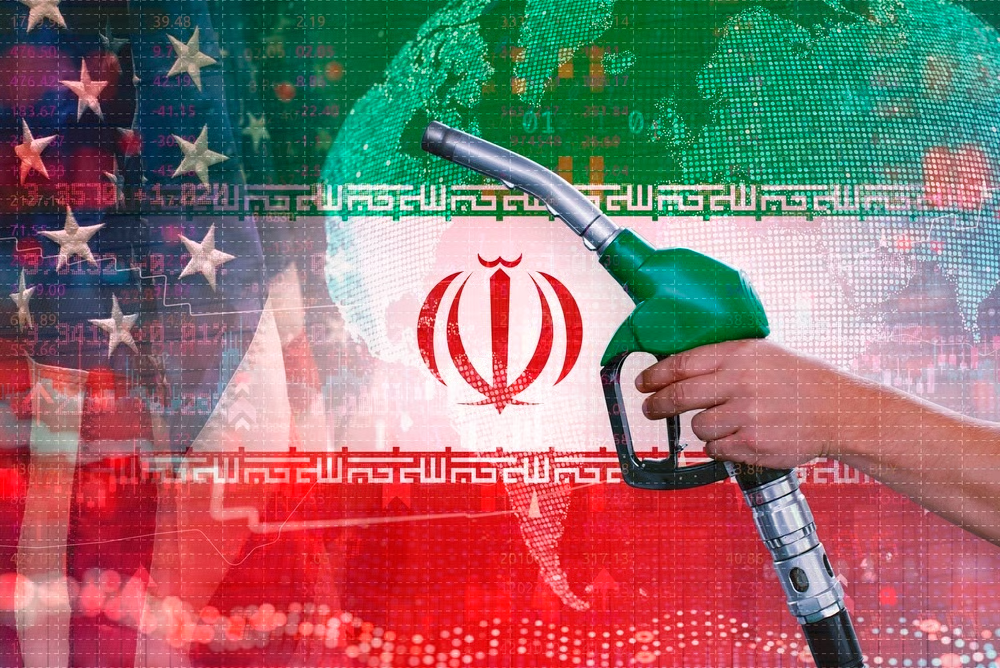
Here's a situation that's about to get very real for Iran's oil industry: U.S. Treasury Secretary Scott Bessent says the country's main oil storage facility is about to hit capacity, and when it does, the wells will have to shut down. That's the direct impact of the U.S. Navy's ongoing blockade of Iranian ports, which Bessent highlighted in a post on X on Tuesday.
He reiterated that President Donald Trump would continue the blockade on the Strait of Hormuz, and dropped this line: "In a matter of days, Kharg Island storage will be full and the fragile Iranian oil wells will be shut in." Think about that for a second. It's not just about ships sitting idle; it's about the physical logistics of oil production. If you can't move the oil, you can't store it, and if you can't store it, you have to stop pumping. Bessent added, "Constraining Iran's maritime trade directly targets the regime's primary revenue lifelines." He also said the U.S. Treasury will intensify its "Economic Fury" campaign to apply maximum economic pressure on Iran, aiming to disrupt its ability to generate, move, and access funds globally.
So what does "Economic Fury" look like in practice? The U.S. Treasury said last week it's increasing pressure by sanctioning two illicit networks as part of Operation "Economic Fury": the Shamkhani petroleum network linked to Iranian-Russian oil trade and a Hezbollah-linked money laundering scheme involving oil-for-gold transactions. It also warned financial institutions of potential secondary sanctions for supporting Iran's activities. This isn't just about blocking ships; it's about cutting off the financial plumbing that lets Iran move money around.
Meanwhile, Trump has been putting numbers to the pain. He stated that Iran is losing $500 million each day due to the blockade in Hormuz. In posts on Truth Social late Tuesday, Trump argued that Iran's threats to close the Strait of Hormuz are for optics, saying they prefer it open to earn revenue and are only posturing because U.S. pressure has already "blockaded" it. He added that Tehran is "starving for cash!" It's a classic squeeze play: cut off the revenue, and watch the pressure build.
On Tuesday, Trump also said the U.S. would extend the ceasefire, citing a "fractured" Iranian government and diplomatic requests by Pakistan, easing immediate escalation fears despite lingering uncertainty. So the military tension might be dialed back a notch, but the economic vise is tightening. The message seems to be: we'll talk, but we're not letting up on the financial pressure.