If you run a state Medicaid program, you might want to double-check your provider lists. Centers for Medicare & Medicaid Services (CMS) Administrator Mehmet Oz announced a nationwide crackdown on Medicaid fraud Tuesday, ordering all 50 states to submit provider revalidation plans within 30 days or face more aggressive federal audits.
Speaking at Politico's Health Care Summit, Oz said his agency would send formal requests to every state this week. "We're asking the states to own that problem red and blue, all of them," he said. "If you don't take it seriously, it indicates to us that we might have to take the audits more aggressively."
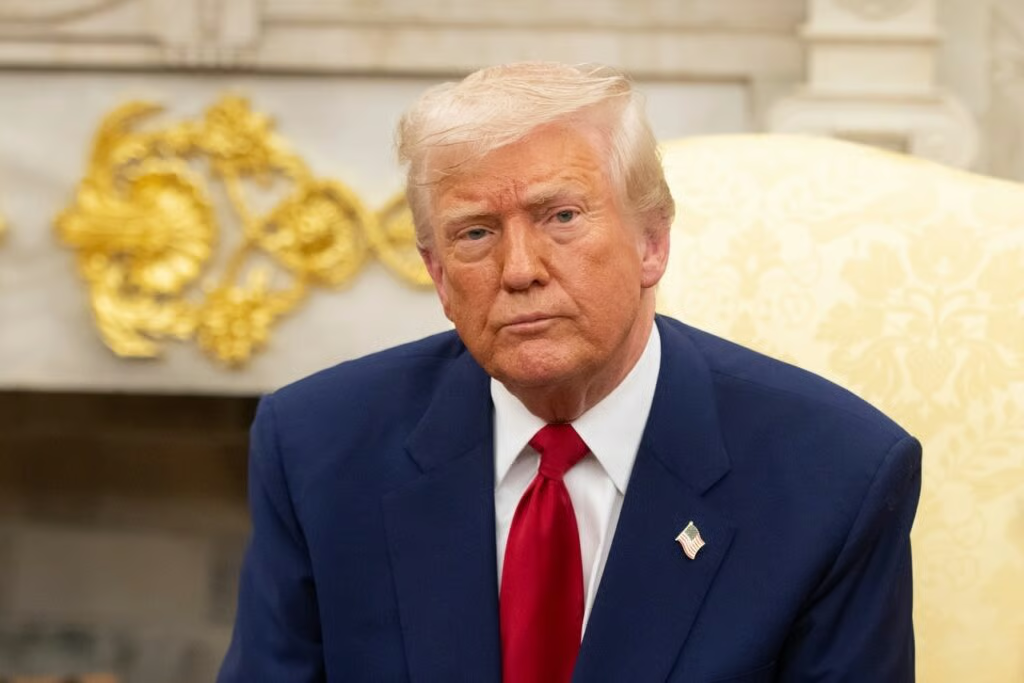
This isn't coming out of nowhere. The campaign follows President Donald Trump's State of the Union declaration of a "war on fraud," with Vice President JD Vance leading the broader effort. In February, CMS temporarily withheld $259.5 million in Medicaid funding from Minnesota over alleged fraud, threatening cuts exceeding $2 billion annually before the state submitted a corrective action plan.
Oz framed the crackdown as an act of love. "I love Medicaid," he said Tuesday. "When you love something, you protect it. You don't let it get defrauded."
But the fraud offensive runs alongside some pretty sweeping cuts to the program itself. A Public Citizen report found 446 hospitals at heightened closure risk following more than $900 billion in reductions under Trump's One Big Beautiful Bill Act. The hospitals feeling the most pain? Universal Health Services Inc. (UHS) and Ardent Health Inc. (ARDT) are facing the steepest headwinds.
Meanwhile, the administration is simultaneously pushing to dismantle the Affordable Care Act, with Trump proposing direct cash payments to consumers instead of routing federal support through insurers. That's happening even as at least six states move in the opposite direction, building tax incentives for small businesses to enroll workers in ACA marketplace plans.
So states have 30 days to show they're serious about fraud, or CMS will come knocking. And hospitals are watching closely—because the money they depend on is being squeezed from both sides.