So America is about to turn 250. That's a big round number, and like anyone hitting a milestone birthday, it's a natural time for some reflection. This week, four former occupants of the Oval Office did just that, looking back on what American democracy means, how the country has changed, and what it was like to sit in the big chair.
In a series of separate interviews with Jenna Bush Hager, the former presidents—George W. Bush, Barack Obama, Bill Clinton, and Joe Biden—shared their thoughts as the United States gears up to mark its 250th year of independence. It's a bit like a reunion special, but for commanders-in-chief.
For President Bush, the nation's response to the September 11 attacks stands out as one of the most significant moments in modern history. He called it an example of unity and civic engagement. "It was an outpouring of patriotism," he said, adding a note on the system itself: democracy is "self-correcting." It's a reminder that even in crisis, the machinery of the republic keeps turning.
President Obama took a more personal angle. His presidency, he said, reinforced his optimism in the American people. "Every corner of this country is just full of really amazing, hardworking, decent people," he noted. The experience actually made him "less cynical" about the divisions we often hear about. It's a refreshing take from someone who's seen the political trenches up close.
President Clinton went back to his roots, reflecting on the inspiration he drew from former President John F. Kennedy. That early example showed him the impact of public service. "You can get up every day, no matter how bad it is, you can make something good happen for somebody," Clinton said. He added that he never imagined becoming president himself, but he always believed the point of public service was simply to improve lives. It's a straightforward, almost humble, view of the job.
And then there's President Biden, who described the presidency as "the greatest honor." He tied his personal story directly to the nation's promise. "A kid from Scranton… could end up being the president of the United States," he said, calling that possibility central to what America represents. It's the classic American dream narrative, but from someone who actually lived it.
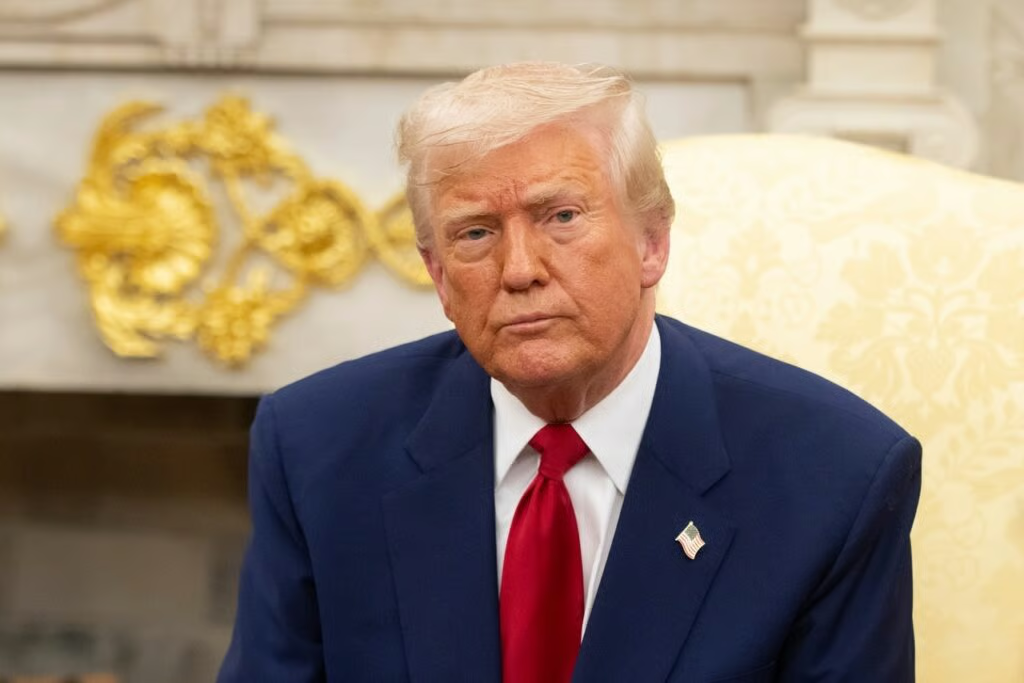
Meanwhile, the plans for the actual 250th anniversary celebrations are taking shape under the current administration. Back in March, the Treasury Department announced that President Donald Trump's signature will appear on future U.S. paper currency alongside Treasury Secretary Scott Bessent. This change replaces the U.S. Treasurer's signature for the first time in over a century and is billed as part of the anniversary festivities.
Last year, Trump also linked himself to the milestone through a planned U.S. Army 250th anniversary parade in Washington, D.C. The event is expected to feature thousands of troops, military vehicles, and aircraft. He additionally floated the idea of new "Victory Day" commemorations, though existing federal holidays have remained unchanged so far.
So there you have it: reflections from four former presidents on what the job and the country mean, paired with some tangible plans for how the nation will mark the occasion. It's a mix of philosophy and logistics, which is pretty much how government works every day.