Here's the thing about gas prices: they're supposed to go down when oil gets cheaper. But if you're waiting for your local pump to reflect that, you might want to get comfortable. The next move isn't just about crude oil pulling back—it's about geography, logistics, and one very narrow, very important strip of water.
In an email interview, Dennis Kissler, senior vice president of Trading at BOK Financial, laid out why the coming relief is anything but universal. The divergence, he says, is already baked in.
U.S. First in Line for Relief
Even as crude prices ease, consumers won't see an immediate impact. And when they do, it won't be a synchronized global event. Something investors in the United States Oil Fund (USO) should note.
"Gas prices will lag because current gasoline inventories will need to flow through the system," Kissler said, pointing to the supply chain frictions and refining logistics that delay the price transmission from the trading pit to the pump.
But once that pipeline clears, the U.S. could move faster than others. He expects the U.S. and Asia to "see relief quicker," with a "dramatic drop in prices at the pump by early May"—assuming, crucially, that the Strait of Hormuz remains fully operational.
Europe's Longer Wait
On the other side of the Atlantic, the story looks stickier. "Europe will continue to see higher prices for longer," Kissler noted, highlighting a more prolonged adjustment cycle even as global crude stabilizes.
That gap underscores a key reality: oil may be globally priced, but fuel costs are anything but uniform. Your local price depends heavily on how close you are to the supply and how smoothly it can get to you.
Hormuz Still Holds the Key
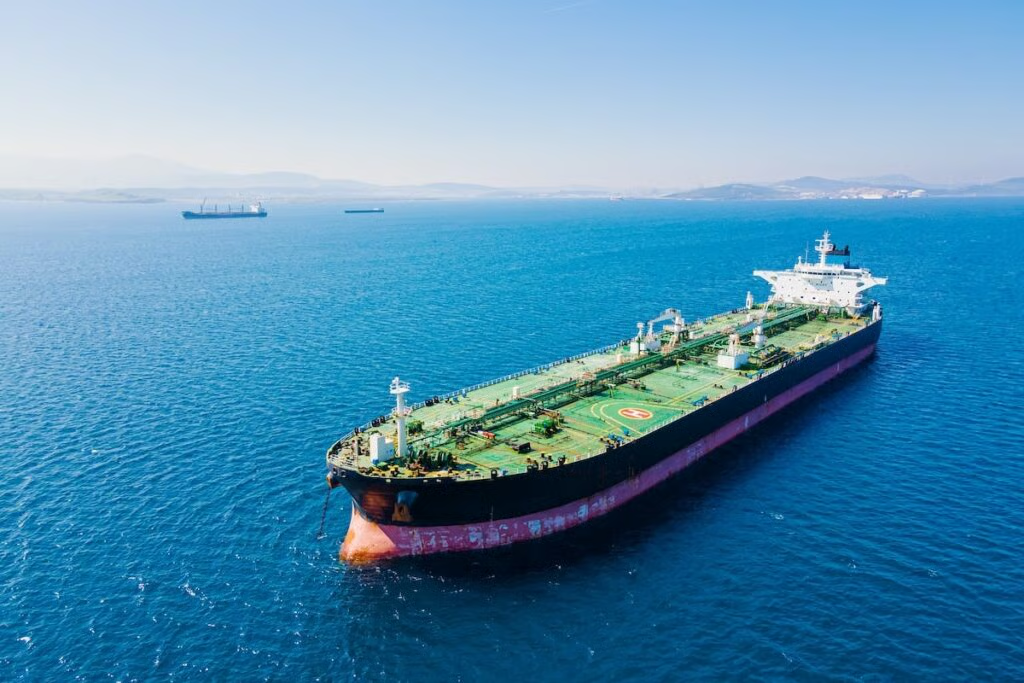
At the center of it all is the Strait of Hormuz—the artery through which sentiment, supply confidence, and price direction now flow. It's the world's most important oil chokepoint, and everyone's watching it.
"The U.S. fuel exports will remain a key factor," Kissler said, adding that as global supplies ease, demand for those exports should fall, leaving "more supplies here in the states."
The bottom line? Relief is coming—but it's not a blanket discount. And until Hormuz proves it can stay open without disruption, the global reset in energy prices will remain a patchwork of haves and have-nots, dictated by geography and the calm of a distant strait.






.jpeg)