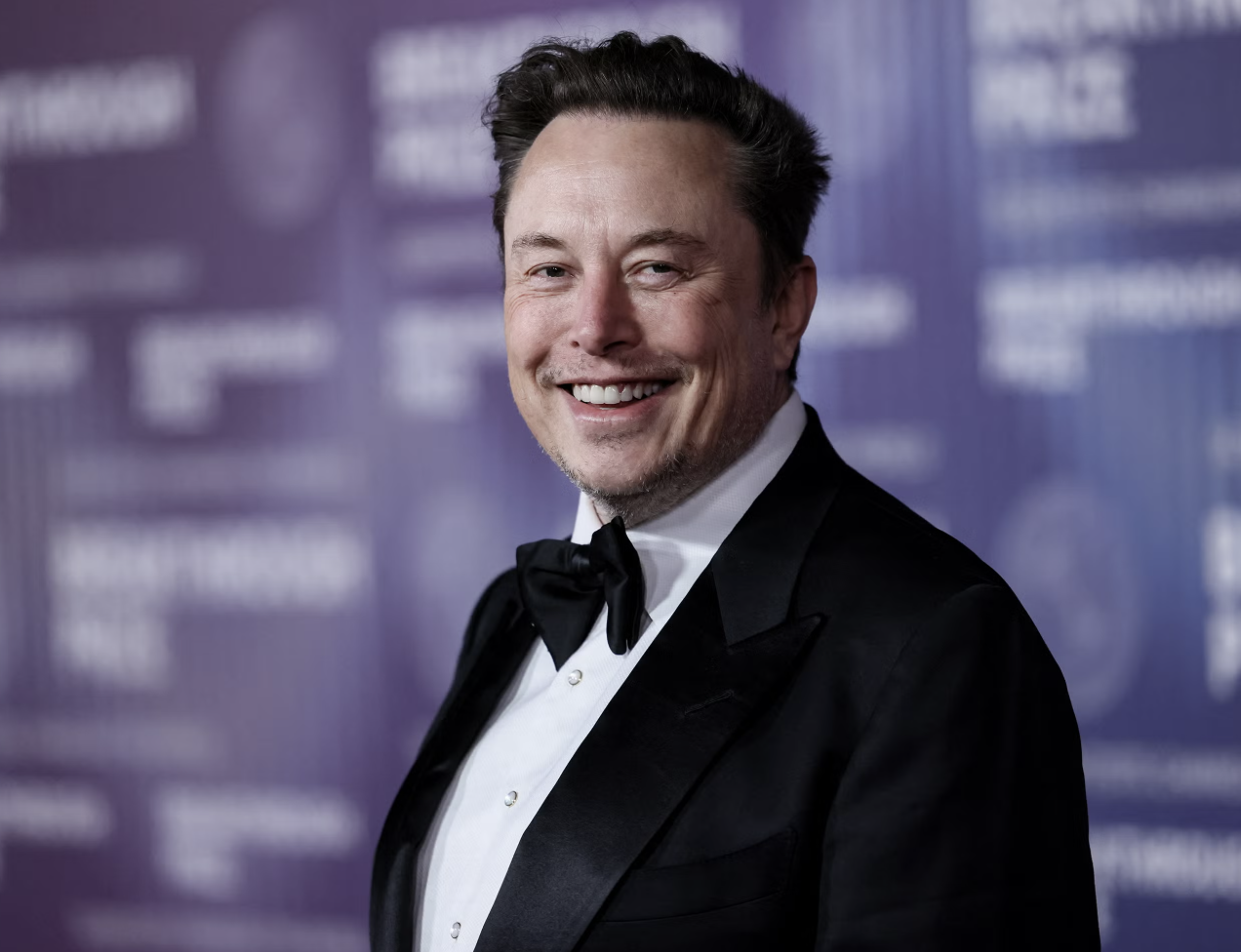
Here's a geopolitical puzzle for you: what happens when a major global power decides to block one of the world's most critical oil chokepoints? According to investor Peter Schiff, co-founder of Echelon Wealth Partners, it might just be an act of war.
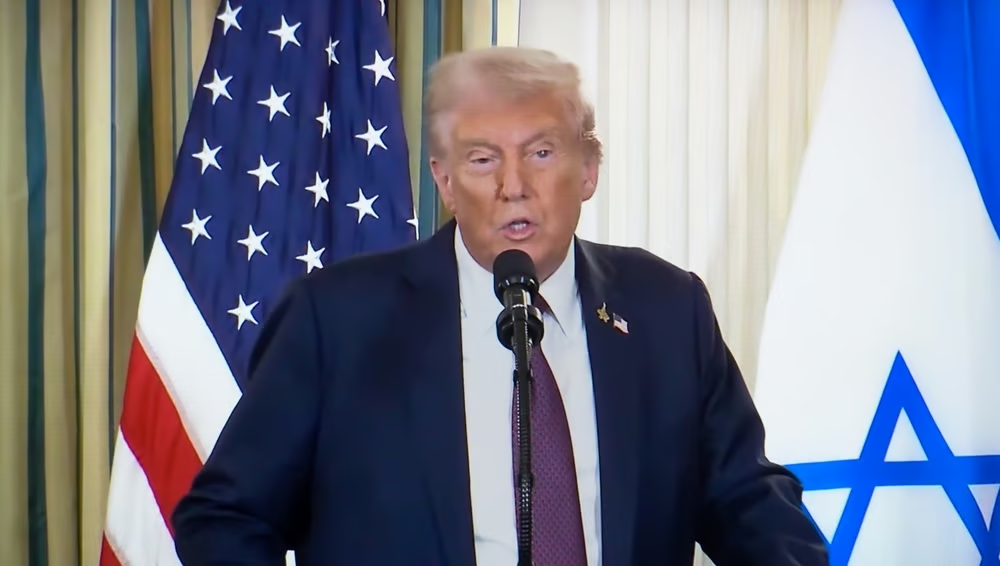
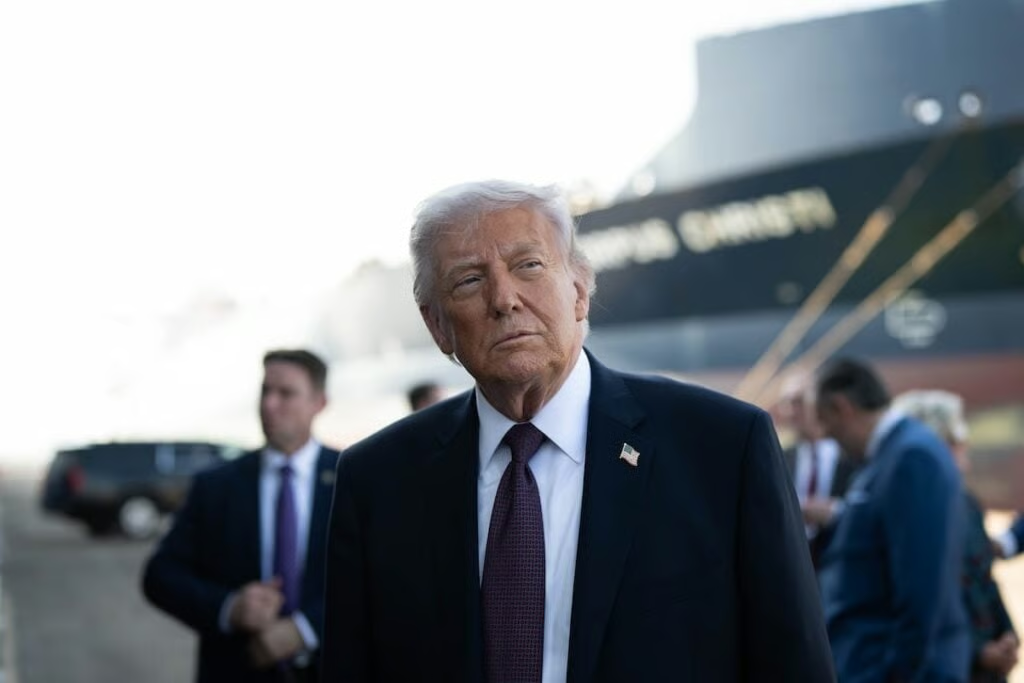
On Tuesday, Schiff took to social media to voice a stark warning about President Donald Trump's decision to deploy the U.S. Navy in a blockade of the Strait of Hormuz. He argued that the move "could easily be considered an act of war by other nations impacted by the action." His central question cuts to the heart of the matter: "What right does the U.S. have to use military force to prevent China from buying oil?" Schiff added that if Beijing chose to retaliate, its motives would be perfectly clear.
It's the kind of statement that makes you stop and think about the rules of the game in international waters. Blockading a strait through which about a fifth of the world's oil passes isn't exactly a minor policy shift.
The First Day: Ships, Sanctions, and Supremacy
So, what does a blockade look like in practice? According to a Reuters report from Tuesday, the first 24 hours saw a mixed picture. Eight ships managed to cross the strait. Among them was the Rich Starry, a tanker owned by Shanghai Xuanrun Shipping Co that had been sanctioned by the U.S. back in 2023. Interestingly, three of the vessels were Iran-linked tankers, but since they weren't heading to Iranian ports, they weren't stopped by the blockade.
Meanwhile, U.S. Central Command was busy posting updates. They stated that U.S. forces were "supporting freedom of navigation for vessels transiting the Strait of Hormuz to and from non-Iranian ports." The command also reported that six ships were forced to turn around and enter an Iranian port in Oman.
Admiral Brad Cooper, the commander of CENTCOM, was quoted with a more triumphant tone. He claimed the U.S. was maintaining "maritime supremacy" in the region and had successfully halted all of Iran's international maritime trade activity through the blockade in "less than 36 hours." That's a pretty bold claim for a day and a half's work.
China's Sharp Critique
Not everyone is applauding the U.S. Navy's efficiency. China has condemned the blockade outright, calling it a "dangerous" and "irresponsible" situation. The criticism didn't stop there. During a meeting with Spanish Prime Minister Pedro Sanchez on Tuesday, President Xi Jinping took a broader swipe, suggesting the international order was "crumbling into disarray."
This tension didn't appear out of nowhere. Trump had previously threatened tariffs on China after reports surfaced that Beijing might supply air defense systems to Tehran. He warned China could face "big problems" if it proceeded with shipping those defenses to Iran. So, the blockade isn't happening in a vacuum; it's the latest move in a complex standoff involving oil, arms, and global influence.
The Oil Price Warning and a Domestic Fuel Fix
Back to Peter Schiff. His concern isn't just legal or diplomatic; it's economic. He had previously warned that this blockade could send crude oil prices skyrocketing, potentially to $150 a barrel in the coming days as regional tensions escalate. When you choke off a major artery for oil, prices tend to notice.
And speaking of prices at the pump, while this international drama unfolds, there's a domestic subplot. In Illinois, Governor JB Pritzker (D-IL) announced he's pushing to make E15 gasoline available year-round. This comes as the average gas price in the U.S. hits $4.188 per gallon. For those keeping score, E15 is a blend of 85% gasoline and 15% ethanol, which is sourced from corn. It's a reminder that global oil shocks have very local consequences, and politicians are looking for any lever to pull to provide relief.
So, to recap: a high-profile investor is calling a naval blockade an act of war, ships are navigating a new military reality, a superpower is crying foul, oil markets are on edge, and your local gas station might soon have a different fuel blend. Just another day in the interconnected world of global finance and geopolitics.