So here's the situation: the United States is doing two things at once with Iran. It's waving a potential olive branch while also swinging a very large naval club.
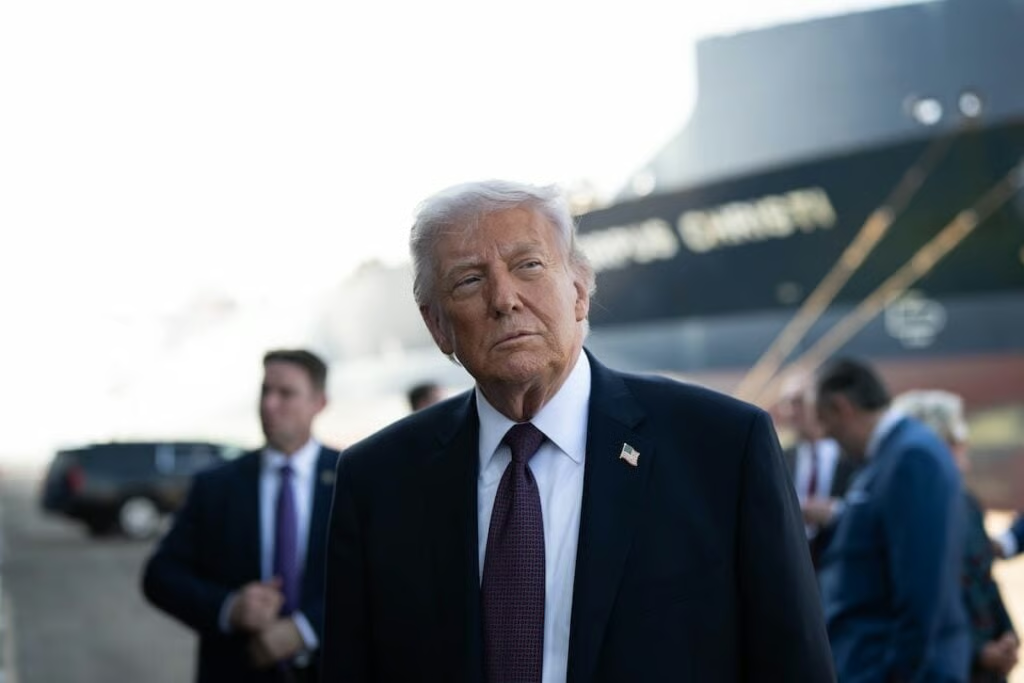
On Wednesday, President Donald Trump said talks with Iran could resume within days, likely in Pakistan, and expressed a surprising amount of optimism. "I think you're going to be watching an amazing two days ahead," Trump told ABC News. He also said he did not expect a two-week ceasefire ending April 21 to be extended.
According to a post by reporter Jonathan Karl on X, Trump said, "A deal is preferable because then they can rebuild." He added, "They really do have a different regime now. No matter what, we took out the radicals."
That's the diplomatic signal. The military action is a bit more direct. At the same time, the U.S. military announced it had effectively shut down Iran's maritime trade. Adm. Brad Cooper, head of U.S. Central Command, said American forces had "completely halted economic trade going into and out of Iran by sea" within 36 hours of launching the blockade.
Think about that for a second. That's the entire country's sea-based commerce. Gone. In a day and a half.
Vice President JD Vance, who led the recent talks, told Reuters he remained cautiously optimistic but acknowledged the deep mistrust between the sides. "You are not going to solve that problem overnight," he said. Pakistan, with support from Army Chief Asim Munir, is expected to host the next round of negotiations, though no formal date has been set.
This all follows an escalation over the weekend. On Sunday, Trump said the U.S. would block Iran-linked ship traffic in the Strait of Hormuz after Tehran failed to reopen the waterway. This is a major chokepoint for global oil shipments, so it's a big deal.
Trump said Iran's actions had disrupted global shipping and raised concerns about mines in the route. He said he was briefed by Vance and other officials after talks in Islamabad ended without a deal. He added that the U.S. Navy had been ordered to stop ships entering or leaving the strait, remove mines and intercept vessels accused of paying illegal tolls to Iran.
Vance framed the failed agreement as "bad news for Iran much more than" for the U.S. and emphasized that Washington's priority remained preventing Iran from developing nuclear weapons.
So, to recap: The U.S. is telling Iran it's open to talking again very soon, maybe in Pakistan. But it's also telling Iran, via its Navy, that it can't move anything by sea right now and its access to a critical global shipping lane is being cut off. It's the classic carrot-and-stick approach, except the stick here is a complete maritime blockade and the carrot is a potential meeting. It sets up a fascinating and tense few days ahead, just as the President predicted.