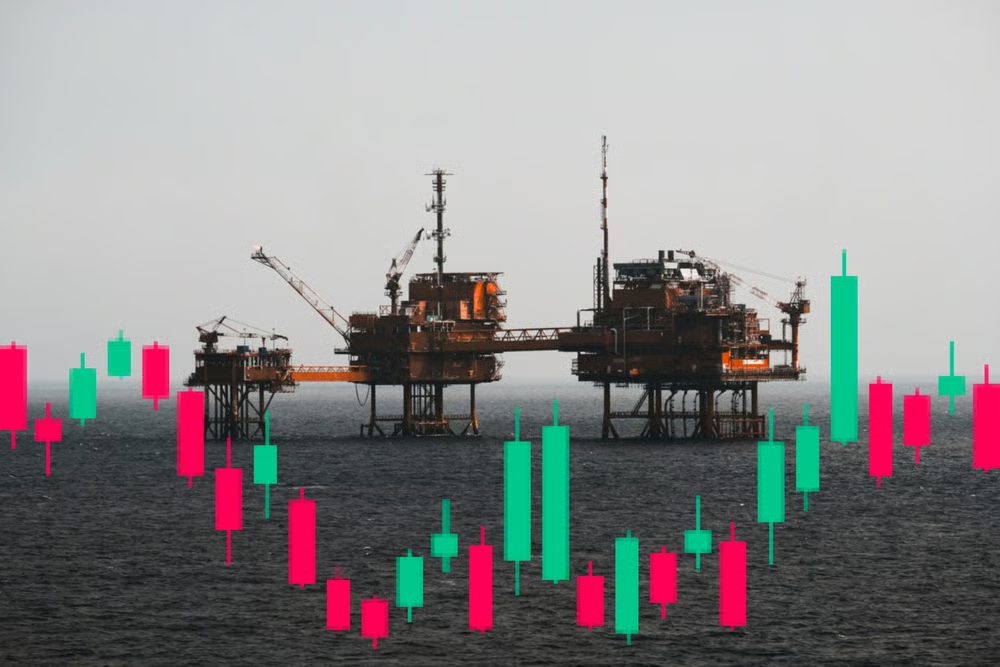
So, oil stocks are having a moment. Again. Military action in the Middle East tends to do that. The U.S. strikes on Iran that began in late February have pushed oil prices—and by extension, oil company stocks—higher. And now, a member of Congress has decided to get in on the action.
Congressman Jonathan Jackson, a Democrat from Illinois, recently disclosed that he bought shares of BP PLC (BP) in March. According to data from Quiver Quantitative, the transactions broke down like this:
- March 19: Bought between $15,001 and $50,000 worth of BP shares.
- March 20: Bought between $1,001 and $15,000 worth of BP shares.
Both trades are marked with the code "JT," which typically indicates a joint holding with a spouse. It's not Jackson's first rodeo with BP; he also bought shares back in May 2023, which he later sold in January 2024. But the timing of these new purchases is what makes them noteworthy.
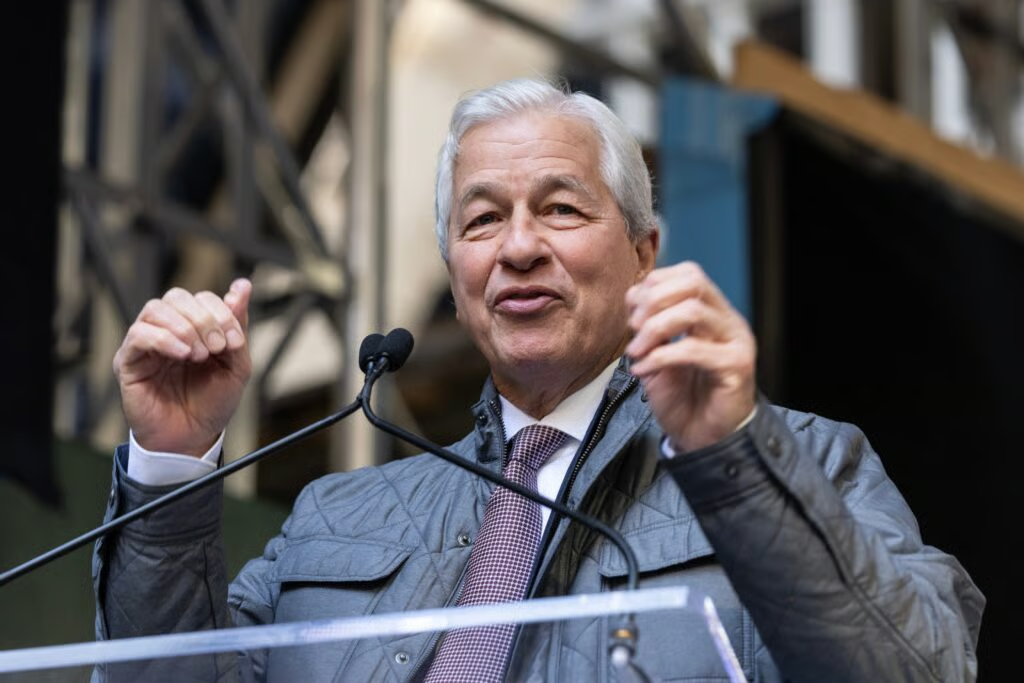
Here's the interesting part: Jackson sits on the House Committee on Foreign Affairs. That's the committee that deals with, well, foreign affairs—including the kind of geopolitical tensions currently roiling the Middle East and the global oil market. It's a position that could, in theory, give him access to non-public information or deeper insights into the situation than the average investor.
When he bought, BP shares were trading around $46.79 on March 19 and $45.69 on March 20. As of Monday's close at $46.44, the stock hasn't moved much since his purchases, but the trade will likely be watched closely. BP is already up 29.6% so far in 2026 and has soared more than 70% over the last 52 weeks, hitting multi-year highs.
Now, here's where it gets a bit paradoxical. On April 7—after buying the stock—Jackson took to social media to criticize President Donald Trump's approach to Iran. Trump had warned on social media that a "whole civilization" could face death if a deal wasn't reached. Jackson's response was blunt.
"The world stands witness as Trump announces his intent to commit war crimes so casually," he tweeted. "Republicans continue to enable this illegal, reckless escalation by refusing to stand for Congress' Constitutional responsibility to rein in unchecked power."
So, to recap: A congressman on the Foreign Affairs Committee buys shares of a major oil company after military strikes in a major oil-producing region. Then, he publicly condemns the administration's rhetoric around that very conflict. It's a curious juxtaposition.
Jackson's purchase also comes as another member of Congress recently sold shares of several oil stocks, highlighting how these trades by lawmakers are increasingly in the spotlight. For retail investors, it's a reminder that when geopolitical risk spikes, some people in positions of power are making moves—even if their public statements tell a different story.
.jpeg)