Here's a story about what happens when the abstract policy debates over artificial intelligence crash into the very real dirt of American farmland. The AI boom needs physical space—lots of it—to house the power-hungry data centers that make everything from ChatGPT to advanced research possible. That need is setting up a classic clash: national political ambitions versus local property rights, with tech companies caught in the middle, checkbooks in hand.
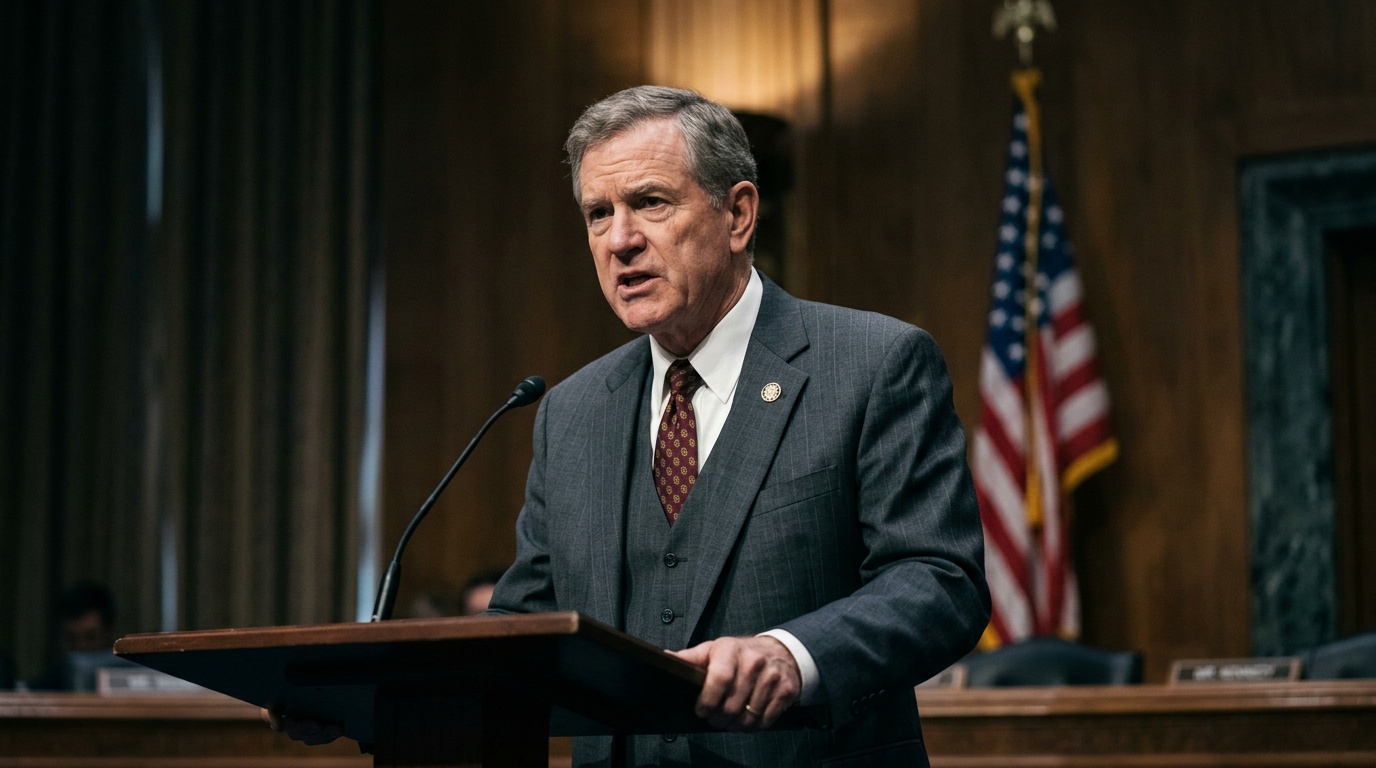
On one side, you have Senator Bernie Sanders (I-Vt.) and Representative Alexandria Ocasio-Cortez (D-N.Y.). This week, they introduced something called the AI Data Center Moratorium Act. The idea is pretty straightforward: hit pause. The bill would stop any new data center project requiring 20 megawatts of power or more from breaking ground until Congress gets its act together and passes some comprehensive AI regulations.
Why the urgency? Sanders' office pointed to a chorus of warnings from people who should know, like Elon Musk, OpenAI's Sam Altman, Anthropic's Dario Amodei, and AI pioneer Geoffrey Hinton. They've all expressed serious concerns about the technology's trajectory. "So why do we have no regulatory oversight?" Sanders' office asked, according to reports. The legislation isn't just a stop sign; it's a list of demands for what should come next: things like certifying AI models, protecting workers whose jobs might be displaced, reducing the environmental footprint of these facilities, and requiring union labor for their construction. It even includes a call to ban exports of advanced chips to countries without their own AI rules.
Ocasio-Cortez framed it as a matter of everyday economics. "These companies are now so desperate to profit off of the AI boom that they are racing to construct thousands of giant AI data centers and jacking up the utility costs of everyday Americans to pay for it," she said at a public event. She claimed a single data center can suck up as much energy as 100,000 homes. "Energy bills around the country are skyrocketing in order to pay for these AI data centers," she added, citing a staggering figure that some consumers living near these centers have seen their monthly utility bills jump by 267%.
While that debate plays out in Washington, a quieter, more personal version is unfolding on the ground. Take Ida Huddleston. She's 82 years old and owns a family farm spanning about 1,200 acres near Maysville, Kentucky. Recently, she was approached by an unnamed "artificial intelligence company" with an offer: $26 million for a piece of that land. She said no.
"They call us old stupid farmers, you know, but we're not," Huddleston told a local news station. "We know whenever our food is disappearing, our lands are disappearing, and we don't have any water — and that poison. Well, we know we've had it." For her, it wasn't just about the money. It was about the disruption—the potential strain on local water and energy resources that could drive up costs for her neighbors. She also dismissed the promise of economic growth, arguing data centers don't bring the kind of job creation a small town needs. Her verdict? "It's a scam."
According to reports, the unnamed company is now trying to rezone over 2,000 acres in the area. While the Huddleston family held firm, the allure of life-changing money is proving too strong for some. The company may have already acquired other land nearby to move forward with its plans.
This isn't just a Kentucky story. The same script is playing out in other communities. In Michigan, residents are organizing against data center projects, including one proposed by Oracle in Saline Township. Over in Dorr Township, community members are fighting a planned data center from Microsoft, which has been quietly buying up hundreds of acres in Allegan and Kent Counties since last year.
What you're seeing is the front line of AI's infrastructure war. On one end, politicians are trying to set national rules for the technology's growth. On the other, individuals are making million-dollar decisions about their own backyards. And in between, tech giants are navigating a landscape where public awareness—and resistance—is growing by the day. The fight over where to put the brains of the AI revolution is just getting started, and it's being fought field by field, and bill by bill.