So here's a cheerful thought to start your day: Iran's Foreign Minister is warning that the world is about to get hit by an "inflationary tsunami." Not a wave, not a surge, but a full-blown tsunami. And he's not talking about your grocery bill going up a few percent—he's talking about what he claims is the biggest oil market shortfall in history.
Iranian Foreign Minister Seyed Abbas Araghchi took to social media on Tuesday with some dramatic market commentary. He says the militarization of the Strait of Hormuz—that tiny but crucial waterway through which about a fifth of the world's oil passes—could lead to a loss of 20 million barrels of oil per day. For context, he claims this potential deficit is "bigger than Arab Oil Embargo, Iran's Islamic Revolution, and the Kuwait invasion COMBINED." That's the 1973 embargo that caused lines at gas stations across America, plus two other major Middle East oil shocks, all rolled into one. He's setting the bar pretty high.
"U.S. officials are posting fake news to manipulate markets," Araghchi wrote on X. "It won't protect them from inflationary tsunami they've imposed on Americans." So there you have it: according to Iran, the U.S. government is trying to talk down oil prices while simultaneously creating the conditions for them to explode. It's a neat trick if you can pull it off.
The $1 Trillion Question
Meanwhile, on the other side of the world, U.S. economists are doing their own scary math. The ongoing U.S. and Israeli joint military campaign against Iran—codenamed Operation Epic Fury—isn't just a geopolitical event. It's becoming a very expensive line item.
Economist Peter Schiff, never one to understate a crisis, warned that a prolonged conflict will require massive government borrowing. "The cost will likely be measured in the hundreds of billions and could top $1 trillion, causing already rising inflation to skyrocket," Schiff stated. Think about that for a second. A trillion dollars. That's a lot of zeros.
And here's the kicker: Schiff notes this inflation won't just come from supply shocks. It will come from the mechanics of modern government finance. The Treasury will issue debt to pay for the war, and the Federal Reserve will likely end up creating money to buy that debt. It's the classic "print money to fund a war" playbook, which historically has not been great for the value of currency.
Missiles, Ships, and Political Speeches
While the economists are crunching numbers, the conflict on the ground is getting hotter. In the latest developments, Iran has launched missile attacks on U.S. bases across five Middle Eastern countries. Separately, a UK maritime agency reported that a cargo ship in the Strait of Hormuz caught fire and was evacuated after being struck by an unknown projectile. When ships start getting hit in the world's most important oil chokepoint, commodity traders tend to notice.
The political rhetoric is also heating up. Israeli Prime Minister Benjamin Netanyahu spoke directly to the "people of Iran", calling on them to "remove the Ayatollah regime and gain your freedom," in an X post. It's a bold move, appealing directly to another country's citizens over the head of its government.
This all continues even as President Donald Trump hinted that the U.S. campaign against Iran could be nearing its endpoint on Monday, saying Tehran's military capacity has been heavily degraded. But he also issued a warning: Trump warned Iran against placing naval mines in the Strait of Hormuz, threatening severe military consequences if such activity were confirmed. So the message seems to be: we might be winding down, but don't test us on the water.
When the Rubber Meets the Road (or the Oil Meets the Water)
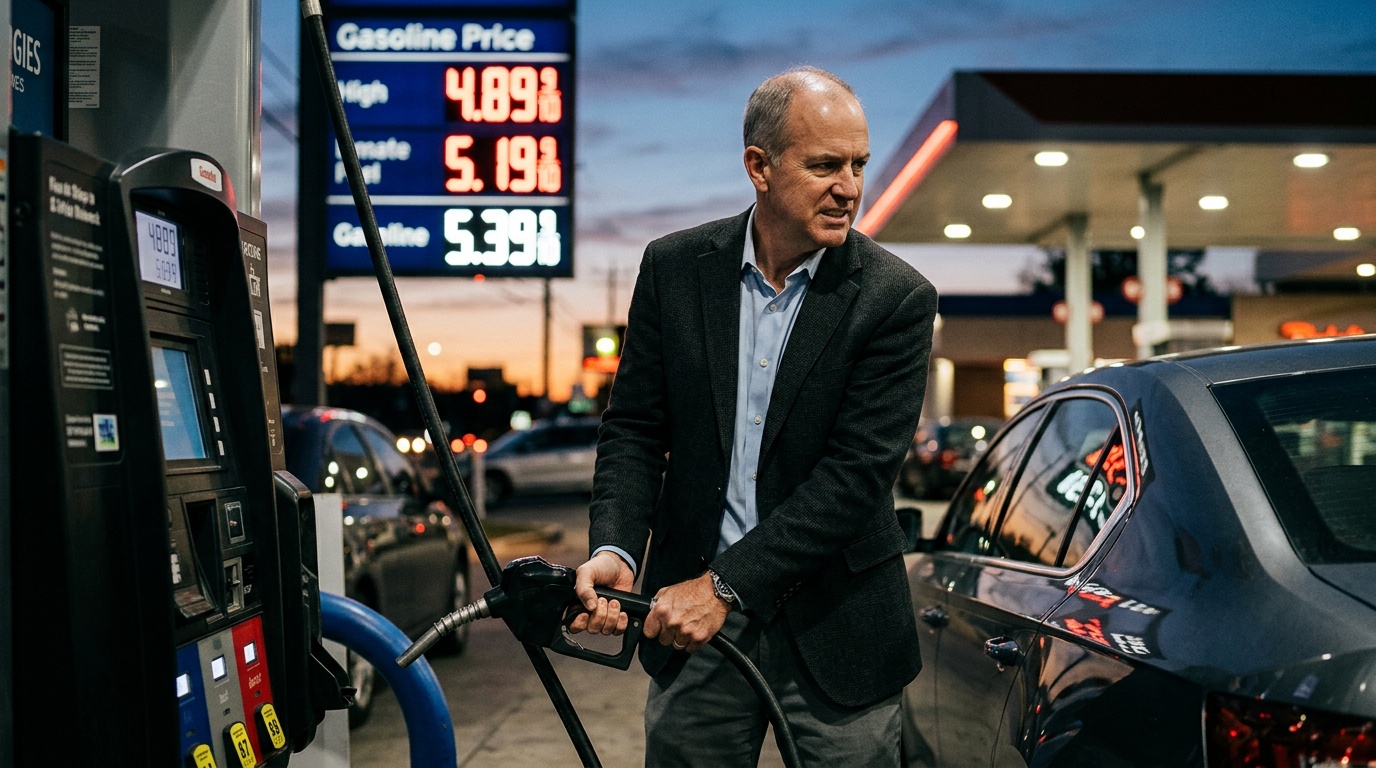
All this talk of tsunamis and trillion-dollar price tags isn't just theoretical. The physical realities of the conflict are already rattling international markets. Crude oil prices surged over 30% last week, briefly breaching $120 a barrel. At the last check, WTI Crude Oil futures were 0.85% higher at $84.16, retreating from an earlier 52-week high of $119.48. That's a wild ride in anyone's book.
The United States Oil Fund LP (USO), which tracks WTI futures, closed 1.47% higher on Tuesday, and it has risen by 17.36% over the last five sessions. When the ETF tracking oil is up 17% in a week, you know something's happening in the underlying commodity.
But it's not just oil. This energy shock is rapidly bleeding into other sectors. An Iranian drone attack forced the shutdown of Qatar's Ras Laffan, the world's largest natural gas export facility. That's severely disrupting agricultural supply chains and driving up fertilizer costs, because natural gas is a key input for fertilizer production.
The ripple effects are global. European natural gas prices climbed to a three-year high, jumping 68% in just one week. Think about that—European gas prices up 68% in a week. That's not a gradual increase; that's a spike.
Economist Mohamed El-Erian summed up the vulnerability perfectly, cautioning that global production systems are highly vulnerable right now. He warned that cross-border supply chains "do not handle 'sudden stops' well." And a missile attack on a major gas facility or a ship fire in the Strait of Hormuz is about as "sudden" a stop as you can get.
So what we have here is a classic geopolitical-economic feedback loop. Military action threatens oil flows. The threat of lost oil flows sends prices soaring. Soaring prices and war costs threaten to drive inflation. And everyone from Iranian ministers to American economists is trying to figure out just how big this loop might get. Is it a historic shortfall? A trillion-dollar war? An inflationary tsunami? Or all of the above? The markets, and your wallet, are waiting to find out.