





Here's an uncomfortable fact about tariffs: they're basically taxes on being poor. A striking new analysis from Yale's Budget Lab shows that President Donald Trump's 2025 tariffs work as a highly regressive tax, slamming America's poorest households more than three times harder than the wealthiest when measured as a share of income.
Trump's 2025 Tariffs Hit Poor Households Three Times Harder Than Rich, Yale Analysis Finds
MarketDash
Yale Budget Lab's latest analysis reveals Trump's tariffs function as America's most regressive tax in modern history, with the poorest 10% of households bearing a burden more than triple that of the wealthiest 10% when measured as a share of income.
Get Market Alerts
Weekly insights + SMS alerts
The Math Behind the Pain
According to the Nov. 17 update released Monday, this year's tariffs will slash after-tax income for the bottom 10% of households by 2.45% in the short run. Meanwhile, the top 10% of earners? They'll see their after-tax income drop by just 0.77%, which is roughly one-third the impact.
University of Michigan economist Justin Wolfers wasn't subtle about the implications. He shared Yale's findings on X, writing: "Trump's tariffs are the most regressive tax in modern American history. The poorest tenth of Americans pay an effective tax rate more than triple that of the richest tenth."
Why Rich People Get Off Easier
The dollar amounts tell one story, but the percentages tell the real one. Sure, wealthy households lose more in absolute terms—an average of $3,871 compared to $920 for the poorest households. But when you're already struggling to make ends meet, losing nearly 2.5% of your income hurts a lot more than a wealthy household losing less than 1%.
The reason is straightforward: poor families spend a bigger chunk of their budgets on exactly the stuff that's now heavily tariffed. We're talking clothing, shoes, electronics, cars—everyday necessities that have seen effective tariff rates rocket to levels not experienced since the early 20th century.
Yale's modeling uses the widely respected GTAP framework and accounts for behavioral changes as people try to dodge the tariffs by switching to different products. Even with that substitution factored in, the regressive pattern holds firm.
Back to the 1930s
Yale researchers estimate the overall average effective U.S. tariff rate has jumped from roughly 2.4% at the start of 2025 to 16.8% (before accounting for substitution). That's the highest rate since the 1930s, when protectionist policies helped turn a recession into the Great Depression.
The long-run outlook isn't pretty either. Separate estimates show a 0.31% reduction in U.S. GDP and the loss of hundreds of billions in potential revenue as economic activity contracts under the weight of these tariffs.
The report even includes a scenario where some tariffs imposed under the International Emergency Economic Powers Act get legally challenged and invalidated. Even in that more optimistic case, the poorest households still face a tax burden 2.7 times higher than the richest.
Markets React to Economic Uncertainty
Markets weren't thrilled with the broader economic picture. Futures for the S&P 500, Nasdaq 100, and Dow Jones indices traded lower on Wednesday, marking the third consecutive day of declines this week.
The SPDR S&P 500 ETF Trust (SPY) and Invesco QQQ Trust ETF (QQQ), which track the S&P 500 and Nasdaq 100 respectively, both closed lower on Monday. SPY dropped 0.84% to $660.08, while QQQ fell 1.22% to $596.31.
More News
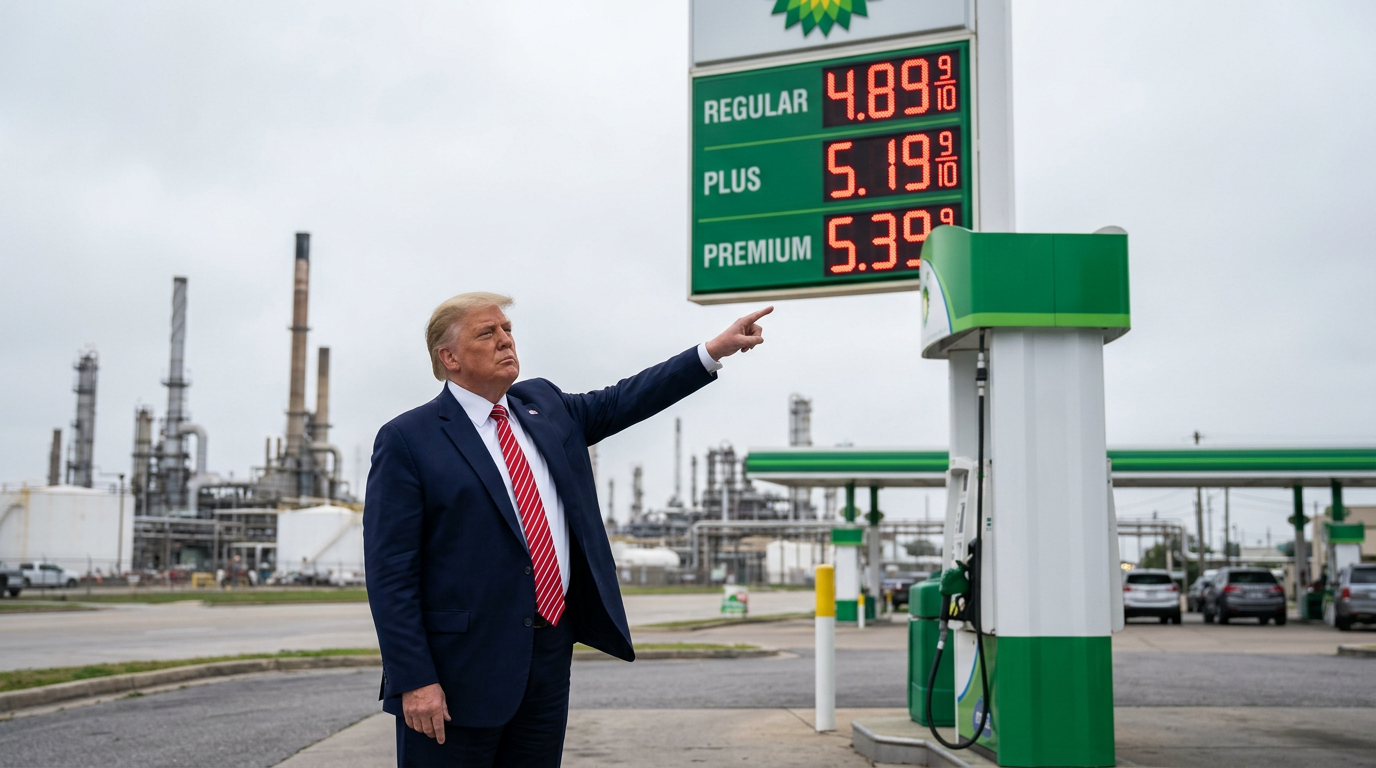
Trump Orders DOJ Probe Into Big Oil, Says Americans Are Being 'Gouged' At The Pump: 'Gasoline Prices Better Start...'
Get a Stake in OpenAI and Anthropic — Today

Futures Mixed as Trump Targets Gas Prices, FedEx Drops, and Micron Earnings Loom

Commerce Secretary Lutnick Warns of Chinese Robot Threat, Signals Crackdown on 'The Arms Race That Is Coming'

Tesla's Model Y and Model 3 Are the Most American-Made Cars Again — Here's Why That Matters Now
Trump's Secret Retirement Fund

Bill Cassidy's $1.5 Trillion Social Security Hail Mary: Invest in Stocks, Avoid the Pain

The U.S. Government Is Betting $17.5 Billion That Nuclear Can Save the Grid
Get Market News Alerts
Real-time alerts on price moves, news, and trading opportunities.
Join 20,000+ investors. No spam, ever.
Featured Articles
View all newsTrump Orders DOJ Probe Into Big Oil, Says Americans Are Being 'Gouged' At The Pump: 'Gasoline Prices Better Start...'
By MarketDash
June 24, 2026
Trump and Elon Are Back (Ad)
By Stansberry Research
Futures Mixed as Trump Targets Gas Prices, FedEx Drops, and Micron Earnings Loom
By MarketDash
June 24, 2026
Commerce Secretary Lutnick Warns of Chinese Robot Threat, Signals Crackdown on 'The Arms Race That Is Coming'
By MarketDash
June 24, 2026
Tesla's Model Y and Model 3 Are the Most American-Made Cars Again — Here's Why That Matters Now
By MarketDash
June 24, 2026

Elon “xPhone” Exposed (Ad)
By Timothy Sykes
Bill Cassidy's $1.5 Trillion Social Security Hail Mary: Invest in Stocks, Avoid the Pain
By MarketDash
June 24, 2026
The U.S. Government Is Betting $17.5 Billion That Nuclear Can Save the Grid
By MarketDash
June 24, 2026