Your Stop-Loss Sets the Trigger, Not the Price You Get
MarketDash Editorial Team
Author
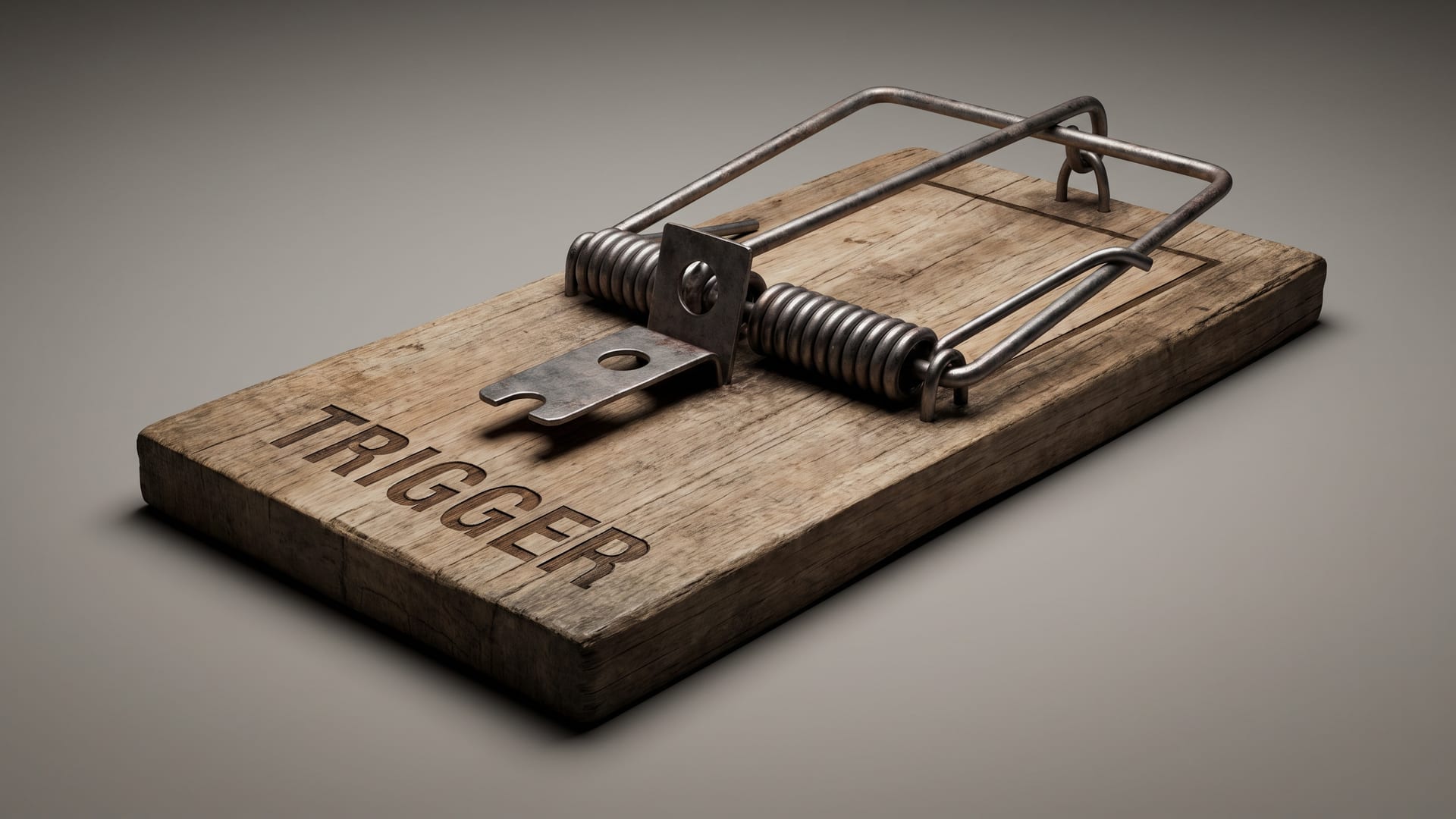
The order you think you placed
Most people believe a stop-loss is a trapdoor at a price they chose. The stock touches your number, the floor opens, you are out, you keep your dignity.
Here is what a stop-loss actually is: an instruction that watches the price and, once it touches your number, sends a market order. A market order is not a price. It is a request to sell to whoever shows up next, at whatever that person offers. You pick the trigger. Strangers pick the price.
That difference is invisible on quiet days and enormous on ugly ones. A stock can close one evening and open the next morning far below your stop, because no trade happened in between. Overnight, a company can report earnings, lose a big customer, get sued, or simply get sold by someone larger than you. When the market reopens, the first buyers bid low because they can, and every stop parked near your number turns into a sell order at the same moment. That pile of selling pushes the price down further for a few minutes, which trips more stops. The market does not read your note about the price you had in mind.
So the fill lands below your stop. That gap between the price you named and the price you got is called slippage. It is not a malfunction. It is the order working exactly as written.
A stop-limit buys a price and sells you a maybe
There is a fix people reach for: the stop-limit order. Same trigger, different ending. When the price touches your line, it becomes a limit order, meaning sell at your price or better and never worse. Sounds strictly superior. It is not.
A stop-limit guarantees the price and gives up the exit. If the stock gaps below your limit, nobody has to buy at your number, so nothing sells. You keep the stock, keep the loss, and keep watching. The order sits there doing nothing, like a smoke alarm that only goes off once you are already standing in the yard. That is a fine trade if you would honestly rather hold than sell cheap. It is a terrible trade if you assumed the position was closed.
The honest summary: a stop-loss sells you certainty of exit and uncertainty of price. A stop-limit sells you certainty of price and uncertainty of exit. You do not get both. Anyone who tells you otherwise is selling something.
Size it so the bad fill is boring
The thing that actually protects you has nothing to do with order types. It is position size.
Ask one question about every holding: if my exit is much worse than my stop, does that change my month or my decade? If the answer is my month, the position is too big for any stop to save you. A stop is risk control, not a guarantee, and risk control tends to fail at the exact moment you need it. That is why you build a second layer. Size the position so a bad gap hurts and does not wreck you, and the stop becomes a convenience instead of a plan.
Two smaller notes. A mental stop, the "I'll sell if it drops" kind, is the same as a real stop except you also have to be awake, decisive, and honest, which is three jobs. And a stop fires once. It cannot rescue you from a stock that leaks lower for two straight years.
Rules of thumb are not promises
Investing runs on shortcuts that work most of the time, and the "most" is load-bearing.
Take the 4% rule. Research from the 1990s (William Bengen in 1994, the Trinity study in 1998) found that withdrawing 4% of a stock-and-bond portfolio in your first year of retirement, then raising that amount with inflation, lasted at least 30 years in most historical periods. Same idea from the other direction: save 25 times your yearly spending. Useful? Extremely. A promise? No. "Most historical periods" is doing real work in that sentence, and the periods where the rule broke are the ones people wrote books about.
A stop-loss is that same species of tool. It improves your odds. It cannot be your entire defense. Treating a rule of thumb as a guarantee is how people get blindsided by something they were warned about in advance.
Check it yourself in MarketDash
Before you set a stop, look up the stock's next earnings date in the Overview section of its stock page. Earnings are the classic overnight gap: the report lands after the market closes, the stock reopens at a new price, and your stop fills wherever the crowd happens to be standing. Knowing the date does not tell you which way the stock goes. It tells you when your stop is least able to help you, so you can decide beforehand whether to hold through it, trim first, or take the risk with your eyes open.
Get Market News Alerts
Real-time alerts on price moves, news, and trading opportunities.
Join 20,000+ investors. No spam, ever.
Featured Articles
View all news
Iran Hits Bahrain With Missiles and Drones as JD Vance Won't Fully Back Trump's War

Iran Readies Tankers To Test U.S. Blockade, And Oil's Surplus Story Hangs In The Balance

Trump Says He'd Work With Democrats on a 10% Credit Card Rate Cap: 'I Would Do It'

Data Centers Are The New Oil Fields — And 'Pretty Soft Targets'

Bitcoin Could Hit $250K and Still Lose to Altcoins, Crypto Banter Founder Says

Bernie Sanders Revives Medicare for All Push: 'Restoring Obamacare Alone Is Not the Answer'
Trump Spins FBI Database Hack as a 'Positive' That Could Expose Voter Fraud