Why a High Dividend Yield Is Not the Same as a 4% Retirement Rule
MarketDash Editorial Team
Author
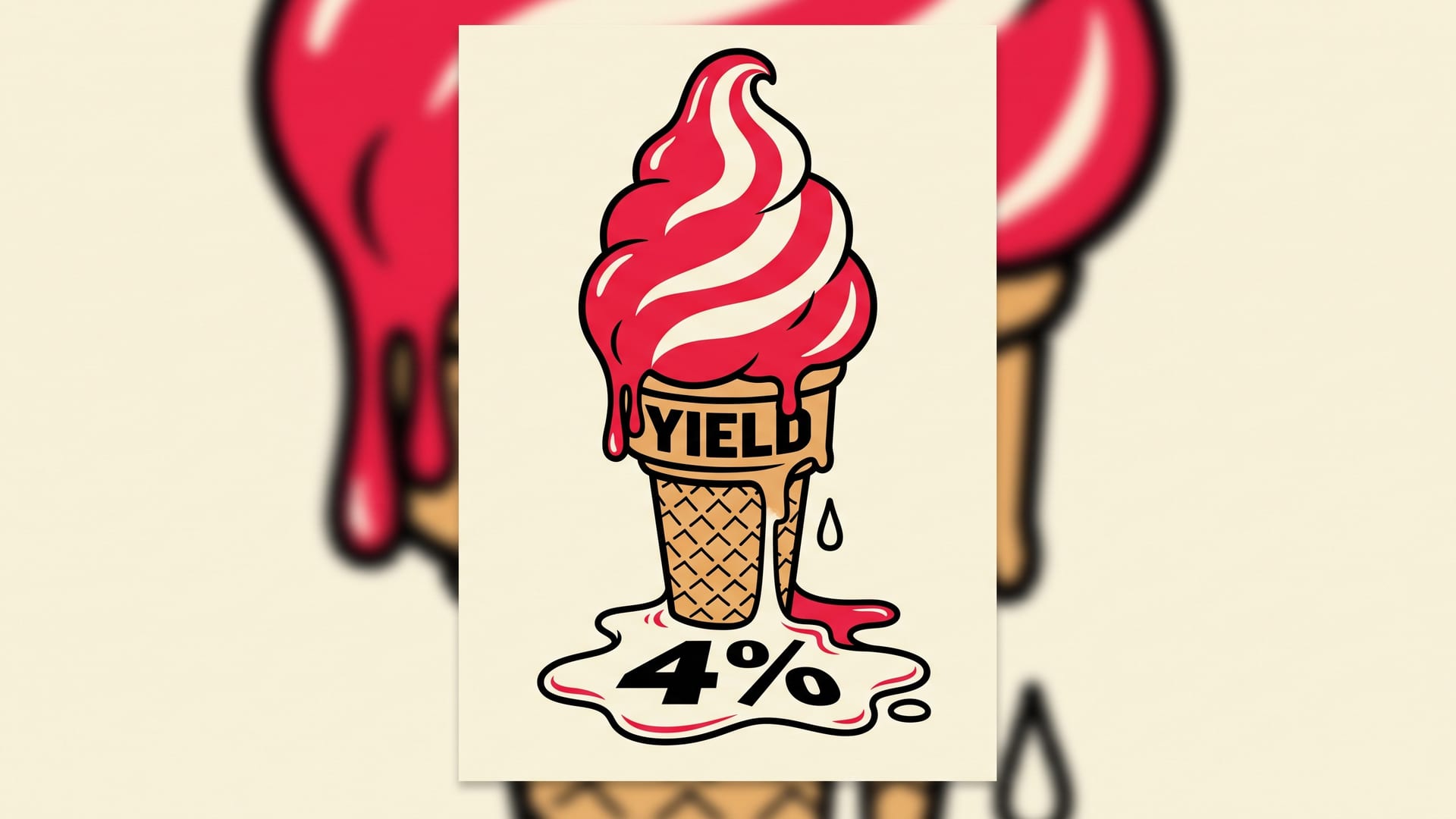
A yield is a fraction with a nervous bottom half
Dividend yield is simple: a year of dividends per share divided by the share price. Look at what sits underneath. The price. So when a stock falls and the payout stays put, the yield climbs without anyone deciding to be more generous. The company did not change. The price did. A yield that jumps because the price sagged is the market's opinion expressed as a percentage, and the market is not in the habit of handing out free income to anyone who can read a screen.
Companies rarely cut dividends during good stretches. The cut arrives after the trouble: the contract that did not renew, the debt that needs refinancing at a worse rate, the lawsuit. By the time the press release lands, the yield has been climbing for months and looking more and more like a gift. Management announces a dividend cut the way someone announces a breakup. Last, and after you have already noticed the suitcases by the door.
So the highest yield on your screen is not a fact about generosity. It is a question: why is the price this low?
Three checks that separate a deal from a trap
Payout ratio. That is the share of a year's profit paid out as dividends. A company paying out less than it earns has room. A company paying out more than it earns is borrowing from the future with your name on the paperwork. Treat a low payout ratio as a first test, not a verdict, because profit is an accounting number and accounting is a language, not a receipt.
Cash. Dividends leave the company as actual cash. Profits can be an opinion. Look at whether the business throws off enough cash after its normal spending to cover the dividend. If the payout depends on new borrowing or selling assets, you are being paid with your own money, or with the bank's.
Growth of the dividend. A flat payout is a slow pay cut. At 3% inflation a year, something that costs $10,000 ends up costing about $18,000 after 20 years, and $10,000 kept in cash buys only what $5,537 buys at the start. A dividend that never grows loses that ground every single year. A dividend growing 8% a year doubles in about 9 years (the rule of 72: divide 72 by the yearly return). Would you rather own a big payout that never moves, or a smaller one that doubles in about 9 years? That is a real choice, and a screen full of yields does not show it.
A high yield is not the same as a high return
Total return is dividends plus the change in the share price. If the price slides by more than the dividend pays, you have not been paid. You have been slowly cashed out at a price you did not choose. That is the quiet danger: a payout that feels like income while the thing producing it shrinks.
This is where the 4% rule is worth remembering. Research from the 1990s (William Bengen in 1994, the Trinity study in 1998) found that withdrawing 4% of a stock-and-bond portfolio in the first year of retirement, then raising the amount with inflation, lasted at least 30 years in most historical periods. Same idea, stated another way: save 25 times your yearly spending. Notice what that 4% is not. It is not the dividend yield. It comes from the whole portfolio's return, price growth included, with the rest reinvested. A single stock with a fat yield can still be a worse income plan than a dull portfolio you sell a slice of each year.
None of this makes high yields bad. Mature businesses with steady cash and slow growth can pay out a lot and keep doing it for decades. The yield simply tells you nothing until you know why it is high. High payout plus low price plus a shrinking business is a countdown. High payout plus steady cash plus modest growth is a paycheck.
Check it yourself in MarketDash
Before the big number pulls you in, open the stock page and read the Intrinsic Value section. It shows an estimate built from a discounted cash flow and a comparison with similar companies, which gives you a second opinion on the price. If the shares sit well below that estimate while the yield looks huge, you may be looking at fear. If they sit above it, that generous yield is being funded out of your own capital. Then read the Wall Street section, which lists each analyst's rating, price target, upside, and date. Check the dates. An opinion written before the last earnings report is a souvenir. For a wider sweep, the Screener's Intrinsic Value % and PE Ratio columns, plus the MarketDash Undervalued preset, help you judge whether a beaten-down price is a bargain or a diagnosis.
The habit worth keeping: when a yield looks too good, assume the price knows something you do not, and go find out what.
Get Market News Alerts
Real-time alerts on price moves, news, and trading opportunities.
Join 20,000+ investors. No spam, ever.
Featured Articles
View all news
Trump Says No Iran Strike Today, Oil Retreats While Dow Futures Edge Higher

Lula Beats Flávio Bolsonaro in Brazil Election, Keeping Latin America's Biggest Economy At Odds With Trump — Brazil ETFs Sink Overnight

A $1 Trillion Depreciation Bomb Is Ticking Beneath the AI Market

Kevin Hassett Says US and Canada Are 'Very Close' to a Trade Deal as Trump's Talks Pick Up Speed

Ross Gerber Says Trump's Own Supporters Are Paying the Price at the Pump

Newsom and Buttigieg Blast Trump Over Gas Prices as Analyst Flags $2.72 Diesel Surge

Netanyahu Wants A Crypto 'Bypass Economy' For Sanctions, And His Rivals Are Calling It A 'BibiCoin' Disaster