Why a 1% Fund Fee Can Cost You $154,000
MarketDash Editorial Team
Author
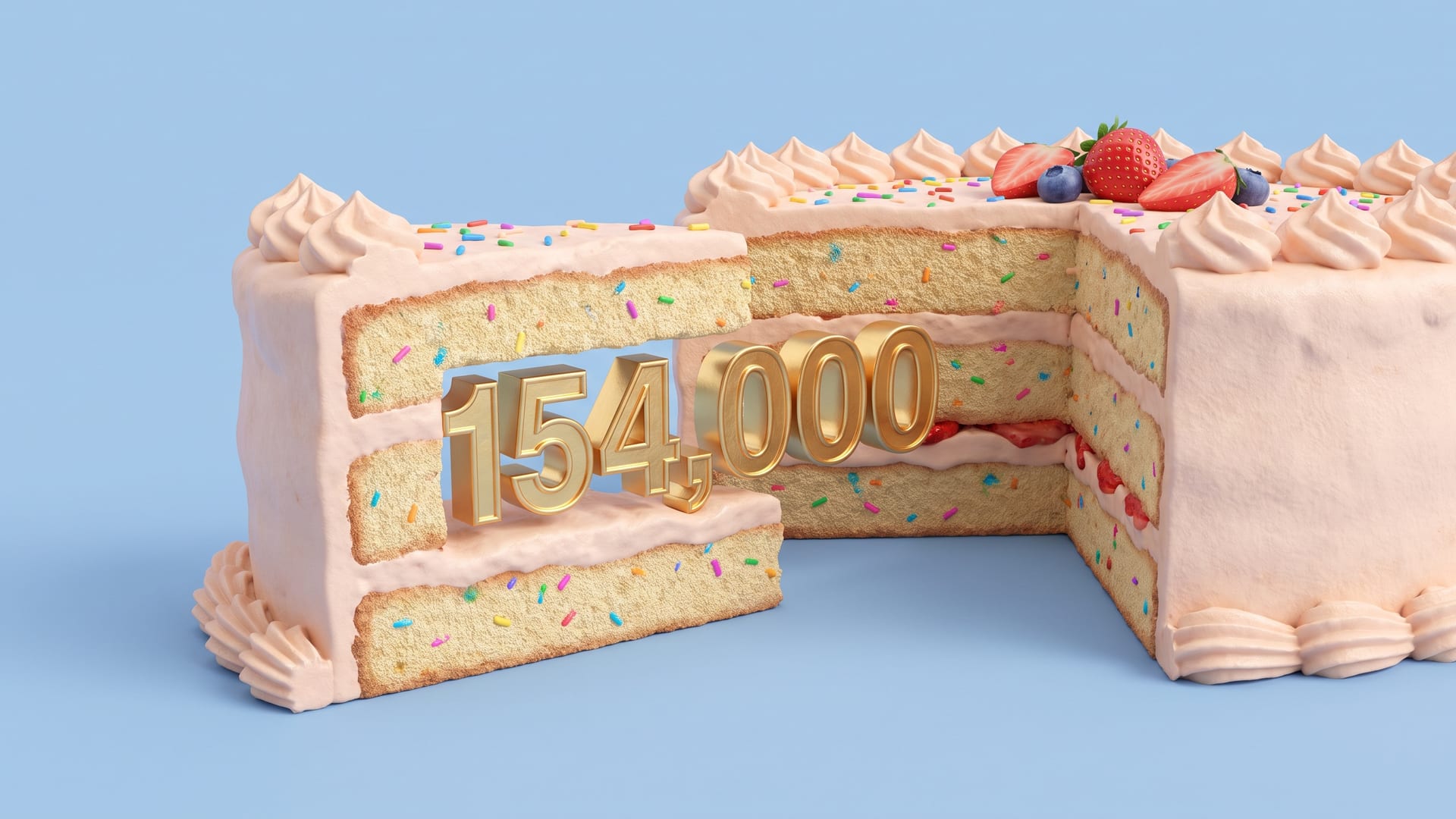
Start with $10,000 and add $500 a month for 30 years, earning 8% a year before fees. Do it in a fund that charges 0.05% a year and you end with about $845,000. Do the identical thing in a fund that charges 1% a year and you end with about $691,000. Same money in, same market, same patience. The second fund simply charged more, and the bill came to about $154,000.
That is the first thing to understand about picking stocks: the fee gets charged before you are right about anything. A 1% yearly fee is not a rounding error. It is a subscription, and the content is your own money.
Your pick has to be right three times
A single stock asks you to be correct about three separate things. Is this a good business? Is the price you are paying reasonable for it? And will you still believe all of that when the price drops and your stomach disagrees?
An index fund asks you to be correct about none of them. You buy a basket of hundreds of companies in one click. The good ones grow and take up more of the basket. The bad ones shrink and take up less. You never have to guess which is which, because you own the result of everyone else's guessing.
Now think about who is on the other side of your trade. You buy a stock, someone sells it. That person has a research team, a data terminal, and a boss checking their work. You have a brokerage app and a lunch break. Sometimes you will win that trade. Betting your retirement on being the sharper one in that matchup is a strange hobby.
The misses are the other half of the bill
People who pick stocks count their wins and forget their losses. The market does not forget. One bad pick in a small portfolio can wipe out the gains from two good ones, and you have to eat that loss before you get to the fee discussion.
Then there is the winner you sold too early, which stings in a different way. Selling a winner early feels smart until it keeps going without you. The index fund never has that problem, because it never sells the winner to prove a point.
And the fee sits on top of all of it. To come out ahead of a cheap index fund, your picking has to be good enough to cover the extra cost, the taxes and trading costs from buying and selling, and the money you lost on the ones you got wrong. That is not a small hurdle. That is a hurdle wearing a hurdle costume.
Boring is the feature
Owning the whole market is genuinely dull. Nothing dramatic happens on an ordinary afternoon. You do not get to tell anyone at a barbecue about your thesis. The upside is that dullness is exactly what you want from the part of your money that has to last. Excitement and reliable returns are usually sold separately, and the exciting one costs more.
The other upside is that this is one of the few decisions you only have to get roughly right once. Pick a broad, low-cost fund, set up automatic contributions, and go live your life. You are not managing a portfolio anymore. You are running a small factory that turns paychecks into ownership of the economy.
The rule of 72 is the reason to start early: divide 72 by a yearly return and you get the rough number of years it takes money to double. At 8% a year, that is about 9 years. Every doubling is another chance for a small yearly fee to nibble at more of your money. Fees do not stay small. They compound too.
Where your effort actually pays
Two levers move your outcome more than any stock tip. The first is how much you save. The second is what you pay to invest. Neither requires an opinion about a company.
For the first, the 4% rule gives you a target. Research from the 1990s (William Bengen in 1994, the Trinity study in 1998) found that taking 4% of a stock and bond portfolio in your first year of retirement, then raising that amount with inflation, lasted at least 30 years in most historical periods it examined. Turned around, it is a savings goal: save 25 times your yearly spending. That is a number you can work toward without knowing anything about semiconductors.
For the second, look at what you pay. Cheap broad funds often charge something like 0.05% a year. Paying 1% instead is allowed, but you should know you are choosing it, and you should know what the choice costs, as the $10,000 example shows.
Check it yourself in MarketDash
Next time you are sure a single stock is the winner, test the certainty. Open its stock page and find the Intrinsic Value section. You will see an estimate built from a discounted cash flow plus a second estimate from how similar companies are priced. If those two disagree sharply, that disagreement is the honest measure of how much of your thesis is a guess.
Then scroll to the Wall Street section. You get each analyst's rating, price target, upside, and the date it was published. Count how often they contradict each other. Those are paid professionals with the same information you have. If they cannot agree on one stock, ask yourself why your one afternoon of reading settles it.
Want the other direction? Open the Screener, try the "MarketDash Undervalued" preset, and look at the PE Ratio column. The PE ratio is the share price divided by a year of profit per share, which is a plain way of asking how many dollars you pay for each dollar of yearly profit. Cheap beats fashionable more often than anyone expects.
Then close the app and buy the whole market anyway.
Get Market News Alerts
Real-time alerts on price moves, news, and trading opportunities.
Join 20,000+ investors. No spam, ever.
Featured Articles
View all news
Meta Crushes Q3 Estimates, Unveils 2-For-1 Split And A New Class Of Stock

SpaceX Rockets 10% And Restarts The AI Trade As Nasdaq 100 Climbs 1.3%
Netflix Stock Hits 52-Week Low: Why Weak Q4 Guidance Is Spooking Investors

Lam Research Beats Q1 Estimates, But Guidance and a 7% After-Hours Slide Steal the Show

Elon Musk's Tesla-SpaceX Mega-Merger Could Create 'Most Unique Company in the World,' Analyst Says

Americans Have Burned $139 Billion Extra on Gas Since the Iran War Started — That's 338,000 Homes, Says Analyst

Coinbase Stock Jumps 3.8% as Needham Hikes Target, Bitcoin Rebounds and OCC Drops Stablecoin Rules