Monthly Dividends Do Not Mean More Money, but Fees Can Cost You $57,000
MarketDash Editorial Team
Author
Frequency is a calendar, not a return
Picture a pair of funds that own the same pile of companies. One pays you quarterly. The other pays monthly. The monthly one feels better. It is not better. The cash came out of the same businesses, and the size of the check is set by how much profit those businesses hand over, not by how often the envelope shows up.
Here is the idea worth keeping: dividend frequency is a payment schedule. A payment schedule is not a return. Total return is the change in the share price plus the dividends you collected. Two funds holding similar companies do not earn more just because one spreads the deposits more evenly across your statement.
A monthly payment is satisfying the way a gym that texts you every day is satisfying. The texts are not the workout. The statements are not the return.
A dividend is your own money, handed back
When a company pays a dividend, the share price drops by about the amount paid. The cash moves from the company's account to yours, and the business is worth that much less the moment it leaves. You did not receive a gift. You received a slice of a pie you already owned, placed on a plate.
Dividend yield is a year of dividends per share divided by the share price. It tells you how big the slice is. It says nothing about whether the pie is growing.
That distinction matters because a high yield can be a warning sign wearing a bow. If the price falls and the dividend stays put, the yield rises. A fat yield often means the market expects the payout to get cut. Chasing it is like taking a job because the signing bonus is large and ignoring the part where the company is on fire.
Where the monthly version quietly costs you
A couple of costs hide behind a monthly payout.
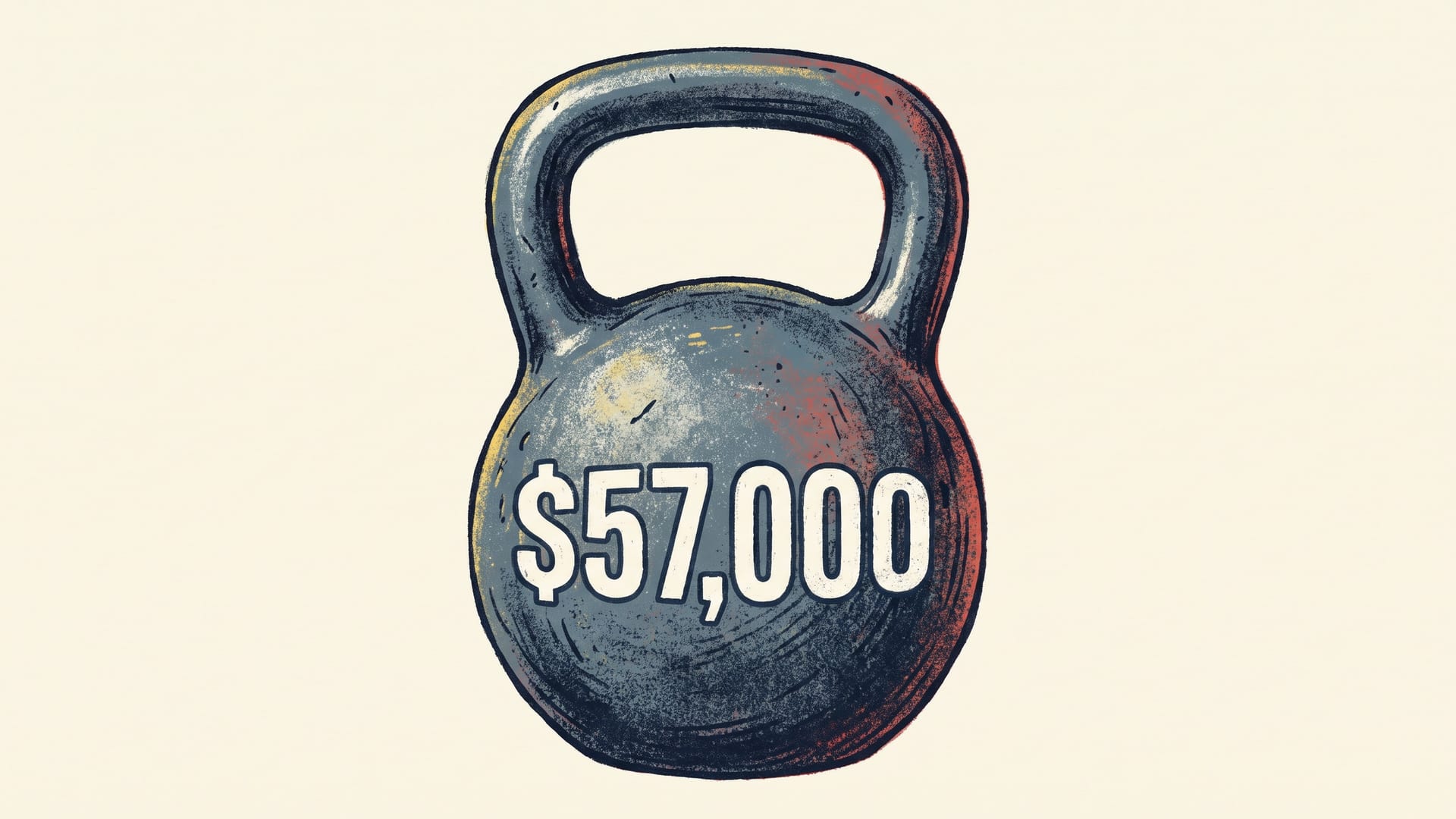
The first is the fee. Funds built to pay monthly often charge more than plain index funds, and fees compound against you. Start with $10,000, add $500 a month for 20 years, and earn 8% a year before fees. With a 0.1% yearly fee you end at about $339,000. With a 1.5% yearly fee you end at about $282,000. The higher fee costs about $57,000, before taxes. Nobody sends you a statement about the money you did not collect. That is the entire trick.
The second cost is behavior. A monthly deposit looks like a paycheck, and paychecks get spent. Reinvested dividends compound; spent ones do not. The rule of 72 is a rough way to see the stakes: divide 72 by a yearly return to estimate the years it takes money to double. At 8% a year, about 9 years.
Ask a better question than how often it pays
- What is the payout ratio, meaning the share of profit paid out as dividends? A company paying out more than it earns is borrowing from next year to look generous in this one.
- What is the total return, price change plus dividends? A yield attached to a shrinking price is a slow leak.
- What does it cost? A fee is a permanent, silent tax on the whole arrangement.
- Is the yield high because the price fell? Check the business before you fall in love with the check.
For retirement income, there is a sturdier yardstick than "does it pay monthly": the 4% rule. Research from the 1990s (William Bengen in 1994, the Trinity study in 1998) found that withdrawing 4% of a stock-and-bond portfolio in the first year of retirement, then raising that amount with inflation, lasted at least 30 years in most historical periods. The same idea from the other side: save 25 times your yearly spending. Notice what is missing from that math. The word monthly. Your bills are monthly. Your portfolio does not have to be, and you can top up a quarterly payout by selling a few shares when you need cash.
Where the money sits also matters more than how often it lands. Roth accounts are funded with money that was already taxed, and qualified withdrawals in retirement are tax-free. Taking money out of a traditional IRA or 401(k) before age 59½ usually means income tax plus a 10% penalty, with some exceptions. That is a bigger deal than the spacing of the deposits.
Check it yourself in MarketDash
You will not find a column for payment frequency in the Screener, which is correct, because frequency was never the question. Compare dividend payers on two columns instead: Intrinsic Value %, which shows how far the price sits from MarketDash's blended estimate of what the business is worth, and PE Ratio, the share price divided by a year of profit per share. Try the "MarketDash Undervalued" preset and read the names it returns.
If a company interests you, open its Stock page and read the Intrinsic Value section, which shows the discounted cash flow estimate and the similar-companies comparison behind the number. Treat that figure as an estimate, not a promise. Then decide, without checking the payout calendar once.
Get Market News Alerts
Real-time alerts on price moves, news, and trading opportunities.
Join 20,000+ investors. No spam, ever.
Featured Articles
View all news
Iran Hits Bahrain With Missiles and Drones as JD Vance Won't Fully Back Trump's War

Iran Readies Tankers To Test U.S. Blockade, And Oil's Surplus Story Hangs In The Balance

Trump Says He'd Work With Democrats on a 10% Credit Card Rate Cap: 'I Would Do It'

Data Centers Are The New Oil Fields — And 'Pretty Soft Targets'

Bitcoin Could Hit $250K and Still Lose to Altcoins, Crypto Banter Founder Says

Bernie Sanders Revives Medicare for All Push: 'Restoring Obamacare Alone Is Not the Answer'

Trump Spins FBI Database Hack as a 'Positive' That Could Expose Voter Fraud