Keep Two Years of Spending in Cash So You Never Sell in a Crash
MarketDash Editorial Team
Author
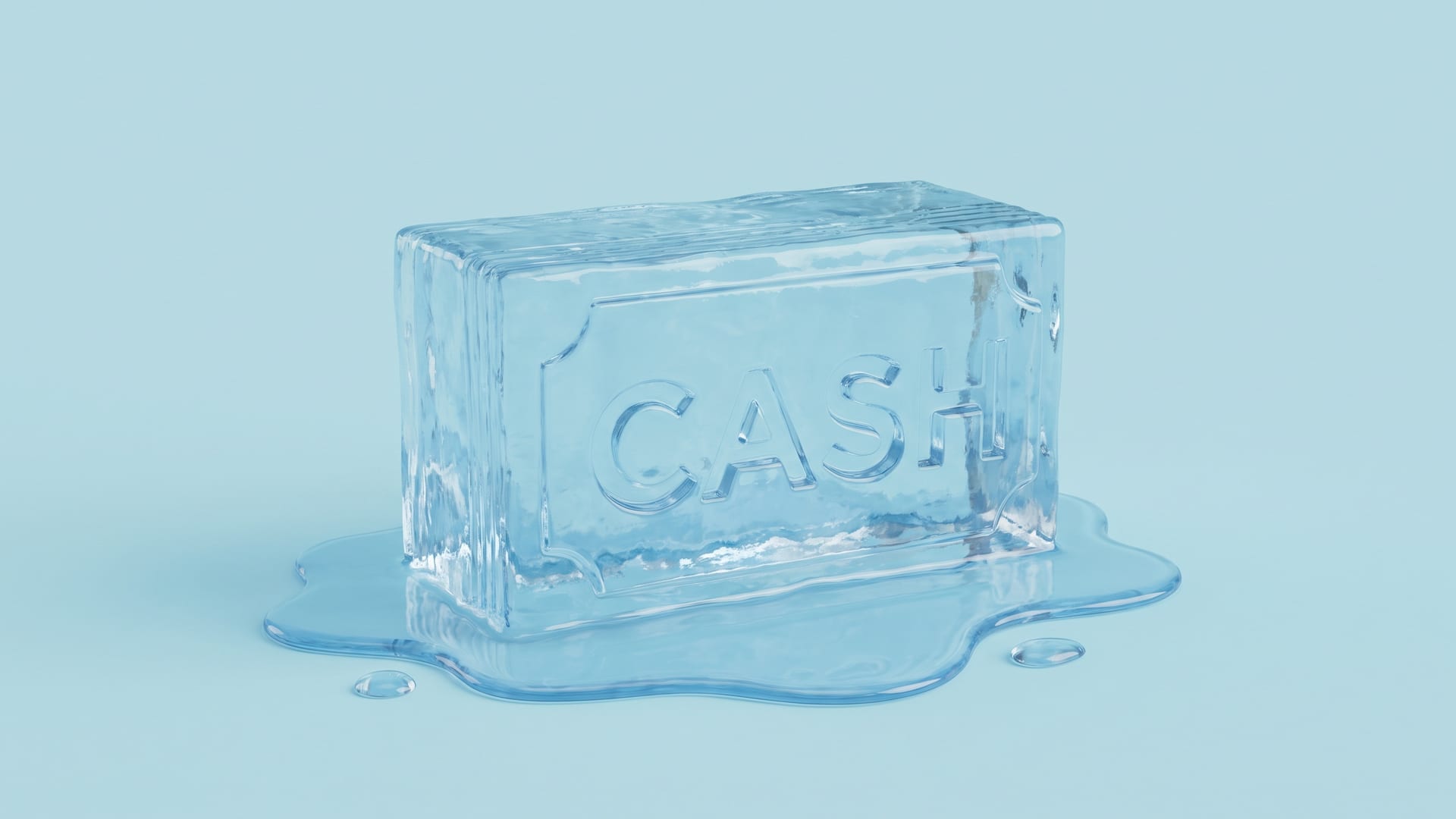
The most expensive trade a retiree ever makes is rarely a bad fund pick. It's selling good investments in a bad year because the water heater died, and the water heater does not accept shares.
You can refuse that trade. Keep two years of spending in cash, in a boring account, and pay the plumber from there. This is not a clever strategy. It has no edge and no forecast. It is the financial version of the spare key under the mat: unglamorous, slightly embarrassing, and the reason you don't break a window.
What the bucket actually buys
Start with the rule everyone quotes. Research from the 1990s (William Bengen in 1994, the Trinity study in 1998) found that taking out 4% of a stock-and-bond portfolio in the first year of retirement, then raising that amount with inflation each year, lasted at least 30 years in most historical periods. The shortcut version: save 25 times your yearly spending.
If you spend $48,000 a year, 25 times that is $1,200,000, about $1.2 million. That is the target. It's also a big number, which is why people get attached to it and forget its fine print. The 4% rule is a study of portfolios that stayed invested. It has nothing to say about the retiree who quits in a bad year, moves everything to cash, and spends the next decade watching from the sideline.
That's who the bucket is for. Not your spreadsheet. You.
A crash plus a broken furnace is how a 30-year plan becomes a 12-year plan. The cash bucket turns a market event into a paperwork event. You spend cash. You sell nothing. You stay invested. That is the entire trick.
Why two years, and not a round number
Most people pick a cash cushion the way they pick a hotel: some number that feels normal. Ten thousand. Fifty. A hundred, because it's round and round feels safe.
Size the bucket to your life instead. Two years of your spending. If you spend $48,000 a year, two years is $96,000. If you spend more, the bucket is bigger. If you spend less, it's smaller. Your neighbor's number is irrelevant, and so is the number that sounds impressive at a dinner party.
Two years is a deliberate choice, not a magic formula. One year is thin: a roof plus a car plus a dental bill can eat a year in a single autumn. Two years covers a bad stretch and the refill, and it's small enough that you don't spend your whole retirement hiding in cash. Anyone telling you six months is plenty has not priced a roof.
The fee you pay for sleeping well
Now the honest part, because a column that only sells the upside is an advertisement.
Cash loses to inflation. At 3% a year for 10 years, something that costs $96,000 ends up costing about $129,000, and $96,000 left in cash buys only what about $71,000 buys. That gap is real money, and it leaves your account quietly, without a statement line, every single year.
There's a second cost. The rule of 72 says you divide 72 by a yearly return to estimate how long money takes to double. At 8% a year, money doubles in about 9 years. Every dollar sitting in the bucket is a dollar not doing that.
So yes: the bucket is a drag. Call it a premium, because that's what it is. You are paying a known, boring, small fee to avoid an unknown, dramatic, large one. Selling stocks at the bottom to fund a furnace is the large one. The premium is the price of never having to make that trade.
Anyone who tells you a cash cushion is "free" is selling something. It's not free. It's cheap.
Put the cash where you can actually reach it
A bucket you can't open isn't a bucket. It's a decoration.
This matters most with retirement accounts. Taking money out of a traditional IRA or 401(k) before age 59½ usually means income tax plus a 10% penalty, with some exceptions. So if you retire early, or you're still working and want a cushion for emergencies, the traditional account is the wrong shelf for money you may need in a hurry. Paying a penalty to fix a furnace is a special kind of insult.
Roth accounts work differently: they're funded with money that was already taxed, and qualified withdrawals in retirement are tax-free. That makes a Roth a more flexible place to park money you might need.
Then keep the rest of the bucket somewhere dull and reachable: a savings account, or short-term holdings you can turn into cash without a drama. The point is access in days, not returns in decades. If getting your cash takes a phone call, a form, and a business day, fine. If it takes a market recovery, you've built a bucket with a hole in it.
Pick your number before you pick a fund
Do the arithmetic on a napkin. Write down one year of your spending. Double it. That's your cash target, full stop, no rounding up to something prettier.
Then check the whole plan. Does everything outside the bucket still add up to 25 times your yearly spending? If it does, you're done. If it doesn't, the bucket isn't the problem, the savings rate is, and no clever fund fixes that.
Then write the rule down where you'll see it in a bad year: spend from cash first, refill it after good years, and don't touch the investments. The bucket only works if you let it. Your job in a bad year is to be the person who follows the rule, not the person who has a feeling.
Get Market News Alerts
Real-time alerts on price moves, news, and trading opportunities.
Join 20,000+ investors. No spam, ever.
Featured Articles
View all news
Alphabet's Worst Week Since 2011, Intel's Record Crash: The AI Trade Cracks as Warsh Warns Rates 'Get In The Cracks'

Intel's 29.6% Crash Drags Nasdaq Down 3.2% as Chip Stocks Lose $631 Billion

Chip Stocks Wipe Out $1 Trillion in Friday Bloodbath: 5 Stocks Alone Account for 60% of the Damage

Binance's $6.3B Hack Sends Bitcoin ETF Down 5%, But This Inverse ETF Soars 21%

Amazon Is Burning $220 Billion on AI — Here's Why Wall Street Can't Agree on the Payoff

Alphabet's $482 Billion Wipeout Exposes the Hidden Risk in Your QQQ ETF

ExxonMobil's Refining Machine Prints $9 Billion as Dividend Gets a Raise