






Cashing Out an Old 401(k) Early Costs Tax Plus a 10% Penalty
MarketDash Editorial Team
Author
The most expensive option on the form
Your 401(k) does not get deleted when your badge stops working. It sits there, still invested, still yours, quietly compounding while you learn a new payroll portal. Then a form shows up asking what you would like to do with it, and one of the choices is to cash out. That choice feels like finding a twenty in an old coat.
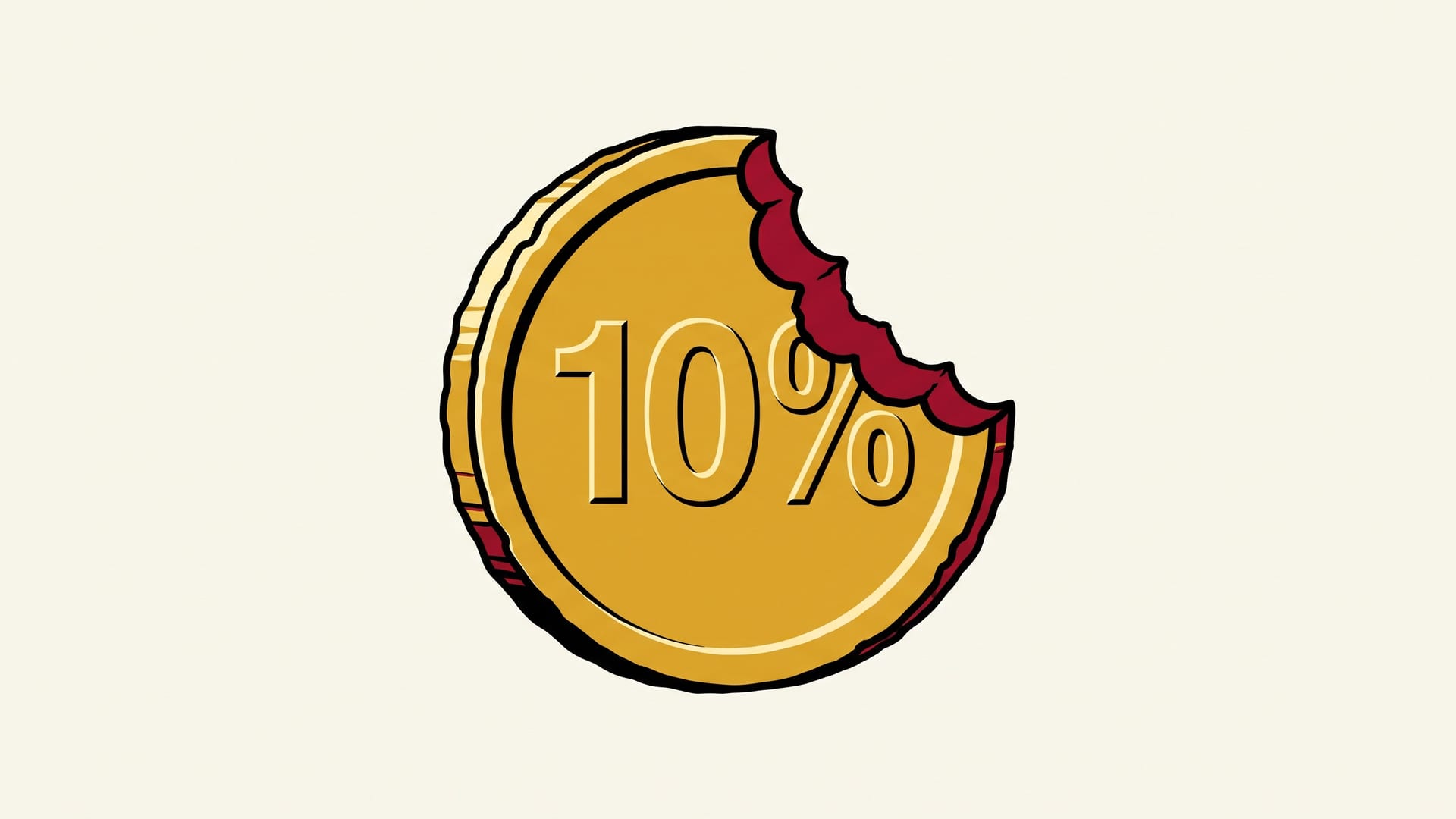
It is not a twenty. A traditional 401(k) holds money that came out of your paycheck before income tax, so you have never paid tax on it. Cash it out and the whole balance counts as income. If you are under 59½, add a 10% penalty on top, with some exceptions. Two bites leave before the money reaches your checking account, and neither bite goes back into anything that compounds.
The compounding you cancelled is the bigger loss. Divide 72 by a yearly return and you get the rough number of years it takes money to double. At 8% a year, that is about 9 years. So a balance you spend instead of rolling is a balance that skips every doubling it had left.
Three doors, and all of them beat the window
A rollover moves money from one retirement account to another without counting as a withdrawal, so nothing is taxed at the moment it moves.
Leave it. Perfectly legal, and fine if the plan is cheap and the funds are decent. The cost is housekeeping: one more login, one more statement, one more account to forget when you change jobs again.
Roll it into the new plan. The tidiest option. One balance, one set of rules, and the contributions come straight out of the new paycheck. Worth it if the new plan is cheaper or has better funds than the old one.
Roll it into an IRA. The widest menu, and nobody hands you a decent default. You are now the person who has to pick, and the cheap index fund does not buy itself. Fine, if you actually intend to pay attention.
One wrinkle: if some of that money is Roth, keep it in a Roth. Roth money is funded with money that was already taxed, and qualified withdrawals in retirement are tax-free. Do not roll pre-tax money into a Roth by accident. That is a conversion, and it is a taxable one.
Fees are a subscription you cannot cancel
Here is the money math, with the assumptions in plain words. Start with $25,000 and add $500 a month for 30 years, growing 8% a year before taxes and fees, not adjusted for inflation. You end at $1,018,573. You put in $205,000. The other $813,573 is growth, which is the part people forget to be greedy about.
Now add a yearly fee. Same $25,000, same $500 a month, same 8% a year before fees. With a 0.25% yearly fee you end at $962,190. With a 1.25% yearly fee you end at $769,064. The expensive plan costs $193,126 more than the cheap one, for the same contributions and the same investing.
Which is why the old plan deserves a serious look before you dismiss it as the boring choice. Ask for its fee disclosure and the expense ratios of the funds you hold. Ask the new plan for the same numbers. Cheapest wins, unless the cheap one's fund menu is genuinely bad.
The match is not yours until it is
A company match is extra money your employer puts in when you contribute. Vesting is the schedule that decides when that match becomes yours to keep. Leave before the schedule is satisfied and you can forfeit some or all of it, and the forfeited part does not follow you to the new job.
So before you give notice, find your vesting schedule. If a vesting date is close, the calendar can matter more than the offer letter does. Same trip: pull the fee numbers while you still have access to the plan website, because that login tends to stop working at the worst possible moment.
Do this before your last day
Three things, in order.
Read the vesting schedule and write down how much of the match is actually yours.
Get the fee disclosure and the expense ratios of your funds, then get the same from the new plan.
Pick a destination and ask for a direct rollover, meaning the money goes from plan to plan without a check ever landing in your hands. Money that lands in your hands has a way of becoming a couch.
Then remember what the pile is for. At a 4% withdrawal rate, $40,000 of yearly retirement spending takes a $1,000,000 portfolio, which is 25 times the yearly spending. You are not protecting a number on a statement. You are protecting the years where that number pays your rent.
Get Market News Alerts
Real-time alerts on price moves, news, and trading opportunities.
Join 20,000+ investors. No spam, ever.
Featured Articles
View all news
CoreWeave's 25% Blowout Revives the AI Trade as Nasdaq 100 Jumps 2.8%

Nvidia's Earnings Day Is 'Earnings Day for Your 401(k).' Here's Why

Ed Yardeni Backs a 50-Point Fed Hike in December: 'Such a Move Is Warranted'

Retail Investors Keep Buying The Dip While Hedge Funds Dump AI At Record Pace

CoreWeave's 23% Surge Sparks an AI Stock Stampede: 16 Names Up More Than 10%

Nvidia's China Comeback Hits Three New Washington Roadblocks, With Trump as the Wild Card

Iran War 'Isn't Out of the Woods': Strategist Says Oil Is 'Significantly Oversold' And Sees A $92 Crude Rally