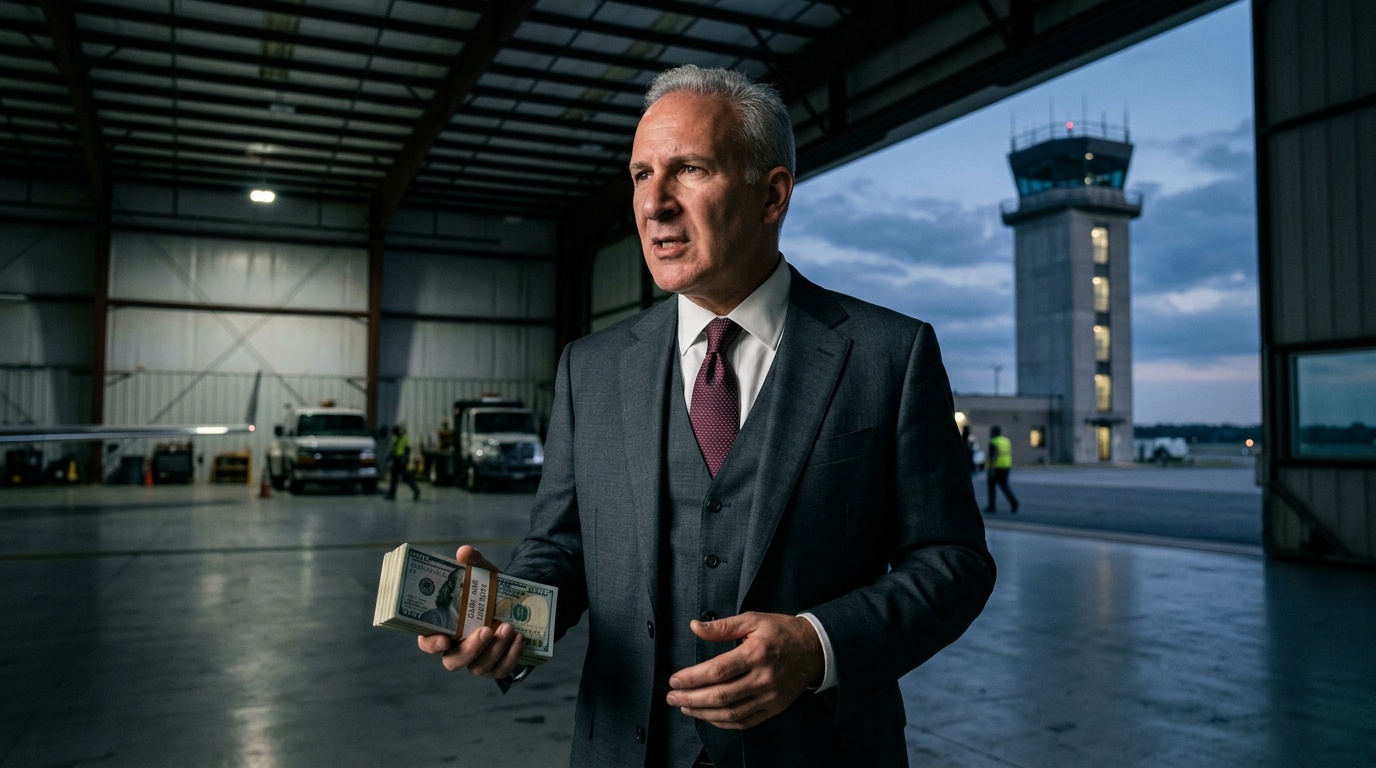
Economist Peter Schiff has a bone to pick with the Trump administration's plan to spend $50 billion overhauling the nation's air traffic control system. In a Sunday post on X, Schiff argued that the spending package, which Trump wants Congress to approve, would only make the country's affordability crisis worse.
His logic is straightforward: the money has to come from somewhere, and right now it's coming from deficits. Schiff said Trump wants the spending "despite soaring budget deficits" and "without cutting other spending or raising taxes to pay for it." The result, he warned, is that "the resulting larger deficits will only add to the inflationary pressures causing the affordability crisis."
It's a familiar argument from Schiff, who has long warned that deficit spending fuels inflation. But this time it lands in the middle of a very real operational mess.
The Ground Stop That Started It All
On Friday, the Federal Aviation Administration announced a ground stop for all flights, citing problems with communications systems across various air traffic control facilities in the U.S. The ground stop lasted roughly five hours, snarling travel plans and putting the spotlight squarely on the aging infrastructure behind the nation's skies.
After the incident, Transportation Secretary Sean Duffy said the issues arose from glitches with old analog equipment. He called for an additional spending package to revamp the system, framing it as a necessary upgrade rather than a luxury.
Trump defended the FAA following the ground stop, instead blaming the Joe Biden administration for the incident. The President also urged Congress to approve the spending. Meanwhile, several airlines, such as JetBlue Airways Corporation (NASDAQ:JBLU) and American Airlines Group Inc. (NASDAQ:AAL), have canceled several flights.
Delta's CEO on Oil Shocks and Demand
Delta Air Lines Inc. (NYSE:DAL) CEO Ed Bastian said last week that higher fare prices had not deterred demand among customers. That's the good news. The bad news? Bastian warned that the Iran war-induced oil shocks may not be over.
And there are fresh signs of trouble. Over the weekend, reports emerged of strikes on tankers in the Strait of Hormuz, with Iran claiming that multiple tankers sank after colliding with undersea mines in the waterway. That's the kind of headline that can send oil prices, and airline costs, higher in a hurry.
So where does that leave the $50 billion air traffic control plan? Schiff's critique is that spending more without offsetting the cost just adds fuel to the inflation fire. Supporters of the package would argue that failing to modernize the system carries its own costs, as Friday's ground stop made painfully clear. Either way, the debate over how to pay for safer skies is just getting started.