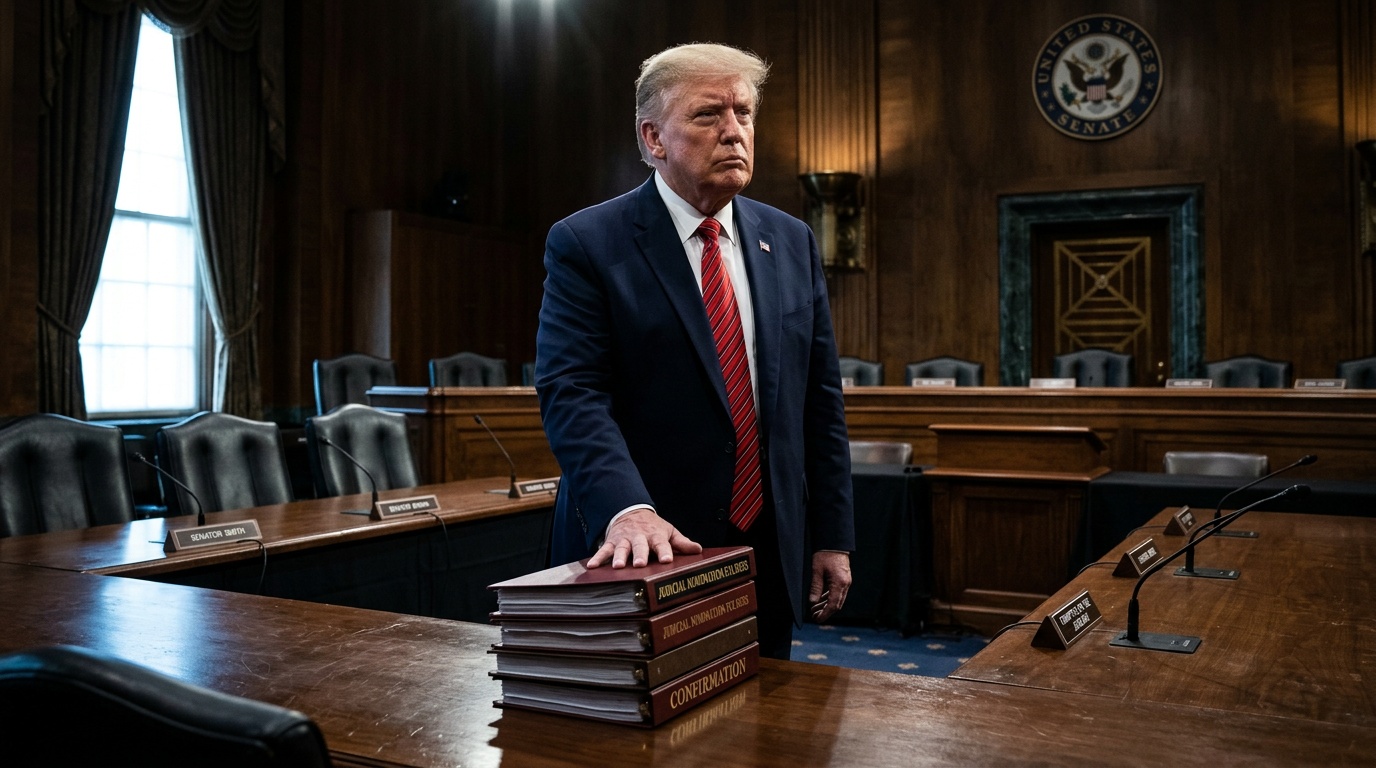
President Donald Trump's last-minute scramble to lock in conservative control of the federal judiciary is running into an unexpected obstacle: Republican senators from his own party.
With Democrats set to take the Senate majority in January 2027, the window for confirming judges is closing fast. Senate Republicans have already confirmed 57 of Trump's judicial nominees during his second term, according to Reuters. But the final stretch is getting messy, because some GOP senators are refusing to rubber-stamp picks from their home states.
The Home-State Prerogative Fight
Republican Sens. Thom Tillis of North Carolina, John Cornyn of Texas and Alan Armstrong of Oklahoma have all challenged nominees from their respective states. Their complaint is procedural but potent: the White House didn't consult them during the selection process.
"We put up a lot of really qualified candidates that we sent to the White House, and they basically ignored that and just put through their one," Armstrong said.
Tillis described the administration's approach as essentially telling senators, "This is our guy, I hope you'll get on board." His response: "That's not how it works here."
In the Senate, that's the kind of thing that can grind confirmations to a halt. Home-state senators have long expected a say in judicial picks from their states, and when that courtesy gets skipped, the backlash is usually swift.
One Nominee Already Pulled
The dispute has already cost the White House one nominee. U.S. District Judge Lee Rudofsky's nomination to the 8th U.S. Circuit Court of Appeals was withdrawn after Sens. John Boozman and Tom Cotton, both Arkansas Republicans, opposed him. Trump then nominated Arkansas Supreme Court Justice J. Cody Hiland instead.
Elsewhere, Cornyn has withheld support for Texas nominee T. Elliot Gaiser, while Armstrong withdrew his initial backing for Oklahoma nominee Zach West.
Senate Majority Leader John Thune of South Dakota has made judicial confirmations a priority, but 23 nominees are still waiting for action. Every one of them is a race against the calendar.
For Trump, the courts have been one of the most durable legacies of his first term, and he's trying to stack as many lifetime appointments as possible before the gavel changes hands. But the Senate is a body built on courtesy and leverage, and right now a few Republicans are reminding the White House of that. The clock is ticking, and the list of willing senators is getting shorter.