






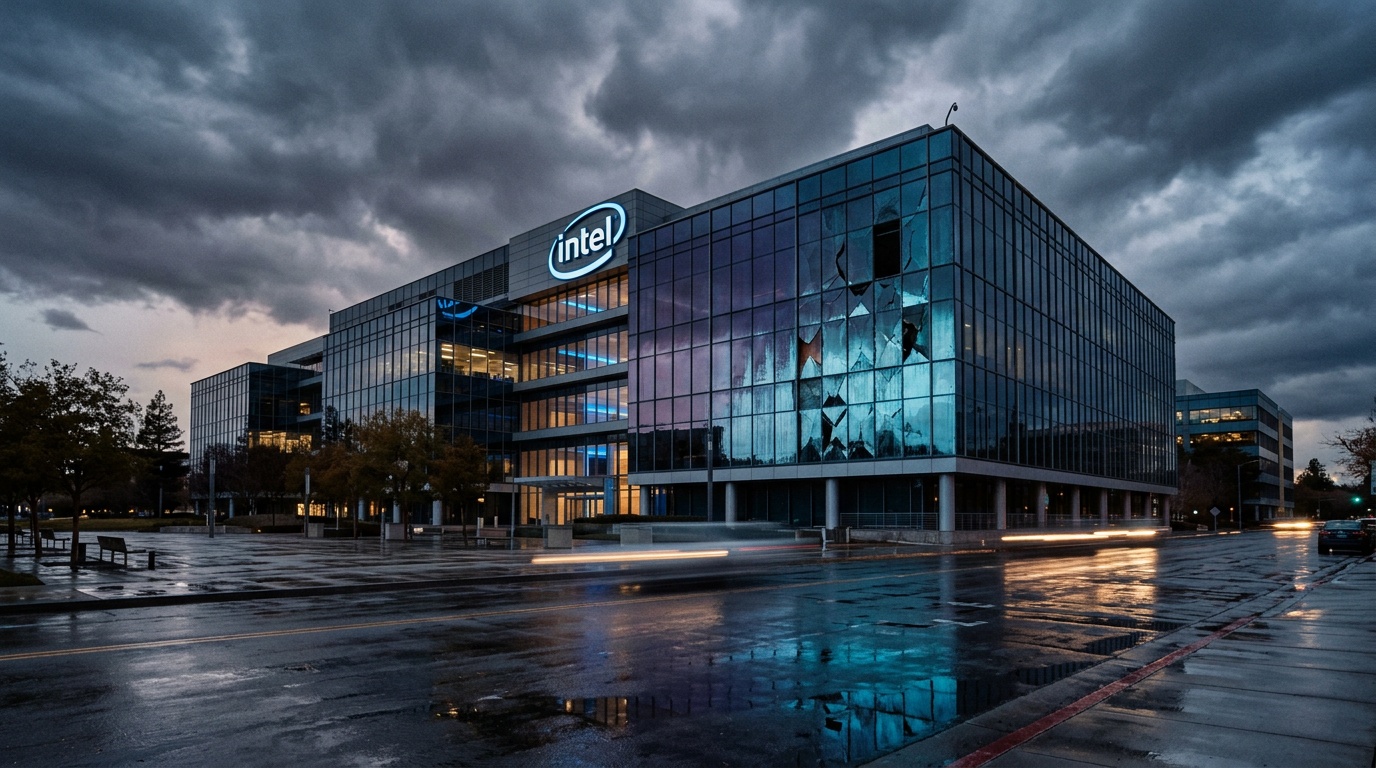
Intel Corp (INTC) has put a number on its Israel factory disaster. Sort of. The chipmaker estimates a deadly explosion at its Kiryat Gat facility will cost about $600 million in lost revenue over two quarters. But a new regulatory filing reveals a bigger uncertainty: Intel cannot yet reliably estimate the incident's full financial impact or how much insurance may ultimately cover. The bill could extend well into 2027.
Intel's Deadly Israel Blast Comes With a $600 Million Bill and a Much Bigger Unknown
MarketDash
Intel expects $600 million in lost revenue from its Israel factory explosion, but the full financial impact and insurance recoveries remain impossible to pin down.
Get Intel Alerts
Weekly insights + SMS alerts
The $600 Million Estimate
The explosion struck the Kiryat Gat facility on Oct. 14, killing two workers and seriously injuring a third, according to The Times of Israel. The plant remained shut for roughly two weeks, with production expected to resume by the end of October, according to Intel's Form 10-Q.
On its Oct. 29 earnings call, CFO David Zinsner said the early assessment points to about $300 million in lost fourth-quarter revenue, with a similar impact expected in the first quarter of 2027. That puts the preliminary revenue hit at roughly $600 million.
Almost all of the fourth-quarter revenue impact involves server chips, where demand already exceeds supply. Intel also expects the incident to reduce fourth-quarter gross margin by about 200 basis points, or two percentage points, according to its earnings remarks.
The Costs Beyond Lost Sales
Beyond lost sales, Intel expects fourth-quarter charges for scrapped inventory, facility remediation and cleanup, as well as excess costs from running the factory below capacity.
Lower production and operating inefficiencies during the shutdown and recovery could also hurt manufacturing costs, gross profit and operating results through the first half of 2027.
One must not combine these impacts with the $600 million revenue estimate or the gross-margin hit: they represent different costs and may overlap. Intel has already included some of these costs in its guidance, but it has not yet provided a complete dollar estimate for the additional charges.
Intel Cannot Yet Price the Damage
The biggest uncertainty is what Intel still cannot quantify. The company said its assessment and remediation work remain ongoing and that it is "currently unable to reasonably estimate the financial impact from the incident or the amount of insurance recoveries we may receive."
Insurance could cover certain losses, while Intel may make up some production shortfalls through its global manufacturing network. But the ultimate cost will depend on property damage, repair timing, operational disruptions and insurance payments.
Zinsner told Reuters that Intel was still assessing which wafers it could salvage and whether the disruption could affect results beyond the two quarters already identified.
For investors, $600 million is a starting point, not a final bill. The disruption adds another constraint as Intel tries to meet server-chip demand and revive its manufacturing business. Intel cannot determine the full cost until it restores normal production and settles its insurance claims.
More News

Intel's 29.6% Crash Drags Nasdaq Down 3.2% as Chip Stocks Lose $631 Billion

Chip Stocks Wipe Out $1 Trillion in Friday Bloodbath: 5 Stocks Alone Account for 60% of the Damage
Intel Stock Craters 26% as Weak Q4 Guidance Spooks Wall Street

Amazon Stock Slips 7% As Investors Weigh Soaring AI Spending Against Blistering AWS Growth

Binance's $6.3B Hack Sends Bitcoin ETF Down 5%, But This Inverse ETF Soars 21%

Alphabet's $482 Billion Wipeout Exposes the Hidden Risk in Your QQQ ETF

ExxonMobil's Refining Machine Prints $9 Billion as Dividend Gets a Raise

Amazon Stock Could Have Nearly 50% Upside, JPMorgan Says, as AWS Eyes a $1 Trillion Future
Get Intel Alerts
Real-time alerts on price moves, news, and trading opportunities.
Join 20,000+ investors. No spam, ever.
Featured Articles
View all newsIntel's 29.6% Crash Drags Nasdaq Down 3.2% as Chip Stocks Lose $631 Billion
By MarketDash
October 30, 2026
Chip Stocks Wipe Out $1 Trillion in Friday Bloodbath: 5 Stocks Alone Account for 60% of the Damage
By MarketDash
October 30, 2026
Intel Stock Craters 26% as Weak Q4 Guidance Spooks Wall Street
By MarketDash
October 30, 2026
Amazon Stock Slips 7% As Investors Weigh Soaring AI Spending Against Blistering AWS Growth
By MarketDash
October 30, 2026
Binance's $6.3B Hack Sends Bitcoin ETF Down 5%, But This Inverse ETF Soars 21%
By MarketDash
October 30, 2026
Alphabet's $482 Billion Wipeout Exposes the Hidden Risk in Your QQQ ETF
By MarketDash
October 30, 2026
ExxonMobil's Refining Machine Prints $9 Billion as Dividend Gets a Raise
By MarketDash
October 30, 2026
Amazon Stock Could Have Nearly 50% Upside, JPMorgan Says, as AWS Eyes a $1 Trillion Future
By MarketDash
October 30, 2026