So, Tesla (TSLA) unveiled its Cybercab, and the internet did what it does: debated the steering wheel, the price, the timeline. But if you were actually paying attention to what Tesla's executives said on stage, you might have noticed something curious. They didn't spend much time talking about range, battery chemistry, or even the car itself. Instead, they talked about intelligence. About prediction. About AI as the whole ballgame.
And then, less than 24 hours later, Elon Musk took to social media and said the quiet part out loud: the same autonomy playbook that powers the robotaxi could apply to the skies. He was responding to Heart Aerospace's successful demo of its battery-electric X1 aircraft, writing: "I'm so glad this is being done! An important next step is making it autonomous."
Now, that's not a product announcement. Musk didn't say Tesla is building a plane. But the timing is telling. It suggests the Cybercab launch wasn't just about a new vehicle—it was about a broader vision for AI-powered transportation, one that might not stop at the edge of the pavement.
AI Before Everything Else
One theme dominated Tesla's Cybercab launch: autonomy is an intelligence problem.
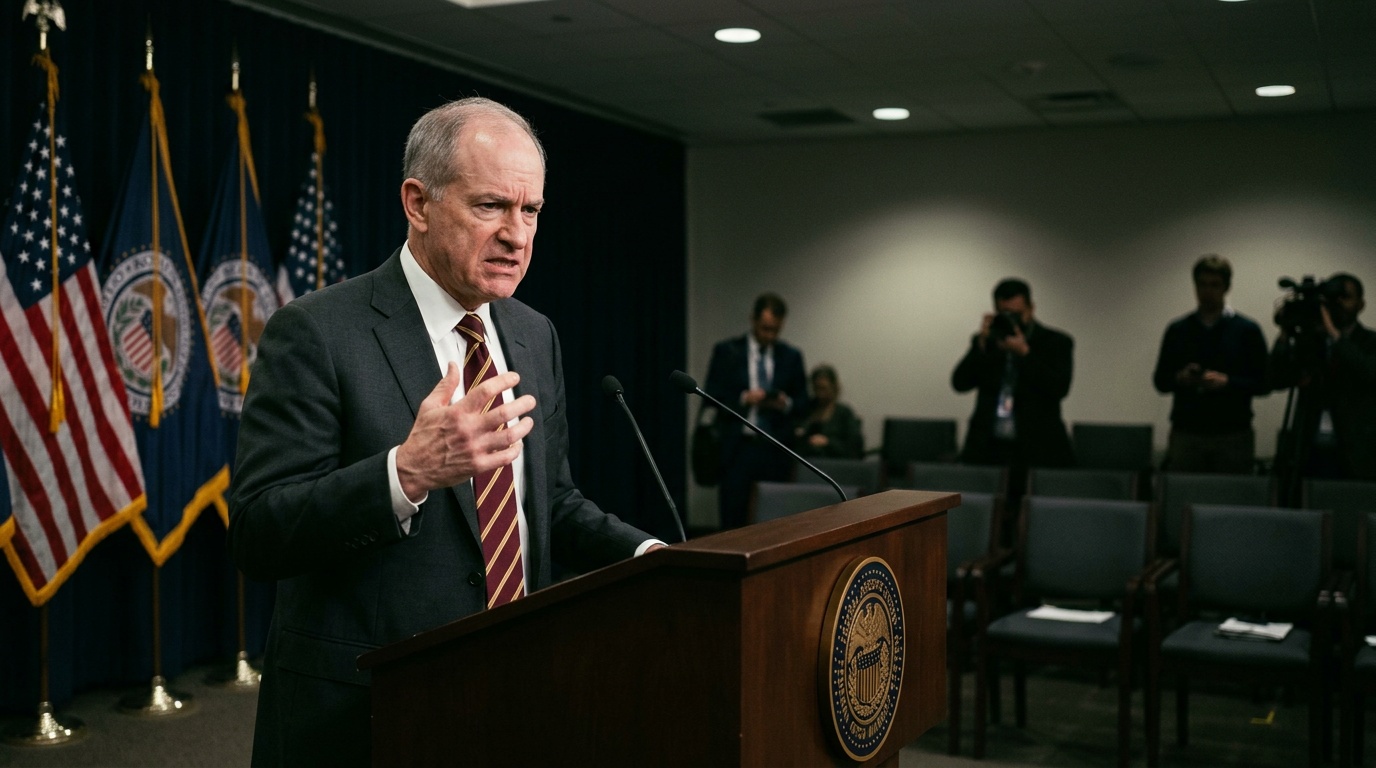
"The core issue for self-driving is one of intelligence," Ashok Elluswamy, Tesla's vehicle software chief, told attendees. That's a direct challenge to the industry's conventional wisdom, which holds that safe autonomous driving requires a suite of expensive sensors—lidar, radar, high-definition maps—to create a detailed picture of the world.
Tesla's counterargument is elegant in its simplicity: humans drive with their eyes. We don't need lidar to navigate a parking lot or a highway. We use vision, context, and experience. So why shouldn't AI learn to do the same?
"You need to understand what is going on. You need to predict what is going to happen in the future," Elluswamy said. "No sensor in the world is going to tell you what's going to happen in the future. It is something an intelligent agent is going to have to figure out."
That philosophy led Tesla to build what it calls an "AI-first, end-to-end driving stack" that relies primarily on camera inputs. The company argues that by training on vast amounts of real-world driving data, AI can learn to interpret visual cues the way humans do—and maybe even better.
And Tesla says it's already seeing results. Executives revealed that the company has logged more than one million miles of unsupervised robotaxi operation. That's not a typo. Unsupervised. No human behind the wheel, no remote operator ready to take over. Just the AI, navigating real roads, making real decisions.
How did they get there? Tesla credits billions of miles of customer driving data, which helped train its autonomous driving models to recognize rare scenarios before they happen. The company says the system has accumulated "more than a thousand lifetimes of experience." That's the kind of stat that sounds like marketing, but it underscores the scale of Tesla's data advantage.
A Clue Beyond Cars
Against that backdrop, Musk's latest social media post takes on a different meaning.
It's not just a random compliment to another company. It's a signal that Tesla's leadership sees autonomy as a platform, not a product. The same principles that make a robotaxi work—understanding the world, predicting what happens next, acting safely—could theoretically apply to any vehicle that moves through the physical world. Including aircraft.
Musk didn't say Tesla is building an aircraft. But he didn't have to. The message was clear: once you've cracked the intelligence problem, the hardware becomes almost secondary.
That consistency matters. Rather than describing Cybercab as simply Tesla's newest electric vehicle, executives repeatedly framed it as the first large-scale deployment of an AI system designed to drive safely without human intervention. It's a subtle but important shift in framing. The car is just the vessel; the AI is the product.
What Investors Should Watch
Cybercab may be the product investors can see, but Tesla's messaging suggests the company's longer-term ambition lies elsewhere.
Throughout the launch, executives emphasized intelligence over hardware, prediction over sensors, and AI over traditional automotive engineering. Musk's comments on autonomous aviation fit neatly into that narrative, hinting that he increasingly views autonomy as a technology platform that can power multiple forms of transportation—not just robotaxis.
Whether that vision ultimately extends beyond roads remains uncertain. But if Cybercab succeeds in proving Tesla's AI-first approach at scale, investors may come to see the robotaxi not as the destination, but as the first commercial demonstration of a much broader autonomy strategy.
In other words, don't just watch the car. Watch the AI. That's where the real story is.