The artificial intelligence boom is creating a new kind of infrastructure headache. It's not just about having enough computing power anymore. As AI models get bigger and more demanding, the way data moves between all those processors is becoming just as critical. And that's where some investors see opportunity.
Tema ETFs is betting that optical infrastructure will be a key part of the AI buildout. The firm's Tema Photonics & Optical ETF, which trades under the ticker LAZR, now counts Anthropic as roughly 15% of its holdings. That makes the AI company one of the fund's largest positions, which is a pretty bold statement for a fund focused on photonics.
Maurits Pot, founder and CEO of Tema ETFs, recently explained to MarketDash why Anthropic is such a big part of the fund's strategy. He says the company is wrestling with three core bottlenecks as it scales its AI infrastructure.
"Anthropic faces 3 core AI infra bottlenecks – compute, memory, and optical," Pot said. "Anthropic benefits through AI infrastructure from the photonics innovations taking place that debottleneck optical."
That's a more specific explanation than you might expect for why an AI model developer would show up in a photonics ETF. TEMA isn't just looking at Anthropic as an AI software company. They see its rapidly expanding infrastructure needs as part of the investment case for the optical technologies that will be needed to support AI at scale.
AI's Optical Bottleneck
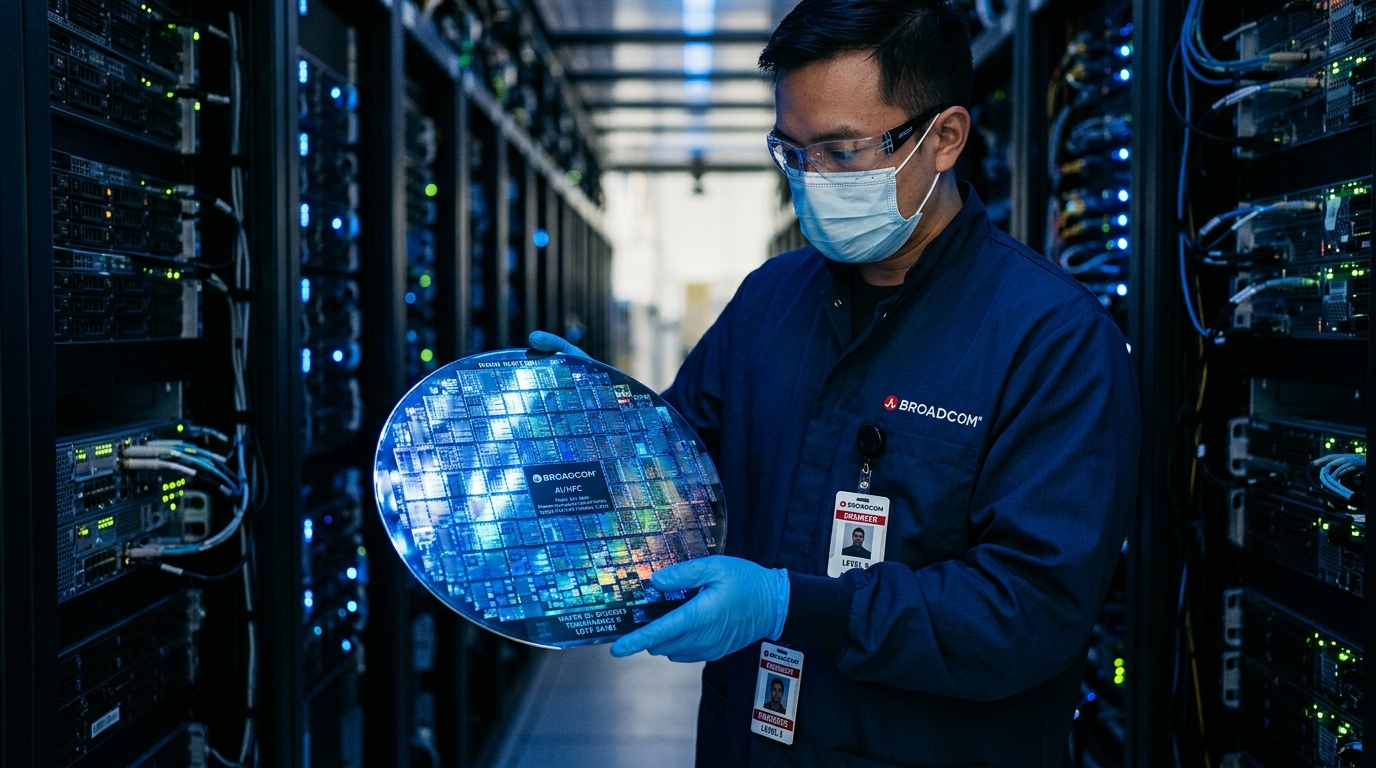
The explosive growth of AI workloads has driven massive investment in GPUs and other accelerators. But moving data between those processors is becoming an increasingly important challenge. As AI systems scale, data centers need to shuffle enormous volumes of information between GPUs, servers, and networking infrastructure with minimal latency. Optical technologies can help meet those bandwidth and connectivity demands, making photonics a bigger piece of the AI infrastructure puzzle.
For LAZR, that creates an investment opportunity that goes beyond just semiconductor makers and cloud companies. "LAZR's Anthropic exposure allows investors to both capture Anthropic's growth as well as the downstream demand for photonics innovations around optical networking," Pot said.
That gives the ETF a two-layer AI exposure. Anthropic provides direct exposure to the potential growth of a leading AI model developer, while LAZR's broader portfolio is positioned to benefit from the infrastructure spending required to support that growth.
Why Anthropic Belongs in a Photonics ETF
It's worth noting that Anthropic isn't a photonics or optical company at all. So why does it make up 15% of a photonics ETF? The investment reflects TEMA's view that the infrastructure requirements of major AI companies can create demand throughout the optical technology ecosystem.
Anthropic's growing compute requirements mean more pressure on data-center architecture, networking, and connectivity. If those requirements keep expanding, companies developing technologies that improve how AI systems communicate could become increasingly important beneficiaries. "Anthropic's growing AI infrastructure needs and bottlenecks will benefit all the LAZR holdings, albeit in different ways," Pot said.
That broader exposure is central to the ETF's thesis. Instead of trying to pick a single winner in AI infrastructure spending, LAZR seeks to capture multiple layers of the ecosystem, including the technologies that help move data through increasingly complex AI systems.
The Bigger AI Infrastructure Trade
The shift toward optical infrastructure comes as investors increasingly look beyond the traditional GPU-driven AI trade. The first phase of the AI boom was all about computing power. But as AI models become larger and data-center workloads more interconnected, bottlenecks can emerge elsewhere in the system. That's where photonics could become strategically important.
For investors, LAZR's Anthropic allocation represents more than just a bet on a potential blockbuster AI IPO. It's also a way for TEMA to express its view that AI infrastructure will increasingly depend on solving the optical bottleneck alongside compute and memory constraints. With Anthropic now representing 15% of LAZR, TEMA is effectively tying the growth of one of the leading private AI companies to a broader bet on the technologies needed to make the next generation of AI infrastructure work.