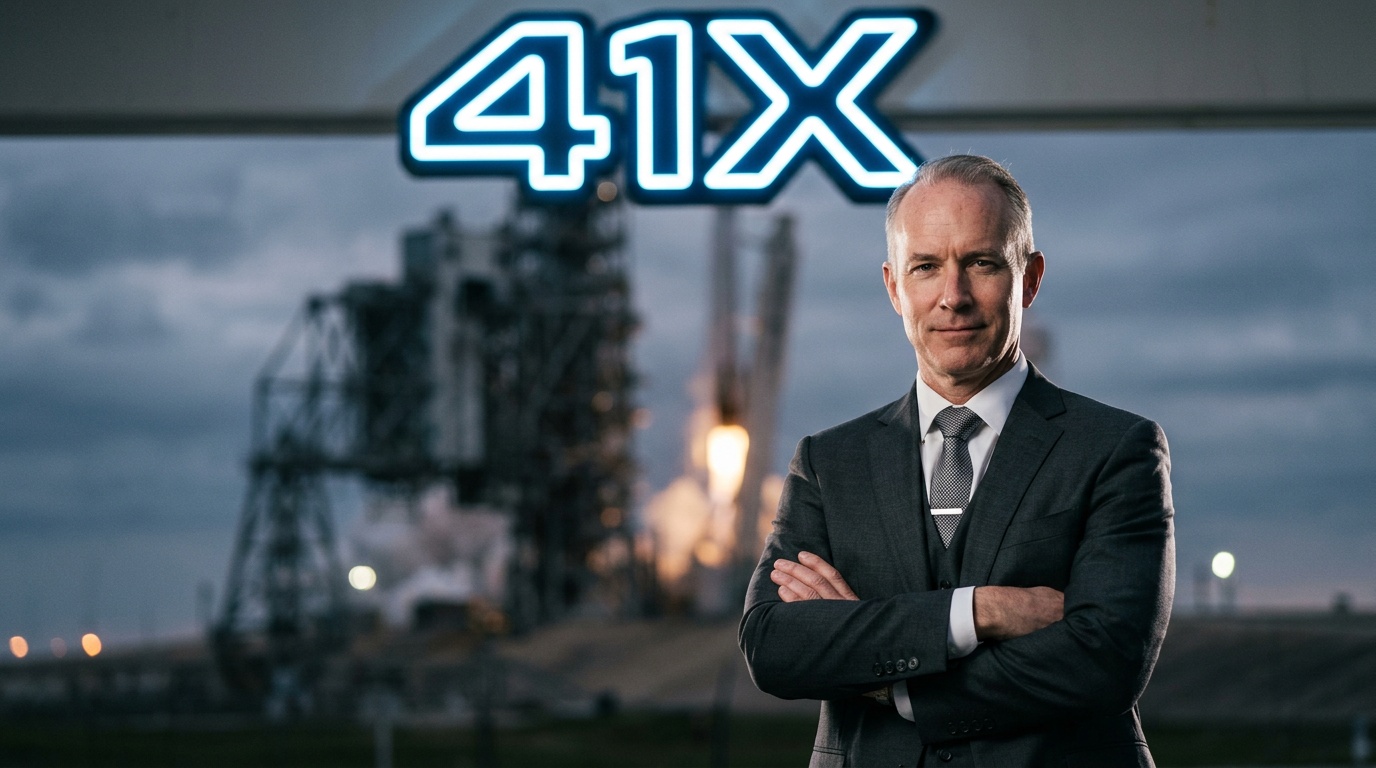
When people talk about artificial intelligence in space, they usually mean something that might happen someday. Firefly Aerospace Inc. (FLY) CEO Jason Kim would beg to differ. In his view, AI is already the glue holding the company together, from landing spacecraft on the Moon to sifting through missile warning data for the U.S. Space Force.
Firefly's AI investments aren't just for one-off missions anymore. The technology now weaves through its entire portfolio, turning lunar exploration, orbital spacecraft, and defense operations into one integrated platform. Over the past two years, the company has grown well beyond its launch vehicle roots, adding lunar landers, spacecraft, and defense software through acquisitions and new government contracts. According to Kim, these businesses get more valuable as they share a common AI foundation.
From Acquisitions to Integration: Firefly's Unified AI Strategy
"We recently brought more AI capabilities in-house after acquiring Space-ng," Kim told MarketDash in an email. That move paid off quickly. The AI-powered vision navigation and autonomous guidance systems from Space-ng were what allowed Blue Ghost Mission 1 to land on the Moon without human intervention. The same technology is now slated for automated docking, proximity operations, and hazard-free landings on future missions.
Kim sees this as just the beginning. Firefly's products will "continue to reinforce each other more and more," he said, with launch vehicles supporting its spacecraft while AI software boosts the value of the whole platform. It's a virtuous cycle, and Kim is betting it will compound.
Firefly Applies Same AI Expertise to Defense Programs
The defense side of the business got a similar boost from an earlier acquisition. Firefly bought SciTec, a defense technology company, bringing AI-powered defense software and mission data processing into the fold. Kim pointed to SciTec's FORGE system, which handles massive amounts of missile warning and tracking satellite data for the U.S. Space Force, as a prime example. There's also the recent $94 million Ground-Based Radar Digitization contract, which fits right into that same AI-driven defense strategy.
Kim says these programs show how AI developed across Firefly's expanding portfolio is supporting national security applications alongside commercial space missions. It's not just about rockets anymore; it's about the software that makes them and everything else smarter.
Combine Space-ng's autonomous spacecraft tech with SciTec's AI defense software, and you get spacecraft that can "autonomously communicate and operate intelligently" across low Earth orbit, geostationary orbit, lunar orbit, and beyond, Kim added. That's a big vision, but the pieces are already in place.
Looking Beyond Contract Wins
Kim's comments suggest Firefly is playing a longer game. The strategy is simple: advances in one business can strengthen another. AI developed for lunar exploration can enhance defense software, and vice versa. If Firefly keeps executing on that approach, software and autonomous systems could become just as important to its long-term growth story as the rockets and spacecraft themselves.
For investors, that's worth paying attention to. The company isn't just stacking up contracts; it's building a platform where every piece makes the others more valuable. And in a world where AI is increasingly the differentiator, that could be the real moat.