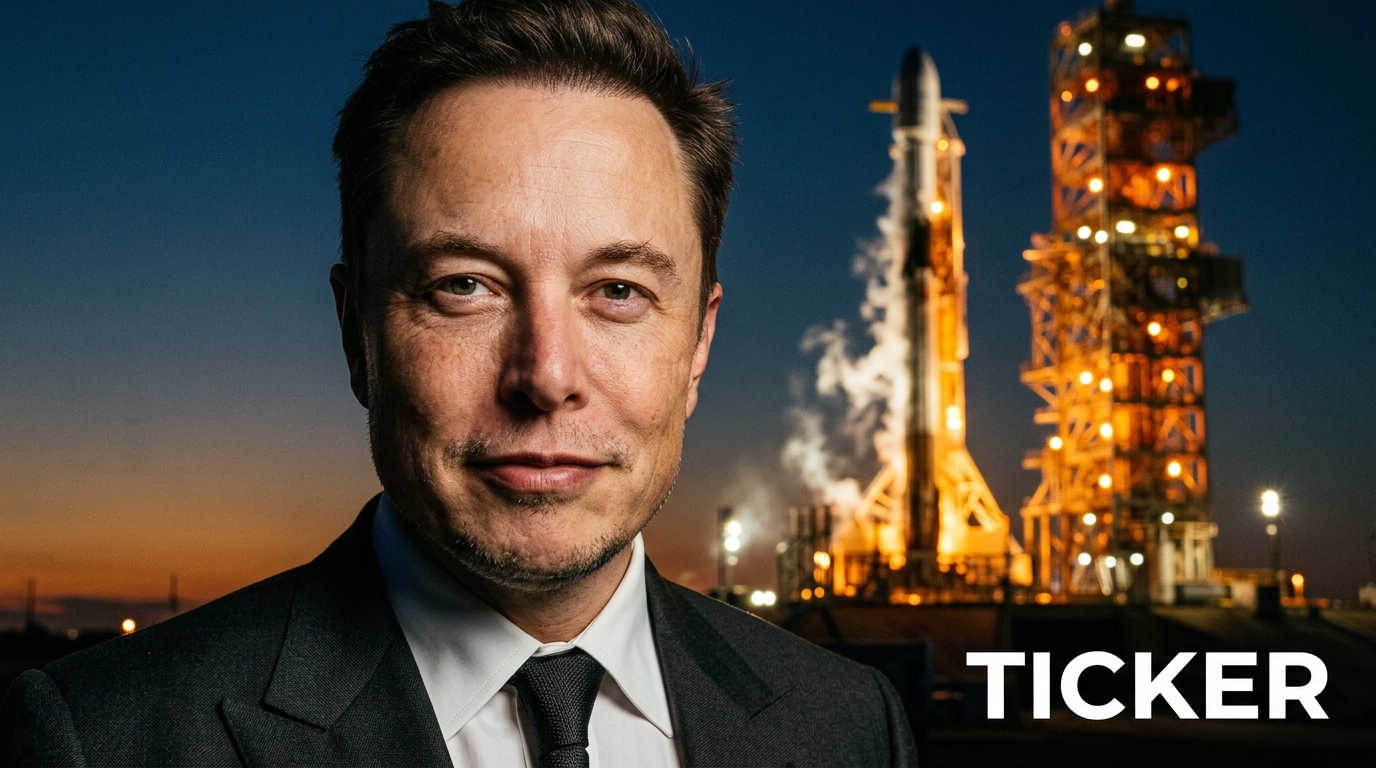
SpaceX has basically redefined what it means to be a launch company. It's flying at a pace that no one else has come close to matching, recently wrapping up its 100th Falcon mission of 2026. That's on the heels of a record-setting 165 Falcon launches in 2025. By any measure, SpaceX is the undisputed heavyweight champion of getting stuff into orbit.
But here's the thing: even with that kind of dominance, Firefly Aerospace CEO Jason Kim says the industry still has a rocket shortage. In an exclusive email interview, Kim told MarketDash that demand for launch services is growing faster than the industry's ability to supply rockets.
Demand Is Outpacing Supply, Says Firefly CEO
When asked about Firefly's long-term agreement with Lockheed Martin (LMT), Kim pointed to strong demand across national security, commercial, and civil space markets. He didn't mince words about the state of the industry.
"The launch market is expanding rapidly across national security, space exploration, and commercial sectors," he said. "Customers need to get to space when and where their mission demands—not months or years down the road." He added that "demand for government and commercial constellations and missions outstrips the rocket capacity available, both in the U.S. and globally."
Kim isn't singling out any one provider as falling short. Instead, he's pointing to a broader dynamic: as governments launch more national security payloads and companies build bigger satellite constellations, the need for launch services is growing right alongside the number of available rockets. It's not that SpaceX isn't doing enough; it's that the entire market is expanding so fast that even a record-breaking launch cadence can't keep up.
Firefly Is Scaling Up to Meet the Moment
So what's Firefly doing about it? Kim says the company is ramping up production of its Alpha launch vehicle. That means expanding automated composite manufacturing, improving engine production efficiency, and increasing overall throughput to support more launches.
These investments show that Firefly believes launch demand will stay strong, even as SpaceX keeps increasing its own flight rate. While SpaceX has dramatically expanded industry capacity through reusable rockets, Kim argues the broader market is also growing rapidly. That creates room for other launch providers that can reliably deliver missions on customers' schedules.
It's a view that's consistent with his comments about industry-wide supply constraints, rather than a direct jab at any competitor. For investors, the key question is no longer whether launch activity is growing—it clearly is. The real issue is whether the industry's launch capacity can keep pace with rising demand from commercial satellite operators, civil space programs, and defense customers.
If Kim's assessment is right, companies that can steadily increase reliable launch availability could benefit, even in a market led by a dominant player like SpaceX. That's a bet on the rising tide lifting all boats—or in this case, all rockets.