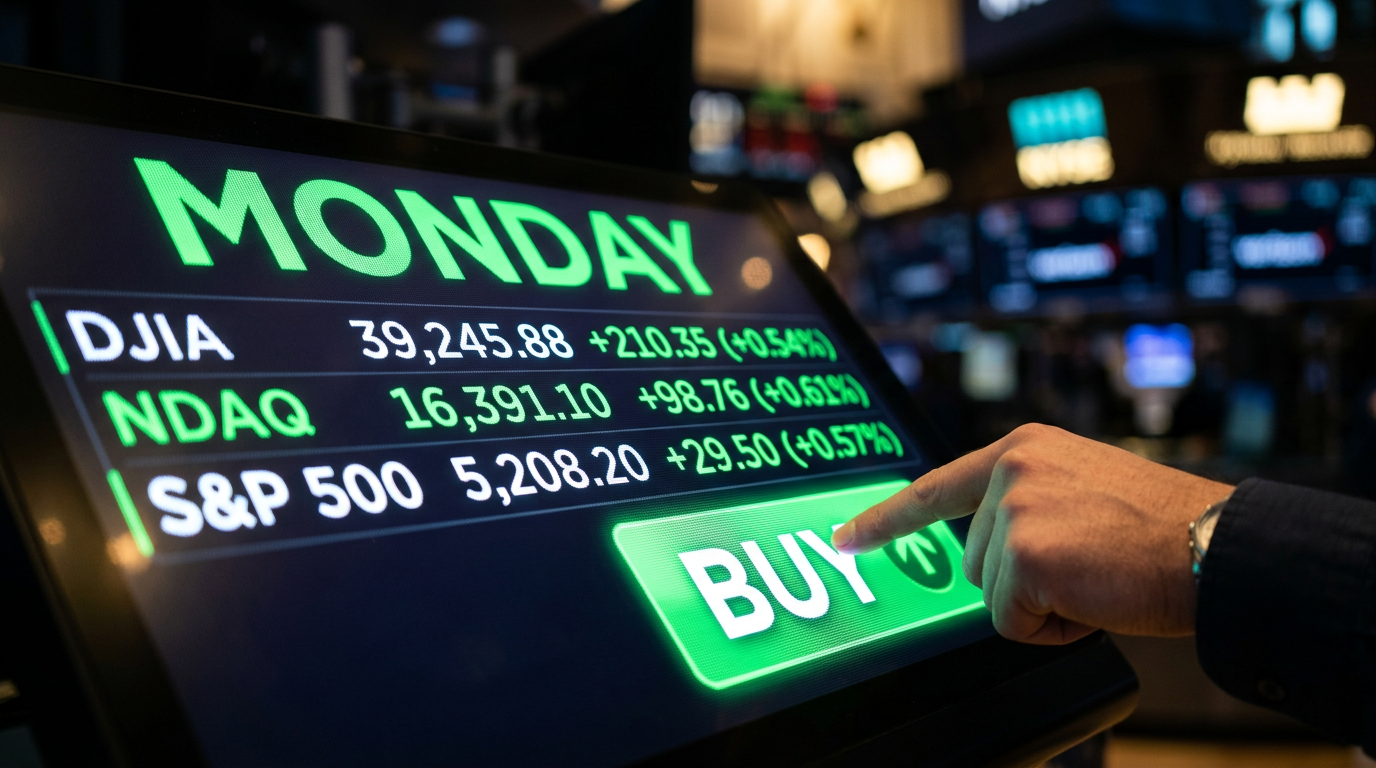
It's a familiar scene for Nvidia investors: the stock is down, the tech sector is wobbling, and everyone is holding their breath for the company's quarterly earnings report. On Monday, Nvidia (NVDA) shares fell more than 2% as part of a broader tech pullback. The Nasdaq dropped 0.78%, the S&P 500 slipped 0.19%, and the Technology sector fell 1.5%. But if you look past the day-to-day noise, Wall Street analysts are painting a picture of a company that's just getting started.
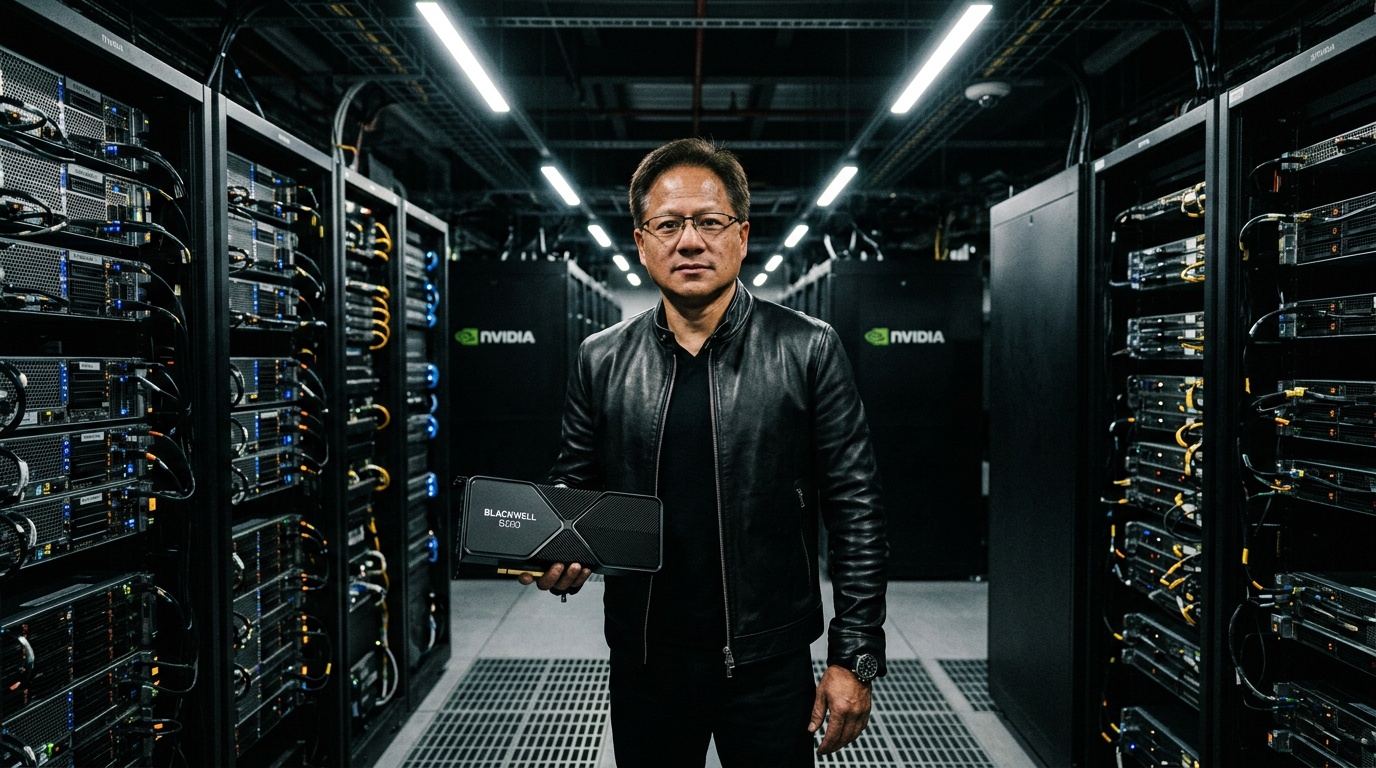
Nvidia is entering what analysts describe as the next phase of AI growth. Blackwell Ultra shipments are rising, Vera Rubin is beginning its initial ramp, and the company is expanding across compute, networking, software, infrastructure, and even financing. It's a lot to digest, but the key takeaway is that Nvidia is no longer just a GPU company. It's building an entire AI ecosystem.
Cantor Sees Nvidia Expanding Beyond GPUs
Cantor Fitzgerald analyst C.J. Muse reiterated an Overweight rating and a $350 price target on Nvidia. Muse believes investors are underestimating Nvidia's ability to sustain growth as it moves beyond GPUs into networking, rack-scale systems, software, infrastructure, and financing. While custom silicon could pressure Nvidia's unit share at hyperscalers, he expects the company's broader system strategy to support more resilient revenue share.
Muse outlined a stretch-case EPS of $16 to $17 in calendar 2027 and $23 to $25 in 2028. He also expects hyperscaler capital spending to approach $1 trillion in 2026 and potentially reach $1.5 trillion in 2027. That's a lot of money flowing into AI infrastructure, and Nvidia is positioned to capture a big chunk of it.
Muse estimates Nvidia could generate about $400 billion in calendar 2026 data center revenue, capturing roughly 80% of a $500 billion AI accelerator and networking market. By 2030, his scenarios imply data center revenue of about $1.05 trillion at 60% market share, $1.23 trillion at 70%, and $1.4 trillion at 80%. He considers 60% share a bear case and still estimates Nvidia could produce $25-$30 in EPS by 2030.
JPMorgan Expects Another Beat and Raise
JPMorgan analyst Harlan Sur also reiterated an Overweight rating, with a $280 price target. Sur expects fiscal second-quarter revenue of $94 billion-$95 billion, up about 15% sequentially and ahead of the $92.1 billion Street consensus. He projects GB300 and remaining GB200 rack shipments will rise about 15% quarter over quarter to 17,000-18,000 units.
For the October quarter, Sur expects Nvidia to guide revenue to $107 billion-$108 billion, compared with the $104.5 billion consensus. He projects rack shipments will increase another 13% to 14% to 19,000-20,000 units, including the first 1,000-2,000 Vera Rubin racks. Sur estimates Vera Rubin could lift blended average selling prices by 5% to 10% and reduce per-token platform costs by about 90% versus Blackwell Ultra. That's a huge efficiency gain, and it could be a game-changer for Nvidia's margins.
Sur also notes that every 100,000 H200 GPUs shipped to China could add roughly $3 billion in revenue. That's a nice little side business, even with export restrictions.
Competition, Margins Remain in Focus
Sur expects GPUs and ASIC/XPU platforms to move toward roughly equal shares of the AI compute market over the next several years, but Nvidia will retain overall leadership. He expects near-term gross margins in the mid-70% range, but sees rising memory costs as a longer-term risk. Nvidia trades at roughly 17 times Street calendar 2027 EPS and 13 times 2028 EPS, according to Sur. That's not cheap, but if the growth materializes, it could be justified.
Earnings and Price Action
Nvidia will report earnings on Aug. 26. Wall Street expects EPS of $2.07, up from $1.04 a year earlier, on revenue of $92.03 billion versus $46.74 billion. That's a massive jump, and the market will be watching closely to see if the company can deliver another blowout quarter.
At the time of publication on Monday, Nvidia shares were down 2.14% at $210.13. It's a bump in the road, but analysts are clearly looking past it. The question is whether the market will too.