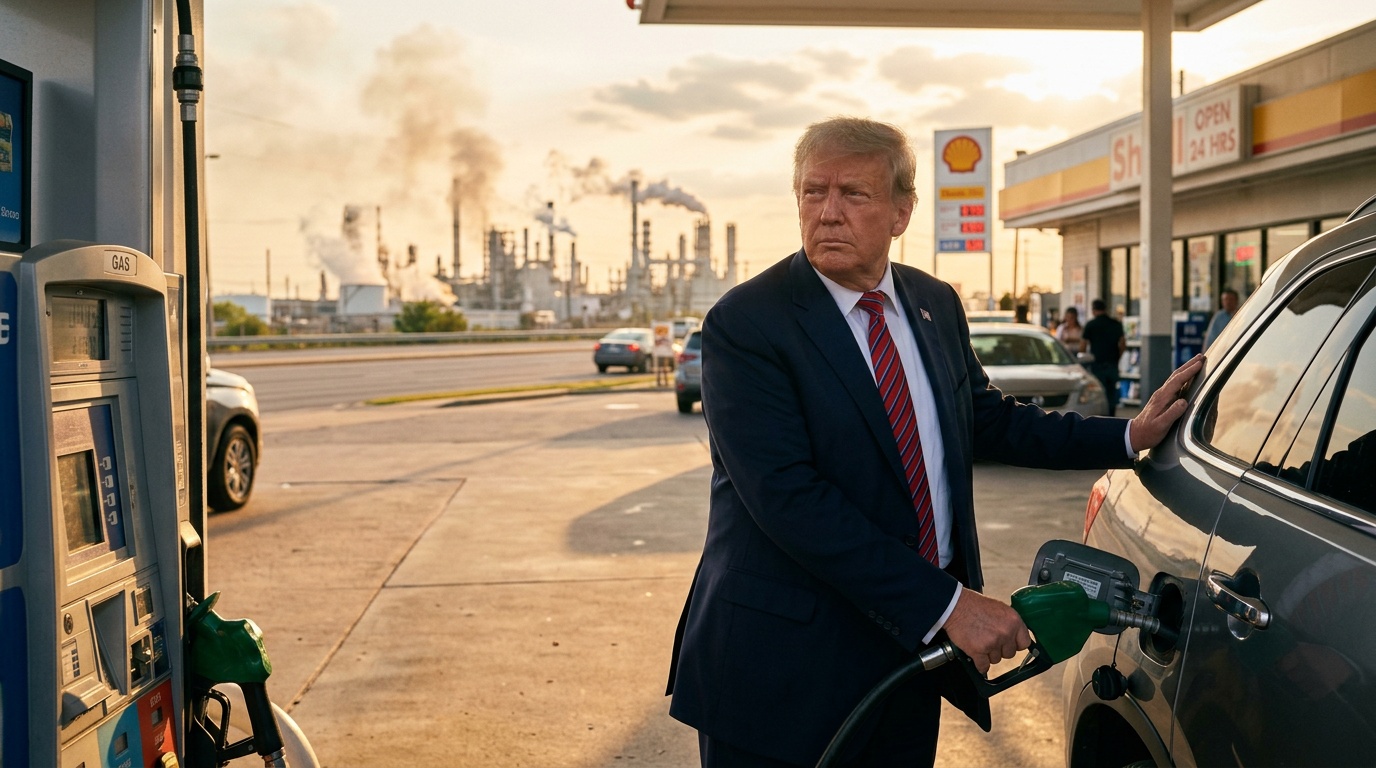
If you've been wincing at the pump lately, there might be some relief on the way—thanks to a bureaucratic twist that's actually good news for your wallet.
President Donald Trump's Environmental Protection Agency (EPA) has issued an emergency fuel waiver that lets gas stations switch to winter-blend gasoline earlier than usual. The goal? To ease fuel costs as tensions with Iran over the Strait of Hormuz keep markets on edge.
What's Happening?
In a statement released Thursday, the EPA said it's authorizing the early release of "E10, gasoline blended with 10 percent ethanol," starting September 1st. That's about three weeks ahead of the normal schedule, and it's designed to boost supply and lower prices.
"This action will increase the domestic gasoline supply by hundreds of thousands of barrels per day by effectively ending the summer-blend gasoline requirement early," the EPA said.
Energy Secretary Chris Wright praised the move, calling it an "example of this Administration using every available tool to cut red tape, increase the supply of gasoline, and lower prices at the pump." EPA Administrator Lee Zeldin echoed that sentiment, saying "President Trump has prioritized ensuring American families have affordable gasoline and energy."
Why Winter Blend?
Here's the nerdy part: gasoline comes in summer and winter blends, and they're differentiated by something called Reid Vapor Pressure (RVP)—basically, how easily the fuel evaporates. Winter blend has a higher RVP, meaning it can include more volatile components like butane, which help gas vaporize in cold weather. Summer blend, on the other hand, has a lower RVP because hotter temperatures require more expensive additives to reduce pollution and smog, and to improve fuel economy. That's why gas tends to cost more in the summer.
By letting stations switch to winter blend early, the EPA is essentially giving refiners and retailers a head start on cheaper production, which should translate to savings at the pump.
What the Experts Say
GasBuddy analyst Patrick De Haan took to X to share his take, and he's cautiously optimistic. "Moving this up only helps gasoline prices," he said, estimating that winter blends could bring down prices by up to 25 cents per gallon. He noted that "largest cities that use most stringent blends" will "see the larger side" of the price benefit. "The change is ~3 weeks early," he added.
So, if you live in a city with strict environmental rules, you might see even bigger savings.
Prices Are Still Painful
Despite the waiver, fuel prices remain high. According to the American Automobile Association (AAA), the national average price of gas on Thursday surged to $4.1044 per gallon, with California drivers paying a whopping $5.5885 per gallon on average.
Diesel is even worse. The diesel crack spread—which shows refiners' profit margins for turning crude into diesel—had earlier hit $102 per barrel. AAA data shows the national average diesel price on Thursday was $5.5477 per gallon, up from Wednesday's $5.5042. In California, a gallon of diesel hit $7.0388.
Political Fallout
Unsurprisingly, the high prices are sparking political jabs. California Gov. Gavin Newsom slammed Trump, saying "the Strait of Hormuz" is "still closed and Americans have been forced to pay $86 BILLION more for fuel."
Wright, meanwhile, pointed fingers at the previous administration, touting increased oil production in the Permian Basin, Texas, and blaming high fuel costs on former President Joe Biden's clean energy policies.
Either way, the early switch to winter blend is a small but tangible step that could put a few extra dollars back in your pocket. It's not a silver bullet, but every cent counts when you're filling up.