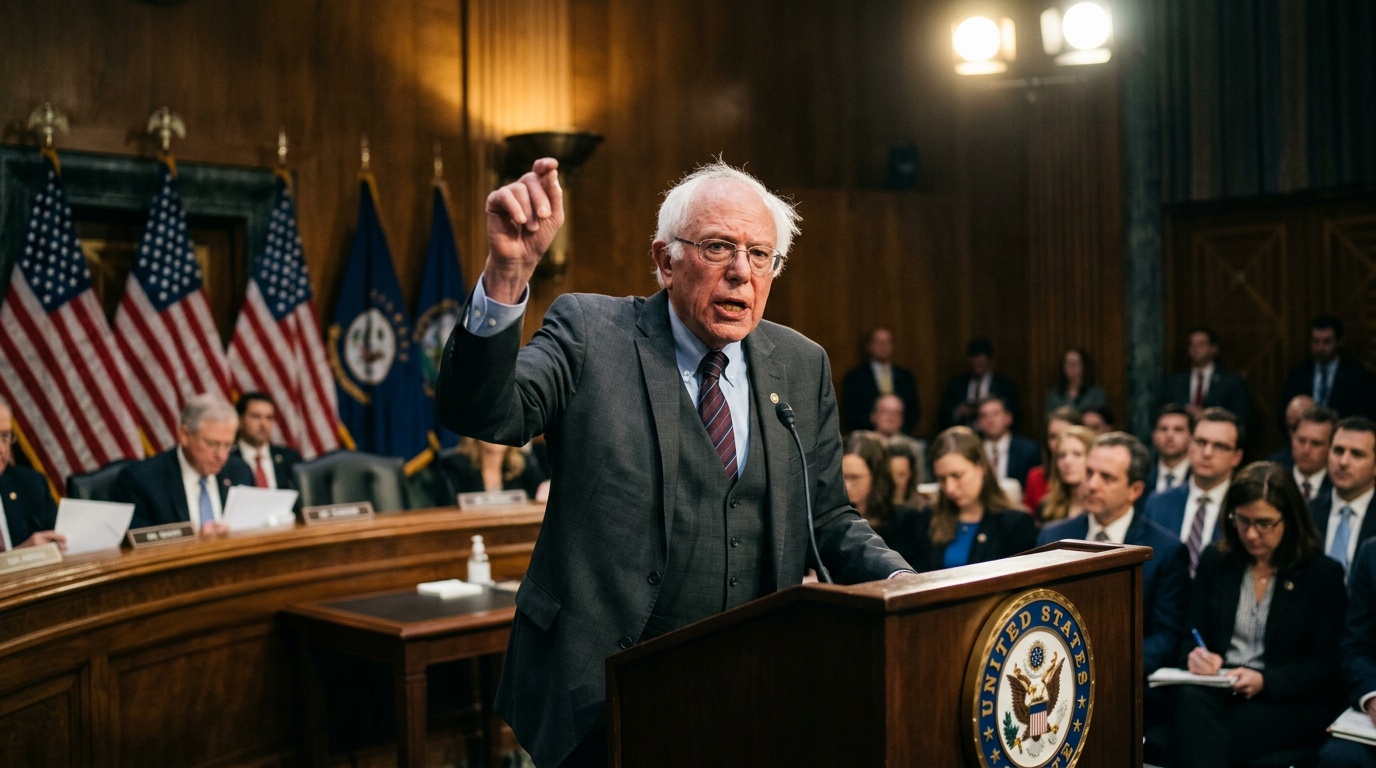
There's a certain cruelty to the idea that the government would take away a senior's Social Security check to pay off a student loan. That's exactly what can happen under current rules, though, and a group of Democratic senators wants to put a stop to it.
On Monday, Sens. Bernie Sanders (I-Vt.), Elizabeth Warren (D-Mass.), and Ed Markey (D-Mass.) introduced legislation that would prevent the Treasury Department from withholding Social Security payments from older borrowers and those with disabilities who have defaulted on federal student loans. The protection would extend to Social Security Disability Insurance payments as well, according to a report from Business Insider.
Why This Matters Now
The bill arrives as student-loan defaults remain stubbornly high. More than 9 million borrowers were in default as of March, according to the latest data from the U.S. Department of Education. For context, a federal student loan typically enters default after a borrower misses payments for 270 days.
The numbers are getting worse, not better. The Federal Reserve Bank of New York's household debt data shows student-loan delinquencies hit 10.6% in the second quarter, up from 10.3% in the first quarter. The New York Fed has noted that delinquencies are creeping back toward pre-pandemic levels.
Older borrowers are particularly vulnerable. Federal Reserve data has shown that borrowers aged 50 and older are increasingly represented among those falling behind, and the average age of borrowers in default is rising.
Under current rules, the Treasury can withhold up to 15% of a defaulted borrower's Social Security benefits. That collection process is currently paused, but the administration hasn't said when it might resume. The bill would make that pause permanent for the affected groups.
Sanders didn't mince words in his statement: "In the richest country in the history of the world, no senior should have their Social Security payments taken away from them to pay back student debt. This is especially true when seniors throughout the country already cannot afford the skyrocketing price of healthcare, prescription drugs, groceries and housing. Congress must pass this legislation."
The Bigger Picture: Social Security's Own Problems
This legislation is landing at a time when Social Security itself is facing a long-term funding crisis. The program's main retirement trust fund is projected to run out of reserves in the fourth quarter of 2032. If Congress doesn't act, incoming revenue would only cover about 78% of scheduled benefits.
Lawmakers have floated very different solutions. One approach would invest $1.5 trillion in a separate fund to help cover future liabilities. Others have proposed higher taxes or changes to benefits. Americans have shown strong opposition to broad benefit cuts and higher payroll taxes, but they're more open to reducing benefits for wealthier retirees.
For older borrowers who depend on Social Security, the new bill aims to ensure that student debt doesn't create yet another reduction in their payments. It's a small but meaningful protection for a group that's already stretched thin.
Image via Shutterstock