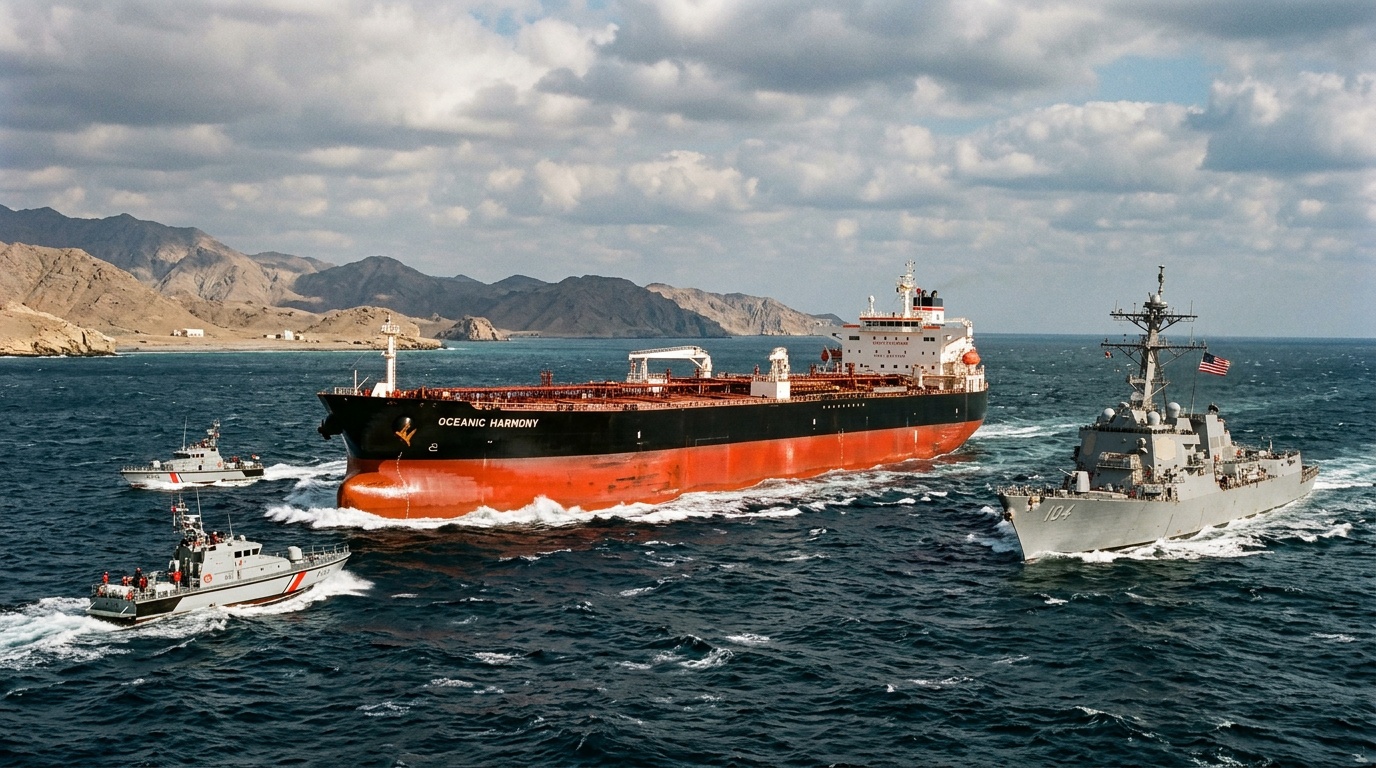
Energy Secretary Chris Wright is painting a surprisingly upbeat picture of oil flows through the Strait of Hormuz, saying the numbers have actually climbed past pre-conflict levels thanks to some serious coordination between the U.S. military and Gulf allies.
Wright took to X on Tuesday to share the good news, noting that the seven-day average for oil leaving the strait has jumped to nearly 9 million barrels per day. That's a big deal, especially considering the region has been in the middle of a military conflict with Iran that had everyone worried about supply disruptions.
Wright Highlights Hormuz Shipping
But wait, there's more. Wright says newly upgraded pipelines and export facilities are moving an additional 5 to 7 million barrels per day out of the region, bringing the total oil flows out of the area to about 15 million barrels per day. And on Sunday, roughly 20 million barrels left the Gulf, which actually exceeds the average daily flows before the conflict started.
In a follow-up post, Wright emphasized that the Department of Energy, working alongside the military, has the most reliable data on oil and products exiting the Arabian Gulf. He pointed out that many private trackers miss ships that are moving covertly through the strait, which could explain why some numbers might seem lower than what the government is reporting.
Trump Claims Total Hormuz Control
The conflict with Iran has thrown a wrench into shipping through the Strait of Hormuz, a critical artery for oil, gas, and fertilizers, sending prices soaring worldwide. At the time of writing, Brent crude futures were up 0.57% at $89.42 per barrel, while WTI crude futures were trading 0.79% higher at $83.86 per barrel.
Wright's comments come on the heels of President Donald Trump's bold claim to reporters at Joint Base Andrews on Tuesday that the U.S. has "total control" over the strait. The day before, during an Executive Order signing ceremony at the Oval Office, Trump said the U.S. Navy now has "100% control of the Strait of Hormuz," describing the blockade as impenetrable. He added that the strait remains open to countries permitted to pass, but vessels bound for Iran are blocked.
Trump also said U.S. forces have swept the strait for mines and argued that Iran lacks the money and resources to pose a major threat, pointing to severe inflation and unpaid soldiers as signs of Tehran's weakness.
Meanwhile, Iran isn't backing down. Mohsen Rezaei, the newly appointed secretary of Iran's Supreme National Security Council, said Tehran will keep the waterway closed unless Washington changes its approach. Rezaei laid out a list of demands: the U.S. must end the war, lift its blockade and sanctions, release frozen Iranian funds, and agree to a broader regional ceasefire.
So there you have it. The U.S. says it's got the strait under control and oil is flowing, but Iran is digging in its heels. The situation remains fluid, and with oil prices already ticking up, the market is watching closely to see who blinks first.