






Late Tuesday, U.S. stock futures edged higher as oil prices surged after the U.S. military said it intercepted a surprise Iranian missile attack, reviving concerns over Middle East stability and global energy supplies.
Iran's Missile Attack on U.S. Forces Sends Oil Surging and Futures Higher
MarketDash
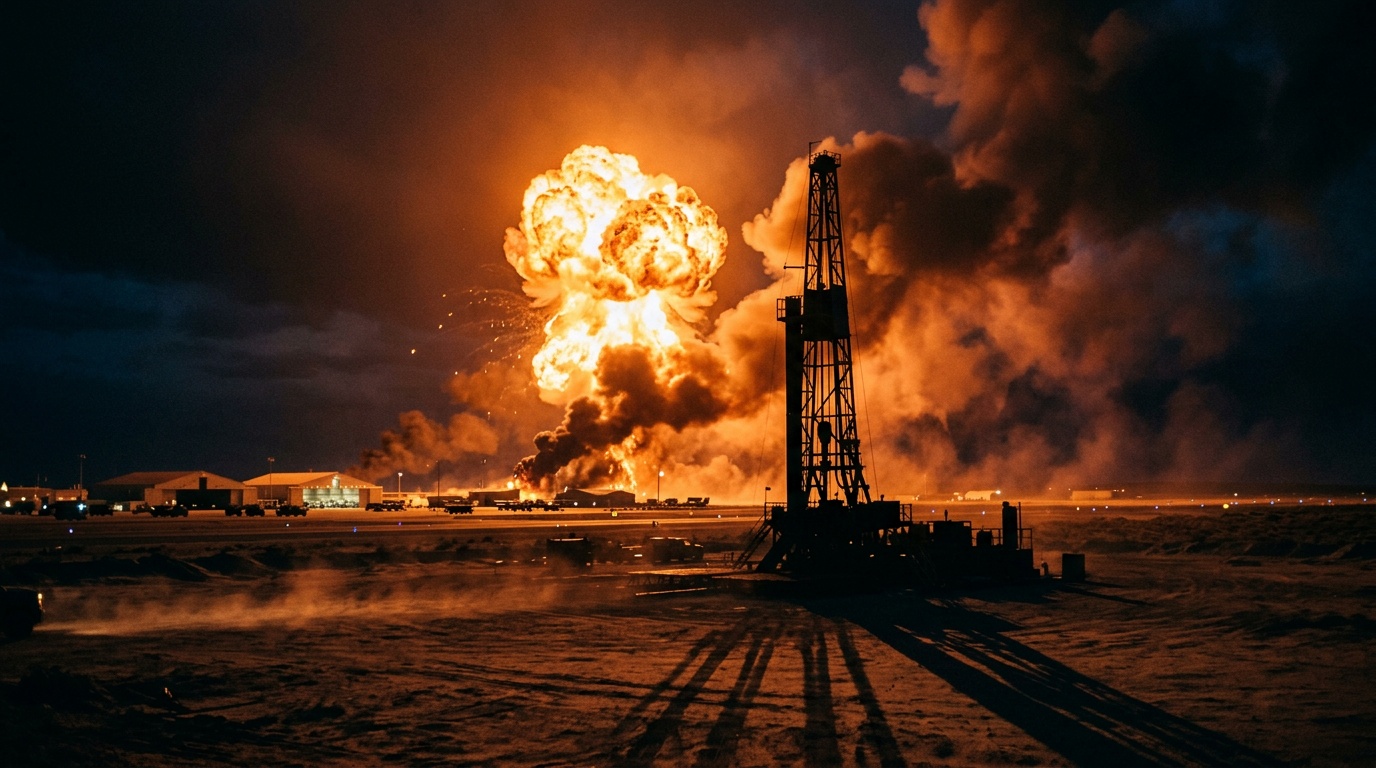
U.S. Central Command says all Iranian missiles were intercepted after a surprise attack, reigniting Middle East supply fears and pushing crude oil up nearly 4%.
Get Market Alerts
Weekly insights + SMS alerts
US Futures Advance as Oil Prices Rebound
Dow futures rose 63.00 points, or 0.12%, to 53,007.00, while S&P 500 futures gained 26.00 points, or 0.35%, to 7,491.25. Nasdaq 100 futures advanced 132.75 points, or 0.48%, to 28,054.75 as of around 8:38 p.m. EDT.
In commodities, WTI crude oil climbed 3.92% to $82.37 per barrel, while Brent crude gained 3.86% to $87.34 per barrel. Natural gas futures slipped 0.45% to $2.65 per MMBtu.
Meanwhile, the U.S. dollar index, which tracks the greenback against a basket of currencies, stood at 101.388, little changed on the day.
Asian markets traded higher, with South Korea's KOSPI rising 1.75% to 6,129.17 and Japan's Nikkei 225 gaining 0.25% to 62,523.66.
CENTCOM Says All Iranian Missiles Were Intercepted
Oil prices reversed steep losses from earlier in the session after U.S. Central Command, or CENTCOM, said Iran launched multiple ballistic missiles at U.S. forces in the Middle East.
"At 5:45 p.m. ET today, Islamic Revolutionary Guard Corps forces launched multiple ballistic missiles from Iran in an attempted surprise attack on U.S. forces based in the Middle East," CENTCOM said in a post on X.
"All Iranian missiles were successfully intercepted. U.S. forces remain vigilant and at a high state of readiness."
The statement renewed fears that the conflict could threaten energy supplies from the region, pushing crude prices sharply higher in late trading.
Earlier Diplomatic Hopes Had Weighed on Crude
Before the missile attack, oil had settled sharply lower after Iran held discussions with Saudi Arabia and Oman over security in the Strait of Hormuz, a critical global oil transit route, according to reports.
According to Iran's Foreign Ministry, the talks focused on the need to "eliminate the insecurity imposed on the Strait of Hormuz caused by the aggressive actions" of the U.S.
On Monday, President Donald Trump rejected reports that the U.S. had delayed broader military action because of depleted munitions, telling reporters aboard Air Force One that the military has "plenty" of ordnance.
Image via Shutterstock/ Mohasseyn
More News

Fed's Favorite Inflation Gauge Hits 3.8% as Expected, Q3 GDP Growth Revised Up to 4.3%

Trump Says a Government Stake in Nvidia Is 'Probably Not Too Late': 'Maybe I Should Do It'

Futures Slide as Traders Bet Big on a December Fed Hike; Trump Tells Jensen Huang to 'Just Tell the Truth'—Dell, Workday, Autodesk in Focus

Micron Stock Slips 8% as Nvidia's Washington Headache Spreads to Chipmakers

AMD Stock Slips 5% As Congress Turns Up The Heat On AI Chip Exports

Boeing Lands 787 Order From Malaysia And A $7.4B China Deal For 737s

Bitcoin's $56,700 Line in the Sand: The Rare Moving Average Test That Could Decide $47,000 or $100,000

Jensen Huang Says Nvidia Is the 'Most Apolitical Company,' Denies Trump Pressured Board for His Reinstatement: 'Completely Untrue'
Get Market News Alerts
Real-time alerts on price moves, news, and trading opportunities.
Join 20,000+ investors. No spam, ever.
Featured Articles
View all newsFed's Favorite Inflation Gauge Hits 3.8% as Expected, Q3 GDP Growth Revised Up to 4.3%
By MarketDash
November 25, 2026
Trump Says a Government Stake in Nvidia Is 'Probably Not Too Late': 'Maybe I Should Do It'
By MarketDash
November 25, 2026
Futures Slide as Traders Bet Big on a December Fed Hike; Trump Tells Jensen Huang to 'Just Tell the Truth'—Dell, Workday, Autodesk in Focus
By MarketDash
November 25, 2026
Micron Stock Slips 8% as Nvidia's Washington Headache Spreads to Chipmakers
By MarketDash
November 25, 2026
AMD Stock Slips 5% As Congress Turns Up The Heat On AI Chip Exports
By MarketDash
November 25, 2026
Boeing Lands 787 Order From Malaysia And A $7.4B China Deal For 737s
By MarketDash
November 25, 2026
Bitcoin's $56,700 Line in the Sand: The Rare Moving Average Test That Could Decide $47,000 or $100,000
By MarketDash
November 25, 2026
Jensen Huang Says Nvidia Is the 'Most Apolitical Company,' Denies Trump Pressured Board for His Reinstatement: 'Completely Untrue'
By MarketDash
November 25, 2026