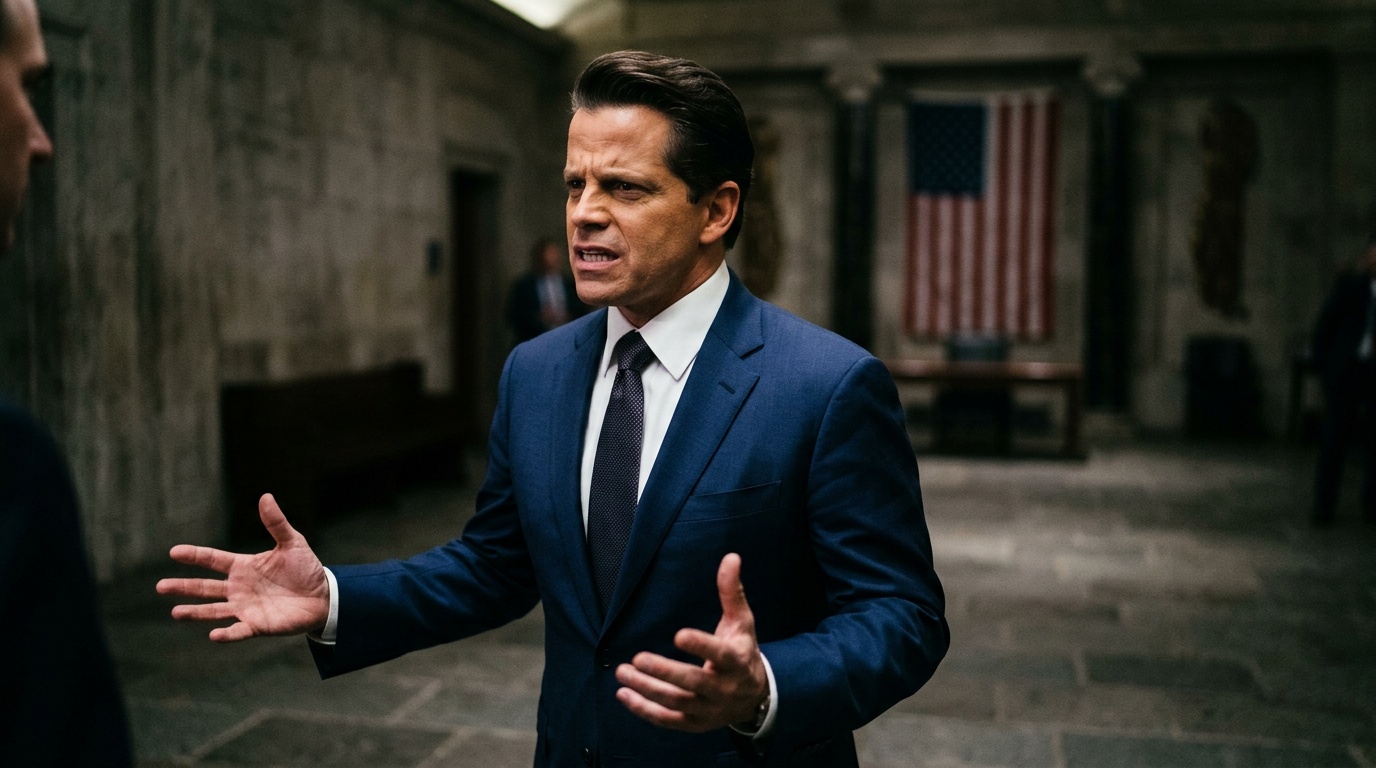
Former White House communications director Anthony Scaramucci isn't holding back. In a blistering post on X Saturday, he accused President Donald Trump's supporters of a glaring double standard — one so obvious, he says, it's sitting "in plain sight."
Scaramucci's argument is simple: imagine if a Democrat, say Barack Obama, had done the things Trump has done. The reaction, he says, would have been nuclear.
"Obama wore a tan suit and Fox News set their hair on fire," Scaramucci wrote, referencing the 2014 media frenzy over Obama's light-colored suit. Then he painted a picture: "Imagine Obama starting a war that creates a quagmire costing several hundred billion dollars. Imagine Obama trading in his personal account to the tune of $22 billion. Imagine the right wing outrage."
Instead, he says, Trump supporters just fall in line. "The hypocrisy isn't even hidden anymore," he wrote. "It's just sitting there in plain sight and nobody seems embarrassed by it."
Scaramucci's comments come amid a broader political firestorm. Democrats are piling on Trump from multiple angles.
Sen. Bernie Sanders (I-Vt.) warned that the climate crisis is being ignored, pointing to record-breaking temperatures, Europe's deadly heatwave, and extreme droughts. Gov. JB Pritzker (D-Ill.) accused Trump of using unlawful tactics to target political opponents. Former House Speaker Nancy Pelosi criticized Trump and congressional Republicans for boosting military spending at the expense of programs for American families, accusing them of favoring "endless wars."
On the policy front, the Trump administration is reportedly redirecting U.S. foreign aid toward MAGA-aligned projects in Europe, promoting free speech and national sovereignty. And in a move that raised eyebrows, Trump threatened to raise tariffs on Canada — blaming Canadian wildfire smoke for harming U.S. air quality and accusing Ottawa of mismanaging its forests.
Whether you agree with Scaramucci or not, his point about political tribalism is hard to ignore. In today's hyper-partisan environment, outrage often depends less on the act and more on the party committing it.