






Shark Tank investor Kevin O'Leary said future conflicts could be shaped by artificial intelligence, precision weapons and advanced defense systems that allow the U.S. to pressure adversaries without relying on traditional large-scale warfare.
Kevin O'Leary Says 'This Is Going to Be a New Type of Warfare' as AI Reshapes Military Strategy
MarketDash
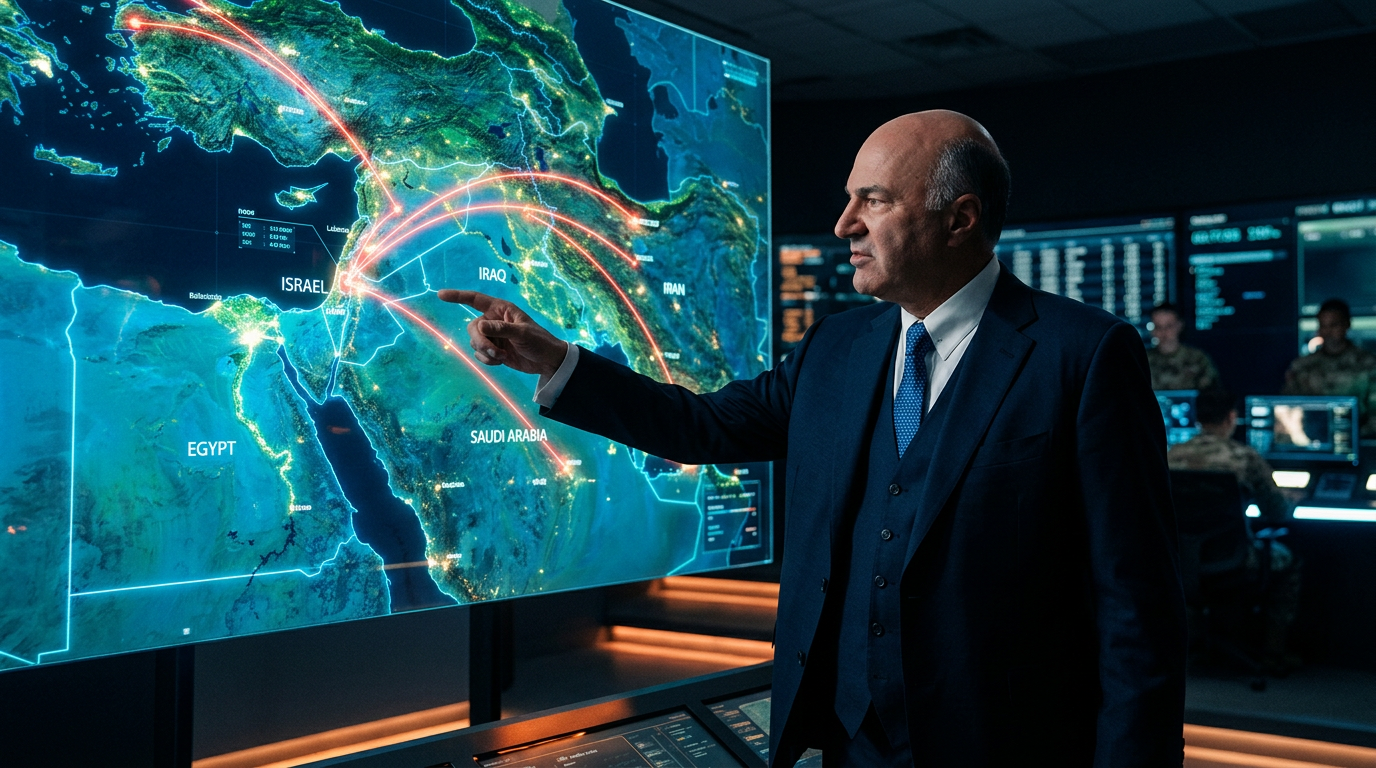
O’Leary says AI-driven warfare, precision weapons and satellite technology could pressure Iran, calling it a new era.
Get Market Alerts
Weekly insights + SMS alerts
O'Leary Details AI-Powered Warfare Strategy
On Tuesday, in a post on X, O'Leary described a future warfare strategy, "tenderization," arguing that AI-powered systems could allow countries to weaken an opponent's capabilities through sustained, targeted pressure.
"If Iran doesn't want to play ball, they will be tenderized into compliance," O'Leary wrote.
He said the approach would involve "highly specific ordinance, satellite-controlled, AI-driven, predictive analysis on everything you need," with technology and operations managed from U.S.-based infrastructure.
"You don't have to kill a lot of people. You don't wanna do that," O'Leary said, arguing that precision weapons and AI could reduce the need for traditional warfare methods.
"This is going to be a new type of warfare. This is called tenderization," he added.
O'Leary also called for greater investment in AI-powered defense systems, saying, "That's what we need in America. That's what I'm building, and that's what every other developer's gonna have to build."
AI Reshaping Cybersecurity And Modern Warfare
Earlier, the Five Eyes intelligence alliance warned that rapid AI advances could accelerate cyberattacks, allowing adversaries to identify vulnerabilities, generate malicious code and automate operations faster, urging organizations to prepare within months rather than years.
XTEND CEO Aviv Shapira said the future of defense technology could rely on AI-powered platforms that connect drones, robots and autonomous systems across manufacturers.
He described XTEND's vision as an "Android of robotics" designed to unify defense hardware through software.
Palantir CEO Alex Karp said AI was providing the U.S. and its allies with a strategic advantage amid rising Middle East tensions, arguing that AI was transforming modern warfare by improving intelligence sharing and battlefield coordination.
Disclaimer: This content was partially produced with the help of AI tools and was reviewed and published by MarketDash editors.
More News

Fed's Favorite Inflation Gauge Hits 3.8% as Expected, Q3 GDP Growth Revised Up to 4.3%

Trump Says a Government Stake in Nvidia Is 'Probably Not Too Late': 'Maybe I Should Do It'

Futures Slide as Traders Bet Big on a December Fed Hike; Trump Tells Jensen Huang to 'Just Tell the Truth'—Dell, Workday, Autodesk in Focus

Micron Stock Slips 8% as Nvidia's Washington Headache Spreads to Chipmakers

AMD Stock Slips 5% As Congress Turns Up The Heat On AI Chip Exports

Boeing Lands 787 Order From Malaysia And A $7.4B China Deal For 737s

Bitcoin's $56,700 Line in the Sand: The Rare Moving Average Test That Could Decide $47,000 or $100,000

Jensen Huang Says Nvidia Is the 'Most Apolitical Company,' Denies Trump Pressured Board for His Reinstatement: 'Completely Untrue'
Get Market News Alerts
Real-time alerts on price moves, news, and trading opportunities.
Join 20,000+ investors. No spam, ever.
Featured Articles
View all newsFed's Favorite Inflation Gauge Hits 3.8% as Expected, Q3 GDP Growth Revised Up to 4.3%
By MarketDash
November 25, 2026
Trump Says a Government Stake in Nvidia Is 'Probably Not Too Late': 'Maybe I Should Do It'
By MarketDash
November 25, 2026
Futures Slide as Traders Bet Big on a December Fed Hike; Trump Tells Jensen Huang to 'Just Tell the Truth'—Dell, Workday, Autodesk in Focus
By MarketDash
November 25, 2026
Micron Stock Slips 8% as Nvidia's Washington Headache Spreads to Chipmakers
By MarketDash
November 25, 2026
AMD Stock Slips 5% As Congress Turns Up The Heat On AI Chip Exports
By MarketDash
November 25, 2026
Boeing Lands 787 Order From Malaysia And A $7.4B China Deal For 737s
By MarketDash
November 25, 2026
Bitcoin's $56,700 Line in the Sand: The Rare Moving Average Test That Could Decide $47,000 or $100,000
By MarketDash
November 25, 2026
Jensen Huang Says Nvidia Is the 'Most Apolitical Company,' Denies Trump Pressured Board for His Reinstatement: 'Completely Untrue'
By MarketDash
November 25, 2026